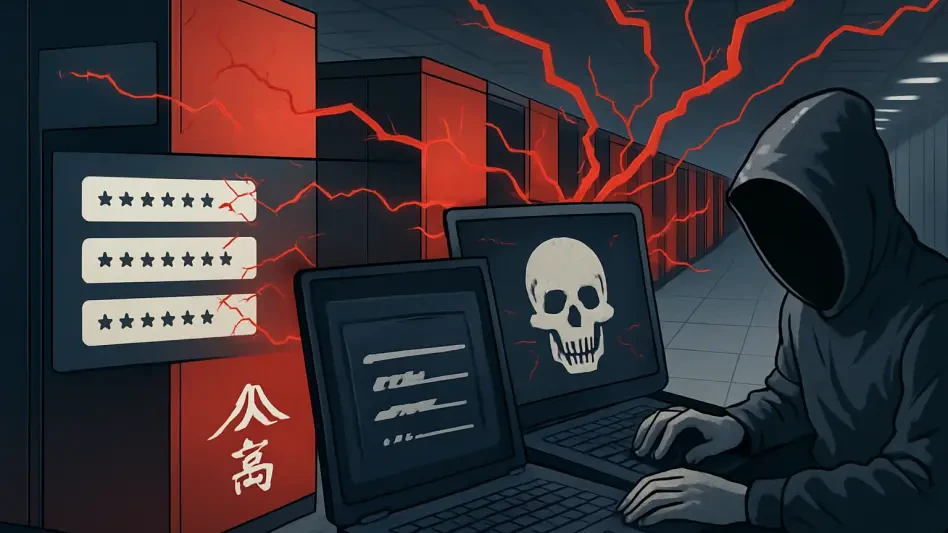
Security teams found traces of unauthorized access to the registration information of 4,222 users, including names and email addresses, raising concerns about targeted impersonation and follow-up attacks. This breach at the RIKEN Center for Computational Science highlights the fragile nature of securing high-performance computing environments that serve thousands of researchers across the globe. While the physical hardware remains intact, the digital integrity of the Fugaku supercomputer has been severely compromised through the systematic theft of administrative and user-level access tokens. Investigators are currently tracing the movement of the intruders who managed to bypass primary defenses by targeting tertiary systems that were inadvertently left exposed. The incident serves as a stark reminder that even the world’s most powerful machines are only as secure as their weakest access point. As the cleanup begins, the primary challenge has shifted from merely reclaiming the supercomputer to securing the vast network of external institutions that interact with it daily.
1. Massive Credential Theft: The Scope of Exfiltration
Japanese researchers recently confirmed that intruders successfully exfiltrated a total of 430 individual credentials from the internal systems governing Fugaku. This substantial haul of sensitive data included 233 private keys that were not protected by any passphrases, alongside 197 keys that were secured by such measures. The presence of unencrypted private keys within user directories represents a significant security lapse, as it allowed the attackers to immediately weaponize the stolen data without needing to perform any additional decryption or brute-force efforts. RIKEN officials have noted that the sheer volume of stolen keys suggests a targeted effort to harvest as much lateral access potential as possible before the breach was discovered. By securing these credentials, the hackers effectively gained a skeleton key to various sectors of the supercomputer’s architecture, allowing them to probe deeper into the file systems and administrative protocols that manage large-scale simulations.
While RIKEN has acted swiftly to suspend all operations and sever external connections to contain the immediate threat, the primary concern now lies in the secondary risks associated with these stolen assets. These cryptographic keys often provide access to external systems at other academic and corporate organizations that continue to trust the compromised credentials. Because Fugaku is a collaborative hub, many researchers use the same keys to bridge their work between different institutions and cloud environments. Consequently, an attacker possessing a stolen SSH key from a RIKEN directory could potentially infiltrate a university server or a private research lab’s database without triggering standard intrusion detection alerts. This interconnectedness means that the breach’s radius extends far beyond the physical location of the supercomputer in Kobe, Japan. Security administrators at linked facilities are now forced to treat all existing trust relationships with Fugaku-affiliated accounts as inherently compromised until a full audit is completed.
2. Breach Timeline and Method: The Vulnerable Dashboard
The unauthorized access occurred within a specific window between November 10 and November 13, 2026, marking a critical lapse in the monitoring of public-facing assets. Attackers specifically exploited a publicly accessible operational dashboard, which was designed to provide real-time status updates but inadvertently provided a gateway into the internal network. This dashboard acted as a bridge, allowing the intruders to pivot from a relatively low-security public service into the core infrastructure where sensitive operational data is stored. RIKEN’s security team first detected the intrusion on November 12, after identifying anomalous traffic patterns that did not align with standard researcher behavior. Following the confirmation of unauthorized access on November 13, the decision was made to take the supercomputer completely offline by the following morning. This rapid response was necessary to prevent the further exfiltration of research data, although the damage regarding credential theft had already been sustained.
The sudden shutdown of Fugaku has resulted in the immediate interruption of high-priority research projects across a wide variety of critical scientific fields. Computing jobs related to climate modeling, which often require weeks of continuous processing, were halted mid-calculation, potentially resulting in the loss of valuable simulation data. Similarly, urgent work in disaster prevention and drug discovery has been delayed, creating a ripple effect that impacts global scientific timelines. RIKEN has not yet provided a definitive timeline for when the system will return to full operational capacity, as the rebuilding process requires a complete overhaul of the server environment and the invalidation of all existing administrative access. The incident has prompted a broader discussion within the scientific community about the trade-offs between making supercomputing resources easily accessible to researchers and maintaining the rigorous security protocols necessary to defend against sophisticated state-sponsored or independent cybercriminals.
3. Risk of Persistent Access: Beyond the Initial Intrusion
The danger inherent in a stolen Secure Shell (SSH) key is that its utility persists long after the initial security breach has been identified and closed by administrators. When a user generates an SSH key pair, they keep a private key on their local system and place a matching public key on the remote server they wish to access. If an attacker manages to copy the private key from a system like Fugaku, they can use that key to log into any other server in the world that holds the corresponding public key. Simply deleting the stolen file from the supercomputer’s directory does nothing to invalidate the trust that has been established on those remote, external servers. This creates a persistent vulnerability where an attacker can remain dormant for months before using the stolen credential to strike a different target. The burden of security, therefore, shifts from the central hub to every individual endpoint that was once connected to the compromised environment, requiring a massive coordination effort.
Revoking access in a decentralized research environment is a complex task that requires every individual user to take proactive steps to secure their own external accounts. Because RIKEN does not control the remote servers owned by universities or private companies, its administrators cannot manually remove the compromised public keys from those systems. Instead, they must rely on users to manually audit every destination where they have previously installed their credentials. This manual process is prone to human error, as researchers may forget about old accounts or backup servers that still accept the now-compromised keys. Furthermore, the use of passphrases provides only a thin layer of protection; while they may slow down an attacker, they do not render a stolen key safe for continued use. The industry standard in such scenarios is to treat the entire cryptographic pair as permanently burned, necessitating a complete replacement of all authentication assets to ensure that no backdoor remains open for future exploitation.
4. Exposure of User Data and Recovery Requirements
Beyond the theft of cryptographic keys, the internal investigation revealed that the attackers successfully accessed registration records for a total of 4,222 Fugaku users. This specific data set contains a wealth of personal information, including full names, active email addresses, and unique user identification strings. While RIKEN has stated that they have not yet confirmed the theft of identity-verification documents, such as passports or national IDs, they are operating under the assumption that all personal information is compromised. This level of exposure makes the affected researchers prime targets for sophisticated phishing campaigns and social engineering attacks. By using the stolen registration data, an attacker could craft highly convincing messages that appear to come from official RIKEN support channels, tricking users into revealing even more sensitive information or installing malware. The psychological impact of this data exposure is significant, as researchers must now worry about their professional identities being used to facilitate further criminal activity.
To mitigate these risks, users eliminated and canceled all vulnerable access points by following the official guidelines provided by the RIKEN security center. This process involved identifying every external server that accepted the stolen keys and deleting the corresponding public keys immediately to prevent any lateral movement by the intruders. Once the old access was revoked, researchers generated fresh credentials in a secure, uncompromised environment that was known to be free of malware. These new cryptographic key pairs were then distributed only to essential systems, with every private key shielded by a robust, unique passphrase. Additionally, account holders collaborated with their local system administrators to audit login histories and activity logs for signs of unauthorized modification. Finally, everyone remained hyper-vigilant against social engineering, verifying all communications through official channels. These recovery steps were essential for restoring the integrity of the research network.