The shift toward mobile wallet applications utilizes sandboxing technology to isolate financial data from the vulnerabilities of a phone’s primary operating system, representing a significant departure from the centralized banking models that have dominated the global economy for centuries. In a decentralized finance ecosystem, the individual assumes the role of the custodian, the treasurer, and the security officer simultaneously. This empowerment is facilitated by the DeFi wallet, a specialized software or hardware interface that manages cryptographic keys rather than holding physical currency. As the blockchain landscape matures, the distinction between possessing a digital asset and controlling access to that asset has become the cornerstone of modern financial literacy. By moving away from intermediaries, users gain unprecedented speed and transparency, yet they also inherit the full weight of the technical risks involved. Understanding the core philosophy of self-custody is no longer an optional skill for niche enthusiasts but a fundamental requirement for anyone navigating the digital economy. The absence of a central authority means that the digital signatures generated by these wallets are the final word in any transaction, making the wallet the most critical piece of infrastructure in the user’s financial toolkit.
Understanding the Landscape of Digital Asset Management
Comparing DeFi Wallets and Centralized Exchanges: A Structural Analysis
A critical distinction exists between self-custody DeFi wallets and the custodial accounts provided by centralized exchanges like Coinbase or Kraken. In an exchange environment, the platform holds the private keys and provides a user experience similar to online banking, complete with password recovery and regulatory protections under frameworks like the Markets in Crypto-Assets Regulation. While this offers a safety net for beginners, it limits access to the broader ecosystem of decentralized protocols where users must have direct control over their signatures to trade or lend. The exchange acts as a gatekeeper, deciding which assets are available and which transactions are permitted, often imposing delays or restrictions based on internal risk assessments. For many, this level of oversight is a comfort, but for those seeking the full potential of blockchain, it represents a bottleneck that contradicts the core tenets of decentralization.
In contrast, using a DeFi wallet removes all institutional safeguards, meaning every transaction signed is final and irreversible. This trade-off grants users access to cutting-edge innovation, such as liquidity pools and decentralized exchanges, but introduces the risk of total loss if a fraudulent transaction is approved. There is no customer support line to call if a password is lost, and no fraud department to reverse a mistaken transfer. The responsibility for security shifts entirely to the user, who must manage their recovery phrases with extreme care. This autonomy allows for permissionless interaction with financial protocols globally, enabling users to earn yield or swap assets 24/7 without needing approval from a bank manager. The choice between an exchange and a DeFi wallet ultimately balances the convenience of third-party protection against the absolute freedom of financial sovereignty in an increasingly complex digital market.
Analyzing the Evolving Threat Environment: Sophistication in Fraud
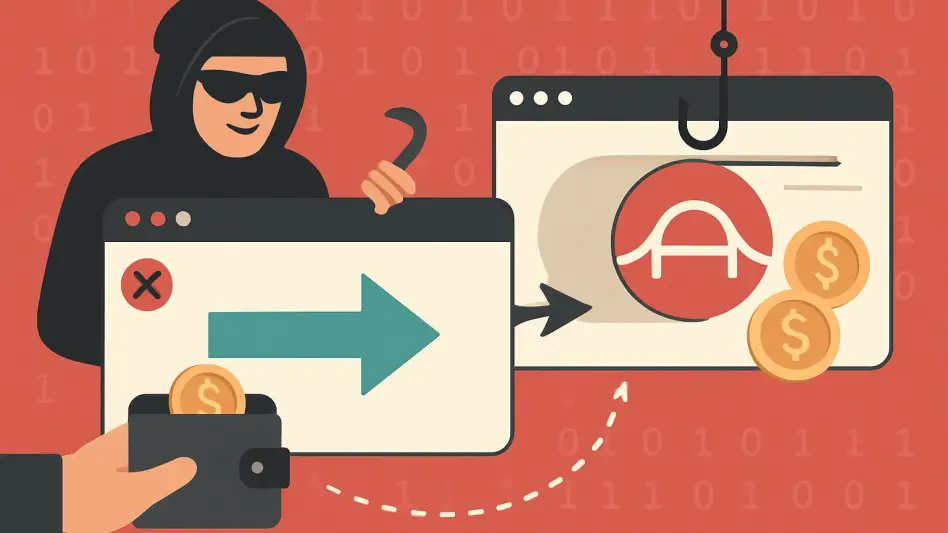
The necessity of wallet education is highlighted by the significant losses attributed to signature phishing and wallet drainers, which accounted for tens of millions of dollars in stolen assets throughout the current market cycle. Although security awareness is improving and total losses have trended downward compared to previous years, scammers continue to refine their tactics to bypass simple security measures. Rather than asking for direct transfers, modern attackers often trick users into signing off-chain messages that grant the attacker future permission to empty the wallet. These attacks frequently use social engineering, masquerading as legitimate protocol updates or exclusive reward opportunities. By the time a user realizes they have signed away their permissions, the assets are often long gone, moved through various mixers or cross-chain bridges to obscure their trail.
Building on these deceptive tactics, the rise of sophisticated “drainer-as-a-service” operations has lowered the barrier for cybercriminals to target DeFi participants. These malicious scripts are designed to scan a connected wallet instantly and identify the most valuable assets to prioritize for extraction. Users often encounter these scripts on cloned websites that look identical to popular decentralized applications. The psychological pressure of missing out on a limited-time offer frequently drives individuals to bypass their usual caution, leading them to approve a signature that appears benign but contains a hidden power of attorney clause. As the ecosystem evolves, the battle between security developers and malicious actors remains a constant struggle, necessitating the use of advanced simulation tools within the wallet interface to preview the outcome of any signature before it is finalized.
Exploring Technical Formats and Approval Mechanics
Evaluating the Three Primary Wallet Types: Hardware and Software
Browser extensions like MetaMask or Phantom offer high convenience for interacting with web-based DeFi platforms but are considered hot wallets because they reside on internet-connected devices. These tools integrate directly into the browser, allowing for seamless communication with decentralized applications through simple pop-up windows. However, because the computer’s operating system and the browser itself are subject to malware and keyloggers, these wallets are inherently more vulnerable to remote exploits. A compromised browser extension could potentially manipulate the user interface to show a fake transaction while the underlying code executes a theft. Despite these risks, browser extensions remain the most popular choice for frequent traders who require quick access to market shifts and decentralized exchange interfaces.
Mobile applications provide a middle ground by utilizing sandboxing and biometrics to enhance security on smartphones, providing a more isolated environment than desktop extensions while maintaining ease of use. These apps often include an integrated browser designed specifically for decentralized protocols, which helps minimize the risk of navigating to malicious sites. On the other hand, hardware wallets represent the gold standard for long-term security. These physical devices keep private keys entirely offline, requiring a manual button press to confirm every transaction. By creating an air-gap between the sensitive keys and the internet-connected computer or phone, hardware wallets provide the highest level of protection against remote hacking. Even if a user’s computer is infected with malware, the attacker cannot steal the funds without physical access to the device, making them an essential tool for anyone holding significant digital wealth.
Distinguishing Between Connectivity and Signing: The Permission Matrix
Users must understand that simply connecting a wallet to a website is a low-risk action that only allows the site to view public balances and addresses. When a website requests to connect, it is essentially asking for a digital business card. This allows the platform to tailor its interface to the user’s holdings, such as showing their balance of a specific token. At this stage, no funds can be moved, and no permissions have been granted to execute transactions. This distinction is vital because many new users fear that clicking a connect button alone can lead to a drained wallet, which is technically impossible under standard blockchain protocols. The connection is merely an informational handshake that sets the stage for further interaction.
The true danger lies in signing requests, particularly those involving the EIP-2612 Permit standard, which can act as a digital power of attorney. These signatures are often free and do not require gas fees, leading many users to sign them without realizing they are granting a third party the right to move their assets later. This permit standard was designed to improve the user experience by allowing for gasless approvals, but it has been repurposed by malicious actors to create “latent” vulnerabilities. A user might sign a permit today, and the attacker might wait weeks before using that signature to drain the account. Understanding the difference between a simple identity signature and a permission-granting signature is the most important defensive skill a DeFi user can acquire, as it prevents the most common forms of modern phishing.
Managing Token Approvals and Infinite Allowances: Closing the Gaps
One of the most frequent vectors for asset loss is the unlimited allowance request often prompted by smart contracts to save on future transaction costs. When a user interacts with a decentralized exchange, the platform must be granted permission to “spend” a specific amount of the user’s tokens to complete the trade. To avoid asking the user to pay a gas fee for a new approval every time they trade, many applications default to requesting an infinite allowance. While convenient, this creates a permanent bridge between the user’s wallet and the smart contract. If that contract is later found to have a bug or if the development team turns malicious, every user who granted an infinite allowance is at risk of having their funds taken without any further action on their part.
These permissions do not expire and remain active on the blockchain even if a user disconnects their wallet from the application’s website. A common misconception is that “logging out” or disconnecting the wallet UI revokes these permissions, but the approval is written into the blockchain’s state, not the website’s code. To remain secure, users must proactively use tools like Revoke.cash or internal wallet security dashboards to cancel old permissions, ensuring that a future compromise of a protocol does not result in their funds being drained. Regularly auditing these approvals is akin to changing passwords or reviewing credit card statements; it is a necessary maintenance task that minimizes the attack surface of a digital portfolio. By setting granular spending caps rather than allowing infinite access, users can limit their potential exposure to the exact amount they intend to trade.
Navigating Network Logistics and Global Regulation
Handling Gas Fees and Cross-Chain Logistics: Operational Hurdles
Every action on a blockchain requires gas, a fee paid in the network’s native currency, such as Ether or SOL. This fee compensates the network validators for the computational power required to process and secure the transaction. A common pitfall for new users is holding valuable tokens in a wallet without the native gas token, effectively freezing the assets until the fee can be paid. For example, having thousands of dollars in USDC on the Ethereum network is useless if the wallet does not contain at least a small amount of ETH to pay for the transfer. This often leads to a “chicken and egg” problem where a user must find a way to get gas tokens into a wallet just to move their other assets out, often requiring a transfer from a centralized exchange.
Additionally, users must be cautious when moving funds between different Layer-2 networks or sidechains. As the ecosystem has scaled, assets now exist across dozens of different environments like Arbitrum, Base, and Optimism. While these networks offer lower fees and faster speeds, they are not always directly compatible with one another. Sending assets to the wrong destination address on a network that the recipient does not support can result in a permanent loss of funds. For instance, sending a token via the Base network to a centralized exchange that only accepts Ethereum mainnet deposits usually results in those funds becoming unrecoverable. Users must verify the network compatibility of both the sending wallet and the receiving platform before every transaction, paying close attention to the specific chain being utilized.
Complying With MiCA and TFR in Europe: Regulatory Convergence
As the DeFi sector matures, it is facing increased oversight from regulators, particularly within the European Union under the Markets in Crypto-Assets regulation and the Transfer of Funds Regulation. These rules are designed to bring the digital asset space into alignment with traditional financial anti-money laundering standards. While the software developers of self-custody wallets are not currently required to hold licenses, the interaction between these wallets and regulated exchanges is now strictly monitored. This means that the “anonymous” nature of crypto is being replaced by a system of verified ownership, where the flow of funds is tracked from the point of entry at an exchange to the final destination in a private wallet.
Under these regulations, exchanges are often required to verify the ownership of self-hosted addresses for transfers exceeding €1,000 to prevent money laundering and ensure transparency. This verification process may involve a “Satoshi test,” where a user sends a specific small amount of crypto to prove they control the wallet, or the use of digital signatures to confirm the address belongs to the account holder. While some critics argue that these measures infringe on privacy, regulators maintain that they are necessary to integrate digital assets into the broader financial system safely. For the user, this means that interacting with a DeFi wallet in 2026 involves more than just technical knowledge; it requires an awareness of how those on-chain actions will be viewed by centralized institutions and tax authorities.
Implementing Best Practices for Long-Term Security: Strategic Advice
Maintaining a secure DeFi presence requires a disciplined approach that prioritizes technical safeguards over the allure of rapid, unprotected transactions. The analysis of recent market trends showed that the most successful participants were those who utilized hardware wallets for their primary holdings, effectively removing the threat of remote exploitation. These individuals often employed a “vault and burner” strategy, where the majority of their assets remained in an offline, rarely connected wallet, while only small amounts were transferred to a “burner” mobile wallet for daily interactions with new protocols. This compartmentalization ensured that even if a specific decentralized application was compromised, the vast majority of the user’s capital remained safe behind a physical security layer.
The findings from this guide suggested that the setting of granular spending caps and the regular auditing of smart contract permissions were the most effective ways to mitigate long-term risk. Looking forward, the introduction of technical upgrades like EIP-7702 and transaction simulation will continue to provide users with better tools to defend themselves, but these technologies are not substitutes for personal vigilance. Keeping meticulous records of all on-chain activity was also identified as a vital practice, not just for security but for fulfilling the rigorous proof of ownership requirements set by modern regulated exchanges. By treating the DeFi wallet as a professional financial instrument rather than a casual app, individuals were able to navigate the complexities of the decentralized world with confidence and technical resilience.