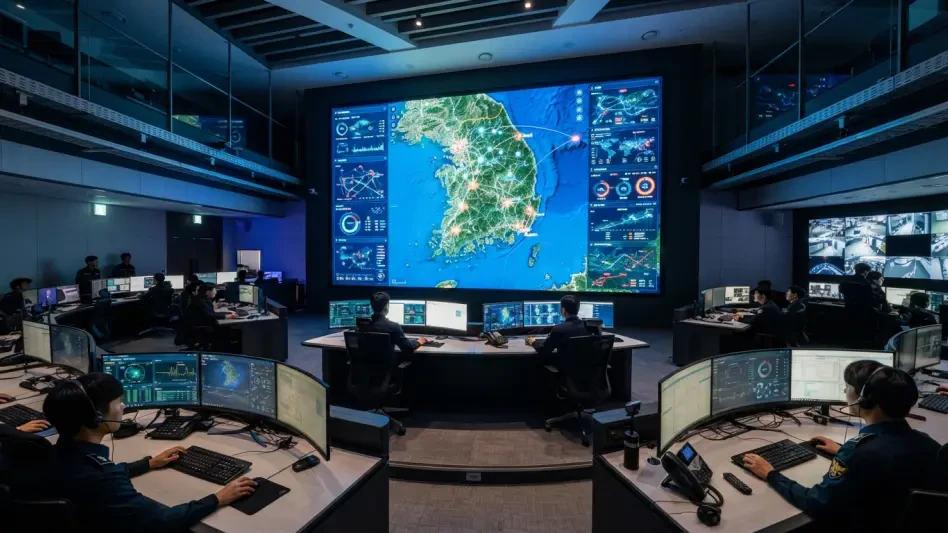
A five-month dwell time on a commercial cloud platform allowed foreign intelligence operatives to harvest biographic data belonging to 168 high-ranking South Korean delegates. This unprecedented security failure has forced President Lee Jae-myung to demand an immediate and total restructuring of the national digital defense framework. The transition represents a fundamental shift in South Korean strategy, moving away from a collection of siloed, reactive agencies toward a “unified, powerful government cybersecurity control tower.” This central authority is designed to prioritize proactive defense and consolidate national sovereignty in the digital sphere, ensuring that sensitive state secrets are no longer vulnerable to the procedural errors that characterized this recent incident. The directive underscores a growing realization within the executive branch that modern threats require a level of administrative cohesion that the current fragmented architecture simply cannot provide.
The Catalyst: A Severe Internal Security Failure
Administrative Errors and Data Exposure
The crisis did not emerge from a sophisticated zero-day exploit or a high-tech breach of encrypted servers, but rather from a profound lapse in basic administrative security protocols. In preparation for a series of high-level diplomatic summits throughout 2026, administrative staff compiled an unencrypted Excel spreadsheet entitled Passenger List (Republic of Korea-Belgium) for use on the presidential aircraft, Korean Air Force One. In an attempt to verify the file’s integrity and scan for potential malicious scripts, government personnel improperly uploaded this master manifest to a commercial, cloud-based malware-scanning portal. These platforms, while useful for individual file checks, often allow enterprise-level subscribers to download raw files for the purpose of global threat intelligence sharing, effectively placing the document into the hands of anyone with a paid account.
Because the document remained on this public-facing platform for nearly five months, foreign intelligence agencies had ample time to index and harvest the biographic data of the nation’s top officials. This “dwell time” meant that the information was not just stolen but systematically cataloged by automated scrapers used by international state actors. The file contained comprehensive biographic details, including full legal names in both Korean and English, dates of birth, passport numbers, and exact issuance and expiration dates. The lack of basic data loss prevention training allowed a single administrative decision to bypass every sophisticated perimeter defense the government had installed, proving that even the most advanced security infrastructure can be rendered useless by a failure to secure the human-operated administrative endpoints.
Consequences for Operational Security
The fallout from this exposure is a catastrophic blow to the operational security (OPSEC) of the South Korean executive branch, particularly regarding the Presidential Security Service. The leaked manifest effectively “burned” the identities of 42 confidential close-protection agents and tactical bodyguards whose identities are officially classified as state secrets. In the sensitive world of counter-intelligence, the public exposure of a field agent’s identity is often an irreversible event. Hostile actors can now cross-reference these specific names and passport numbers against international flight logs, border crossing databases, and hotel registries to track the historical and future movements of South Korean security details. This level of transparency makes it significantly easier for foreign operatives to anticipate the logistics of presidential movements and identify the specific personnel tasked with high-stakes protection missions.
Beyond the security detail, the breach included the identities of 14 medical and aviation logistics experts, such as the presidential physician and military trauma nurses. The exposure of these individuals allows adversaries to map the exact medical support capabilities and emergency response protocols surrounding the South Korean presidency. For the remaining 92 members of the delegation, including accredited press and administrative staff, the risk is centered on long-term identity theft and the creation of highly targeted spear-phishing campaigns. Attackers can leverage authentic passport details to craft deceptive communications that appear to originate from official government channels, creating a persistent threat vector that will last for the duration of the validity of the compromised documents. The immediate reassignment of exposed security personnel has already begun to mitigate the tactical risks, but the strategic damage to the nation’s intelligence anonymity remains severe.
Addressing Structural Vulnerabilities
The Fragmented Defensive Architecture
The current state of South Korean cybersecurity is defined by a decentralized model where responsibilities are split between several competing and often overlapping entities. Currently, the National Intelligence Service (NIS) focuses on state-level espionage and public sector intelligence, while the Korea Internet & Security Agency (KISA) manages the response to civilian incidents. Simultaneously, the National Police Agency handles domestic cybercrime investigations, and the Military Cyber Command focuses exclusively on protecting defense-related networks. This division of labor has created significant jurisdictional “blind spots” where no single agency has the complete picture of a multi-vector threat. When a breach occurs that straddles both civilian administration and military secrets, the response is frequently slowed by bureaucratic infighting and a lack of standardized communication protocols between the various headquarters.
Security analysts argue that this fragmented approach is no longer sustainable in an era where cyber threats do not respect the artificial boundaries of government departments. The Air Force One leak serves as a prime example of this failure, as the breach involved civilian platforms, military transportation, and presidential intelligence, leaving the initial response mired in confusion over which agency held the authority to lead the forensic audit. A unified command structure is seen as the only way to eliminate these silos and provide a “single pane of glass” view for national defense. By centralizing authority, the government aims to create a streamlined decision-making process that can react in real-time to emerging threats, rather than waiting for inter-agency committees to reach a consensus while adversaries continue to exploit active vulnerabilities in the system.
The “Human Element” as a Security Weakness
This recent incident highlights a recurring trend in global cybersecurity where the “human element” continues to be the most vulnerable link in the defense chain. Despite the implementation of multi-million dollar encryption suites and advanced firewalls, the unauthorized transfer of sensitive data across unvetted administrative channels bypassed every technological safeguard. This mirrors broader vulnerabilities recently documented in global airline reservation systems and supply chain networks, where data is frequently aggregated into consolidated “target decks” that are easy for adversaries to exploit if administrative convenience is prioritized over security protocols. The act of uploading a master manifest to a public scanning engine reflects a systemic failure in data loss prevention (DLP) culture rather than a failure of the software itself, suggesting that training and procedural enforcement have not kept pace with technical upgrades.
Furthermore, the incident demonstrates how intelligence reconnaissance has become increasingly passive in the modern age. Adversaries do not always need to perform complex “break-ins” to acquire sensitive data; they can simply monitor public threat-intelligence platforms and wait for internal errors to be indexed. This passive collection method is difficult to detect because it does not involve an intrusion into a government-controlled network, allowing data to be harvested without triggering any internal alarms. As biometric and biographic data are permanent and cannot be changed like a password, the exposure creates a long-term “tail” of vulnerability. This realization has shifted the focus of South Korean security experts toward the necessity of strict data handling mandates and the implementation of internal, air-gapped scanning tools to ensure that employees never feel the need to use commercial third-party services for sensitive documents.
The Path Toward Centralized Governance
Modeling the Unified Control Tower
The proposed centralized cybersecurity command is heavily modeled after successful international frameworks, such as the United States’ Cybersecurity and Infrastructure Security Agency (CISA) or the Office of the National Cyber Director. The primary goal of this new “control tower” is to transition the South Korean government from a posture of reactive inquiry to one of predictive defense. By holding executive authority over civilian, defense, and intelligence networks, the new agency will be able to mandate uniform security standards across all government branches. This will ensure that an administrative staffer in the diplomatic wing is operating under the same rigorous data-handling protocols as a high-ranking officer in the military command, closing the gaps that were exploited during the recent passport leak and ensuring a cohesive national response to cyber threats.
The creation of this agency also aims to foster a more robust partnership between the public and private sectors. In 2026, many of the most critical threats originate or manifest on private cloud infrastructure, much like the malware-scanning portal used in the Air Force One breach. A centralized command would act as a clearinghouse for threat intelligence, allowing the government to share data with private providers more effectively and vice versa. This collaborative approach is designed to create a “neighborhood watch” effect in the digital realm, where the government can provide the tools and oversight necessary to prevent commercial platforms from being used as accidental dead-drops for state secrets. The “control tower” will serve as the brain of this network, processing information from diverse sources to identify patterns of reconnaissance before they escalate into full-scale data exfiltration events.
Legislative Challenges and Civil Liberties
Despite the clear mandate for improved security, the proposal for a centralized cybersecurity command has faced significant resistance within the National Assembly. For over three years, similar bills have been stalled due to concerns from civil rights advocates who fear that a powerful, centralized agency led by intelligence officials could be weaponized for domestic surveillance. The primary concern is that by giving a single body authority over both civilian and military networks, the government could inadvertently create a tool for the mass monitoring of private communications under the guise of national security. To mitigate these fears, the executive branch is now advocating for a civilian-led cooperative model that emphasizes transparency and democratic oversight, seeking to prove that national security does not have to come at the cost of individual privacy.
The debate in the National Assembly reflects a global tension between the necessity of efficient state security and the protection of civil liberties. Lawmakers are currently debating the inclusion of strict “firewall” provisions that would prevent the new cyber command from accessing the content of civilian communications without a judicial warrant. President Lee has emphasized that the goal of the control tower is to protect the nation’s sovereign data from foreign actors, not to monitor its own citizens. However, the legacy of past intelligence abuses remains a hurdle. The success of the bill will likely depend on the government’s ability to implement a system of robust checks and balances, ensuring that the agency’s focus remains strictly on the prevention of foreign espionage and the securing of critical government infrastructure against external and internal failures.
Remediation and Future Outlook
The South Korean government took several immediate steps to mitigate the damage caused by the Air Force One leak while the legislative debate continued. The Ministry of Foreign Affairs (MOFA) initiated an unprecedented emergency revocation and reissuance program for the passports of all 168 individuals on the compromised list to prevent immediate travel complications and identity fraud. Simultaneously, a comprehensive forensic audit was launched by the National Police Agency and internal presidential inspectors to identify the specific individuals responsible for the breach and to determine if any other sensitive documents were improperly uploaded. These findings were prepared for a high-stakes presentation to the National Assembly in late 2026, serving as the primary evidence for the urgent necessity of the cybersecurity reform bill.
The exposure of the presidential delegation proved to be a watershed moment that highlighted the high cost of administrative convenience. The South Korean administration implemented a new series of mandatory data-handling workshops for all executive staff and began the rollout of private, government-hosted sandbox environments for malware testing to replace the use of commercial portals. These technical and procedural adjustments were paired with a renewed focus on the “operational sequestering” of the exposed security agents to protect the integrity of future diplomatic missions. Ultimately, the crisis provided the political capital needed to push for a more unified national defense strategy, demonstrating that in the digital age, a single unencrypted file can be just as dangerous as a physical breach of the border. The government’s move toward a centralized “control tower” model established a new standard for protecting digital sovereignty while attempting to maintain the delicate balance of a democratic society.