
New transparency requirements for military technology are on the horizon, as any any AI product sold to the Department of Defense may soon require a detailed AI Bill of Materials. This legislative maneuver underscores a broader transformation within the United States capital as the Democratic Party consolidates control over both the House of Representatives and the Senate. The change in leadership arrives at a pivotal moment when digital threats from state actors and sophisticated ransomware groups are escalating in complexity. With the gavel passing to new committee chairs, the federal government is poised to transition toward a resource-intensive and proactive defensive posture. This strategic pivot aims to fortify the nation’s critical infrastructure, which has recently faced unprecedented vulnerabilities. As policymakers navigate this new landscape, the emphasis is shifting from mere reactive measures to a comprehensive framework of accountability and sustained investment in the digital frontier.
Reshaping Leadership: Committee Directives and Shifting Priorities
The reshuffling of committee leadership represents the first major consequence of the change in party control, placing experienced lawmakers at the center of national security policy. In the Senate, the Homeland Security and Governmental Affairs Committee is transitioning to the leadership of Senator Maggie Hassan, who has consistently advocated for a bridge between physical security and digital defense. Her agenda for the current term focuses on addressing the dual challenges of traditional counter-terrorism and modern AI-driven risks. A central component of this strategy involves reversing the budgetary constraints that hampered the Cybersecurity and Infrastructure Security Agency during previous sessions. By restoring these resources, the committee intends to empower federal agencies to better assist private sector partners in securing essential services. This shift signals a departure from hands-off approaches, favoring instead a model where the government plays an active role in coordinating defense.
Simultaneously, the House Homeland Security Committee is returning to the guidance of Bennie Thompson, whose priorities center on the organizational stability of the nation’s primary cyber defense body. Having witnessed a significant reduction in the federal cyber workforce over the last few years, the committee is now fast-tracking a comprehensive re-staffing initiative to reclaim lost technical expertise. This effort is particularly critical for sectors that have historically been under-resourced, such as municipal water systems and local government networks. To support these vulnerable entities, the new majority is looking to expand the State and Local Cybersecurity Grant Program, ensuring that federal aid reaches the front lines of digital defense. By fostering a collaborative environment within the cybersecurity subcommittee, leadership aims to maintain a bipartisan consensus on technical standards while pushing for more aggressive federal oversight of critical systems.
The Immediate AgendNavigating Legislative Hurdles
Before the newly seated majority can fully implement its long-term vision, several immediate legislative hurdles must be cleared during the high-stakes lame-duck session. The most pressing of these is the reauthorization of the Cybersecurity Information Sharing Act of 2015, which serves as the legal backbone for cooperation between the intelligence community and private industry. While historical opposition from certain fiscal conservatives has created friction, the current political climate favors a swift extension to avoid a lapse in vital threat intelligence sharing. Legislative leaders are currently exploring the inclusion of this act within a broader omnibus funding bill or the National Defense Authorization Act to ensure its passage. Maintaining these information-sharing channels is viewed as a prerequisite for any further advancements in national security, as the private sector remains the primary operator of the systems that provide power, water, and communications.
The National Defense Authorization Act itself has become a primary vehicle for groundbreaking cyber provisions that will dictate operational policy throughout the late 2020s. Beyond the transparency requirements for AI, the legislation introduces broad authorizations for offensive cyber operations conducted by specialized contractors, marking a significant evolution in how the military engages in the digital domain. This move acknowledges the reality that modern conflict often takes place below the threshold of traditional warfare, requiring more flexible and technically advanced response capabilities. By mandating the AI Bill of Materials for military technology, Congress is establishing a precedent for transparency that could eventually extend to civilian government contracts. This requirement ensures that the underlying data and components of AI systems are thoroughly vetted for vulnerabilities before they are integrated into sensitive military infrastructure, thereby reducing the risk of supply chain attacks.
National Defense: Restoring CISA as a Cyber Shield
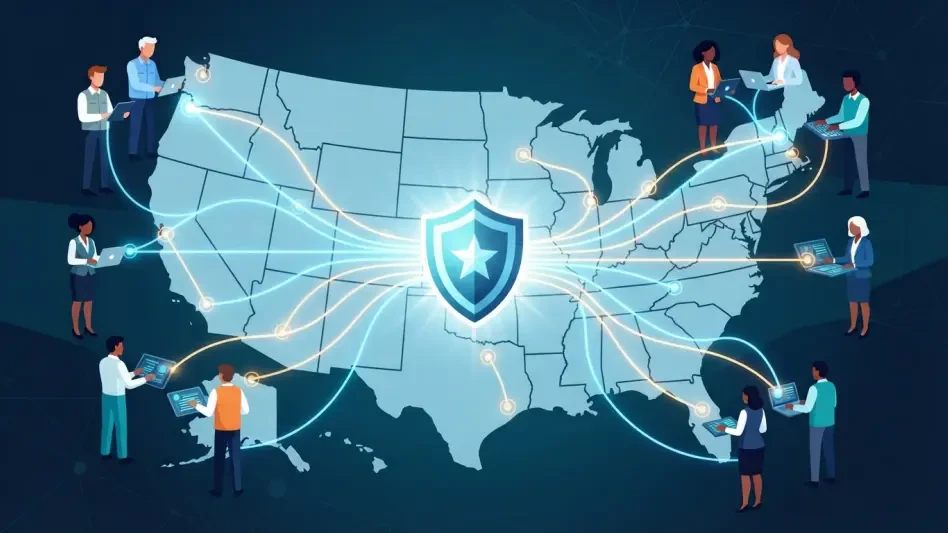
Central to the current administration’s cybersecurity philosophy is the comprehensive rehabilitation of the Cybersecurity and Infrastructure Security Agency. After enduring a period of significant personnel turnover and budget uncertainty, the agency is being repositioned as the nation’s primary “cyber shield.” The Democratic majority has committed to a multi-year funding strategy designed to return the agency to its full operational capacity and beyond. This expansion is not merely about headcount; it is about recruiting high-tier talent capable of managing the Joint Cyber Defense Collaborative and the Cyber Safety Review Board. These bodies are essential for translating raw threat data into actionable defense strategies for the private sector. By enhancing CISA’s ability to coordinate across various economic sectors, the government aims to move away from a reactive model and toward a proactive defense that anticipates attacker movements rather than just responding to them.
Building on this foundation of agency growth, leadership is focused on operationalizing the Anchor-CI initiative to better support stakeholders who manage the nation’s bulk power and transit systems. The objective is to provide a level of technical scale and velocity that individual private entities cannot achieve on their own. Oversight power is being utilized to ensure that the Critical Infrastructure Partnership Advisory Council framework remains responsive to the needs of these industry partners. Furthermore, the push for increased federal involvement includes a renewed focus on the security of municipal networks, which often lack the budget for sophisticated defense tools. By centralizing certain security services within CISA, the federal government can offer security-as-a-service to smaller jurisdictions, effectively raising the floor of the nation’s overall digital resilience. This collaborative approach recognizes that the security of the nation is only as strong as its weakest local link.
Technological Guardrails: Artificial Intelligence and Quantum Readiness
The rapid emergence of frontier artificial intelligence models has catalyzed a fresh debate over the implementation of regulatory guardrails for advanced technology. These models, which possess the capability to identify systemic software vulnerabilities at scale, present both a significant risk and a powerful defensive opportunity. The current legislative consensus suggests that while innovation must continue, it cannot occur in a vacuum without safety protocols. Lawmakers are working to define specific standards for dual-use AI technologies that could be repurposed for malicious cyber operations. The goal is to leverage AI to help human defenders keep pace with attackers who are already utilizing automated tools for exploit generation and credential harvesting. By establishing a clear legal framework for AI safety, the government hopes to foster a secure environment where technology serves as a force multiplier for national security rather than a liability.
In addition to artificial intelligence, the modernization of federal information technology systems has emerged as a critical priority for the Democratic majority. This includes a massive push for the adoption of post-quantum cryptography, a necessity as traditional encryption standards face potential obsolescence due to advances in quantum computing. The transition to these new cryptographic standards is a complex undertaking that requires significant federal investment and cross-agency coordination. Industry groups have noted that once the foundational laws for information sharing are solidified, the focus must shift toward these future-leaning technological shifts. The strategy involves not only updating hardware and software but also training a workforce that is proficient in managing these next-generation security systems. By prioritizing post-quantum readiness now, the United States aims to secure its sensitive data against decryption efforts by foreign adversaries.
Strategic Implementation: Privacy Rights and Future Actions
To move forward effectively, the Democratic-led Congress established a clear roadmap focused on long-term systemic health rather than temporary fixes. The first step involved the stabilization of the cyber workforce through competitive federal salaries and streamlined hiring processes to close the technical talent gap. Following this, the implementation of the AI Bill of Materials provided a necessary foundation for supply chain security that other nations began to emulate. Policymakers ultimately decided that a decentralized approach to cybersecurity was no longer viable, leading to the creation of more robust federal standards for critical infrastructure operators. By the end of this legislative cycle, the focus shifted toward international cooperation, as officials recognized that digital defense required a unified front with global allies. These actions collectively worked to ensure that the nation remained resilient in the face of increasingly automated and sophisticated digital challenges.
Furthermore, the reconciliation of surveillance powers under Section 702 became a cornerstone of the new legislative agenda. Lawmakers successfully introduced tiered oversight mechanisms that balanced the needs of the intelligence community with the constitutional rights of citizens. This effort included the adoption of mandatory audit trails for database queries involving domestic identifiers, which significantly reduced the risk of unauthorized access. By integrating these privacy-centric reforms into the reauthorization process, the government maintained its ability to track foreign threats while restoring public trust in federal surveillance programs. Looking ahead, the focus moved toward establishing a permanent federal cyber insurance backstop to stabilize the private insurance market against catastrophic digital events. These initiatives transformed the national security landscape, replacing fragmented policies with a unified strategy that prioritized transparency, modernization, and the protection of civil liberties.