
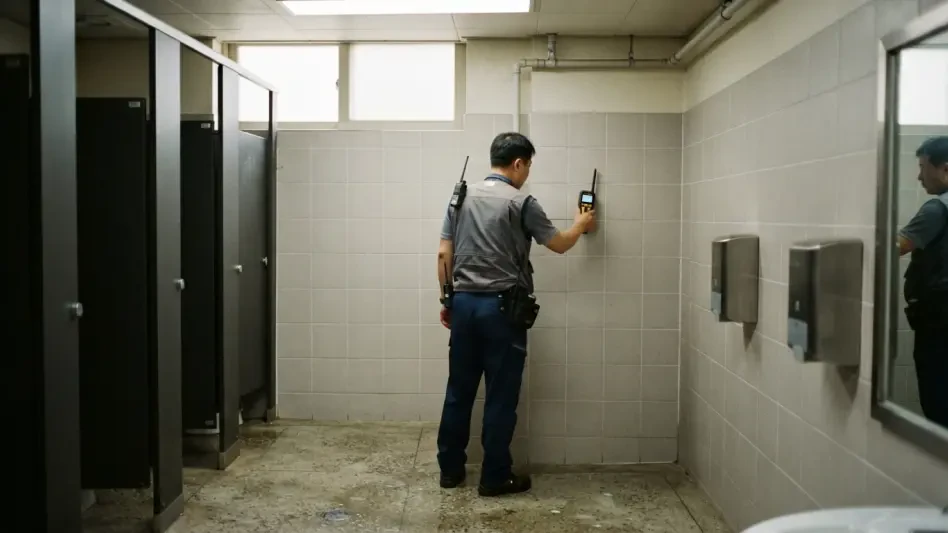
South Korea stands as a global leader in high-speed connectivity and hardware innovation, yet this technological prowess has created a pervasive environment where miniature disguised cameras can easily infiltrate the most private spaces of daily life. The term “molka” has become synonymous with a persistent social crisis that lawmakers have struggled to address through meaningful legislation for over a decade. Since the mid-2010s, numerous bills aimed at requiring the registration of purchasers and sellers of these devices have been introduced in the National Assembly, only to stall repeatedly during the committee phase. This regulatory stagnation exists despite overwhelming public support for stricter oversight and the increasing sophistication of devices that look like ordinary pens or wall clocks. The failure to establish a comprehensive tracking system for specialized recording equipment has allowed a lucrative black market to flourish, leaving citizens vulnerable to digital sex crimes that often result in lifelong trauma for victims.
Socioeconomic Barriers to Effective Regulation
The debate over hidden camera regulation is frequently framed as a conflict between individual privacy and the collective need for public safety, particularly regarding the protection of women from nonconsensual filming. Advocacy groups like WomenLink have long pointed out that the legislative apathy surrounding these crimes stems from a fundamental lack of urgency among high-ranking officials who are rarely the targets of such invasive surveillance. This disconnection has led to a legal framework that focuses almost exclusively on the distribution of illegal footage rather than controlling the accessibility of the hardware itself. Without a mandatory registration system similar to those used for firearms or certain high-risk chemicals, the origin of a disguised camera remains nearly impossible to trace once it is discovered. Consequently, the burden of vigilance falls on the public, who must resort to using handheld detectors in public restrooms, highlighting the government’s inability to provide a secure environment.
Opponents of strict camera regulation often cite the potential for market stifling and the infringement on personal liberties as primary reasons for blocking legislative progress. Critics argue that requiring a license or formal registration for every small recording device could hinder the development of legitimate technology sectors, such as wearable cameras for security or industrial inspection tools. Furthermore, there is a persistent concern that government-mandated tracking of consumer electronics could set a dangerous precedent for state surveillance, potentially compromising the very privacy laws the regulations intend to uphold. This ideological divide has created persistent gridlock in the National Assembly, where economic interests often outweigh the immediate social costs of digital abuse. In the absence of a unified political will, the market for miniature electronics continues to operate with minimal oversight, allowing both legitimate consumers and bad actors to obtain high-definition tools with complete anonymity.
Academic Integrity and Proactive Solutions
The conversation regarding hidden cameras has expanded beyond the realm of privacy to include significant threats to academic integrity, particularly after high-profile cheating scandals involving generative artificial intelligence. Recently, a candidate for a national professional qualification exam used a buttonhole camera to transmit test questions to an external AI system, receiving real-time answers through a microscopic earpiece. This incident forced the Ministry of Education to implement emergency measures for high-stakes exams, including the deployment of advanced electronic scanners and specialized proctor training. The integration of AI with disguised cameras represents a new frontier of technological misuse that traditional security measures are ill-equipped to handle. As these devices become smaller and more integrated into everyday attire, the risk of widespread academic fraud threatens the perceived fairness of the national education system, prompting calls for more aggressive device-level regulation.
Addressing the challenge of hidden cameras requires a multifaceted strategy that moves beyond reactive punishment toward a comprehensive system of preventative oversight and social education. Legislative bodies need to prioritize the implementation of a national registry for specialized miniature cameras, ensuring that every device can be traced back to its original purchaser to deter illegal use. This proactive approach should be coupled with mandatory safety features at the manufacturing level, such as audible shutter sounds or visible indicators when a device is actively recording. Furthermore, the government is tasked with launching extensive public awareness campaigns to shift societal mindsets regarding the severity of digital crimes, treating them as life-altering violations rather than minor infractions. By fostering cooperation between technology developers and law enforcement agencies, South Korea has the opportunity to set a global standard for digital ethics and ensure that technological advancements serve the common good.