The current digital landscape has evolved into a state of permanent gray-zone conflict where the security of local utilities is now a matter of national survival. The landscape of national security has moved beyond physical borders, entering a digital realm where traditional boundaries no longer apply. Recent incidents and academic research indicate that cyberwarfare against the United States is undergoing a fundamental transformation. While previous decades were defined by the quiet theft of state secrets, the current era is marked by a more ominous objective: the strategic pre-positioning of digital assets for future sabotage. This shift moves the primary threat from the loss of information to the potential disruption of the critical infrastructure that sustains daily American life. As state-linked actors from nations such as China, Iran, Russia, and North Korea increase their activity, the focus has pivoted toward “operational preparation of the environment.” This involves embedding malicious code within utility grids, telecommunications networks, and water systems. These infiltrations are not intended for immediate destruction but serve as a dormant weapon to be activated during geopolitical crises. By establishing a persistent presence in domestic infrastructure, adversaries gain the ability to create chaos and hinder military mobilization without ever firing a traditional shot.
Identifying Key State Actors: The Rise of Persistent Threats
The surge in nation-state cyber activity is well-documented by intelligence agencies and private security firms, with China emerging as the most persistent threat. Data indicates a significant rise in intrusions targeting logistics and infrastructure, signaling a move toward controlling the flow of goods and services. For instance, recent telemetry from security platforms shows that Chinese-linked groups have increased their focus on maritime and rail logistics by over 30 percent since the start of 2026. This trend suggests a strategic desire to influence supply chains during periods of heightened tension. Meanwhile, North Korea continues to utilize cyber operations as a vital revenue stream, stealing billions in cryptocurrency to fund its weapons programs. This combination of strategic positioning and financial desperation creates a volatile environment for digital defenses. The diversification of these targets suggests that no sector is truly exempt from the ambitions of state-sponsored actors looking to gain a foothold in the American economic engine.
Microsoft’s recent intelligence reports highlight that the United States remains the primary target for global nation-state activity. Nearly a quarter of all recorded state-backed attacks are directed at American interests, far exceeding the attention given to any other single country. This concentrated effort demonstrates that adversaries view the U.S. domestic sphere as a critical front. The momentum of these attacks suggests that the digital space is no longer a secondary concern but a primary theater of modern international conflict. Furthermore, the sophistication of these campaigns has grown, with actors now utilizing stolen credentials to bypass traditional perimeter defenses. This strategy, often referred to as “living off the land,” allows attackers to blend in with legitimate network traffic, making detection significantly more difficult for even the most advanced security operations centers. The persistent nature of these threats requires a paradigm shift in how organizations perceive their daily network operations.
Analyzing Digital Models: Salt Typhoon and Volt Typhoon Models
The Salt Typhoon model represents a sophisticated evolution of traditional espionage, where Chinese hackers compromise telecommunications networks to access lawful intercept systems. These are the same tools used by law enforcement for wiretapping, meaning foreign actors can now monitor domestic communications and gain insight into federal investigative processes. This level of access provides a dual benefit to the adversary: it gathers high-level intelligence while simultaneously identifying how the nation monitors its own internal threats. By infiltrating the very infrastructure designed for legal oversight, these actors have effectively turned a tool of national security into a vulnerability of immense proportions. This type of deep-network intrusion is not about immediate damage but about gaining a long-term, unhindered view into the private communications of government officials and citizens alike, creating a strategic imbalance that is difficult to rectify without complete hardware overhauls.
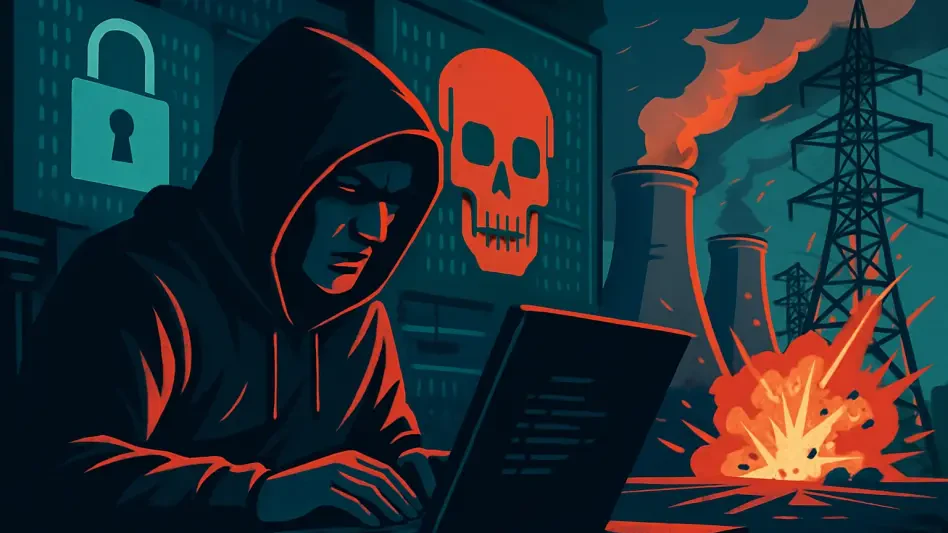
In contrast, the Volt Typhoon campaign focuses almost entirely on pre-positioning for future conflict rather than immediate data theft. These actors use specialized techniques to hide their tracks, utilizing the victim’s own administrative tools to avoid triggering malware alerts. By remaining silent for years within energy and water sectors, these groups maintain the ability to switch off essential services at a moment’s notice. This strategy is designed to sow domestic discord and cripple the ability to respond to kinetic military threats in other parts of the world. The psychological impact of such a capability is profound, as it demonstrates that the basic necessities of modern life are held at the whim of a foreign power. Unlike traditional malware that can be quarantined and deleted, the presence of these actors is woven into the administrative fabric of the network, requiring a meticulous and often manual purging process that can take months to complete.
Examining Direct Sabotage: Vulnerabilities in Public Utilities
A chilling shift toward overt disruption occurred recently when Iranian-affiliated groups began targeting industrial controllers within American water systems. These attacks hit facilities across multiple states, focusing on human-machine interfaces that allow technicians to monitor safety. By tampering with these controls, hackers can effectively blind operators and disable emergency shutdowns. Unlike espionage, these actions have no intelligence value; their only purpose is to demonstrate the vulnerability of life-sustaining resources and prove that the interior is reachable. In several cases, the attackers displayed political messages on the control screens, signaling that the breach was intentional and politically motivated. This transition from quiet infiltration to loud disruption marks a new phase in cyber conflict, where the primary goal is to project power and create a sense of helplessness among the civilian population.
The vulnerability of these systems often stems from the decentralized nature of infrastructure across the country. With over 150,000 water systems managed by various local municipalities, many lack the budget or expertise for robust cybersecurity. In many cases, successful sabotage was made possible by simple oversight, such as failing to change default passwords or leaving critical controls exposed to the public internet. This fragmentation makes the task of securing the nation’s utilities a massive logistical and financial challenge for local and federal governments alike. While large metropolitan areas might have dedicated cybersecurity teams, small rural towns often rely on a single IT generalist who must manage everything from email servers to industrial pump controllers. This disparity creates a patchwork of security where the weakest link can be exploited to cause localized but significant harm, highlighting the need for a more unified national standard for utility protection.
Assessing the Human Toll: Healthcare and Artificial Intelligence
The impact of cyberwarfare extends beyond technical glitches and economic loss; it has a direct and measurable effect on human mortality. Research into ransomware attacks on hospitals has revealed that in-hospital mortality rates for Medicare patients rise significantly during and after a digital breach. When healthcare systems are paralyzed, patient records become inaccessible, and life-saving treatments are delayed. This reality reframes cyberattacks as a legitimate threat to public health rather than just a white-collar or financial crime. As digital systems become more integrated into medical care, the window of failure becomes increasingly lethal. A hospital that cannot access its digital infrastructure is a hospital that cannot safely function, turning a line of code into a weapon. This human element underscores the urgency of protecting soft targets that may not have obvious military value but are essential for the survival of the civilian population.
Artificial Intelligence is currently acting as a force multiplier for state-backed hacking groups, allowing them to automate complex tasks that once required significant human effort. AI tools can perform the majority of manual labor in spying campaigns, drastically reducing the time needed to identify vulnerabilities and execute intrusions. While AI still faces issues with data accuracy, its ability to accelerate the pace of attacks has led to a nearly twofold jump in activity from groups utilizing these advanced technologies. The integration of AI also lowers the barrier of entry for sophisticated cyber operations, enabling adversaries to launch broader, more frequent campaigns with fewer resources. This technological shift means that defenders can no longer rely on manual monitoring alone. To counter AI-driven threats, the U.S. must adopt its own automated defense systems that can detect and neutralize intrusions at a speed that matches the offensive capabilities of modern state actors.
Strengthening National Resilience: Basic Hygiene and Strategic Perspectives
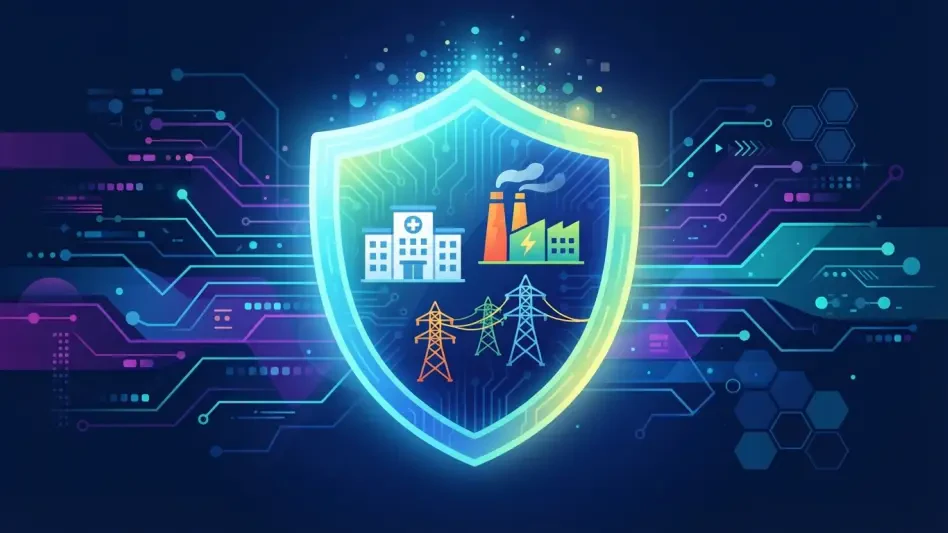
The primary weakness of the digital landscape is the exposure of critical industrial controls to the open internet. Many utility providers do not implement basic security protocols, leaving the door open for even low-level hacking groups to cause significant damage. The solution for many of these infrastructure targets is relatively straightforward: disconnecting critical controls from the public web. However, the sheer scale of the nation’s decentralized utility network makes implementing these simple fixes a complex nationwide endeavor. Despite the sophistication of nation-state actors, basic security hygiene remains the most effective defense against the majority of attacks. Utilizing multifactor authentication, particularly phishing-resistant versions like hardware keys, can block over 99 percent of identity-based intrusions. Strengthening the security of individual accounts and small-scale utilities is now considered a vital component of the broader national defense strategy.
Some researchers caution against hyper-securitization, arguing that the actual military impact of cyberwarfare may be overstated. Studies comparing cyber incidents to kinetic violence in active war zones suggest that low-level hacking rarely changes battlefield outcomes or leads to significant territorial gains. From this perspective, cyberwarfare is viewed as an effective tool for harassment, economic theft, and domestic disruption, but it is not yet a replacement for traditional military power. Its primary effect may be psychological rather than physical. This counter-perspective suggests that while the “cyber-Pearl Harbor” narrative is a powerful motivator for policy, the reality is more likely to be a persistent “death by a thousand cuts.” The goal of adversaries may not be to win a war through digital means alone, but to weaken the social fabric and economic stability over time. Understanding this nuance allows for a more balanced approach to defense, focusing on resilience and recovery.
Charting the Future Response: Actionable Steps for Security
The transition from espionage to sabotage was driven by the realization that digital disruption is a cost-effective way to project power without triggering a full-scale kinetic war. In a globalized economy, traditional warfare is incredibly expensive and risky; however, cyber operations allow nations to strike at the heart of an adversary’s domestic stability with relative anonymity. This gray-zone conflict provides a way for smaller or less conventionally powerful nations to challenge the United States on a more level playing field. Furthermore, as society becomes more dependent on interconnected technology, the number of potential targets grows exponentially. Every smart device, connected utility, and digital record represents a potential entry point for an adversary. This increased attack surface made the shift toward sabotage inevitable, as the opportunities to cause disruption were integrated into the very fabric of modern life. The motivation shifted because the vulnerability moved from the secret files of the government to the daily lives of every citizen.
The analysis demonstrated that most organizations protected themselves effectively by focusing on proven security frameworks. The transition from simple passwords to robust, multi-layered authentication proved to be the single most important step any entity took during this period of transition. Additionally, segmenting networks so that an intrusion in one area did not lead to a total system failure prevented minor breaches from becoming catastrophic events. For critical infrastructure, the focus remained on air-gapping essential controls and ensuring that manual overrides were always available to human operators. The federal government shifted toward providing more resources and advisories to help small municipalities and the private sector secure their systems. Cooperation between the public and private sectors was essential, as the defense of the nation relied on the security of mundane systems like local water pumps and regional energy grids. By prioritizing security over convenience and maintaining a state of digital literacy, a resilient national infrastructure was maintained against the new era of cyber sabotage.