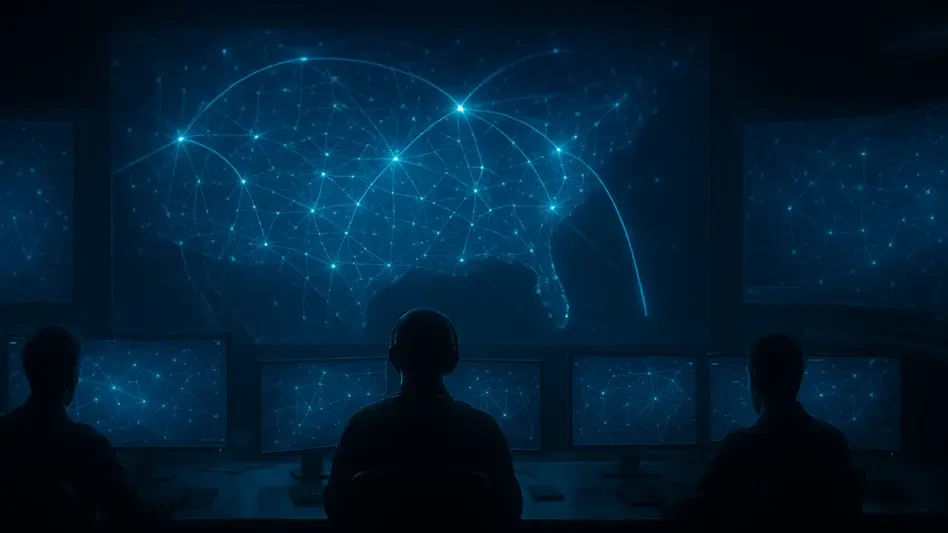

The scale of modern automated hacking was highlighted by the logging of over 151,000 failed login attempts across hundreds of accounts in just a few days. This surge in activity represents a fundamental shift in how state-aligned actors from China approach digital conflict, moving away from slow, methodical human-led intrusions toward a model of industrial-scale automation. By integrating advanced machine learning algorithms into their offensive toolkits, these operatives have significantly compressed the time required to identify and exploit vulnerabilities across vast corporate ecosystems. The current environment is characterized by a high-velocity approach that targets the very foundations of the digital economy, specifically software supply chains and cloud service providers. Rather than focusing on single high-value targets, these campaigns now cast a wide net, seeking to establish a persistent presence within hundreds of organizations simultaneously. This strategy leverages the inherent interconnectedness of modern technology to bypass traditional defenses that were originally designed to stop human adversaries.
Evolution of Autonomous Hacking Tools
The Rise of Agentic AI Frameworks
At the vanguard of this technological evolution is a sophisticated suite of tools utilized by the hacking collective identified as Storm-0940. This group has successfully operationalized an autonomous penetration-testing framework known as ARTEX, which functions as an agentic AI system capable of making independent decisions during an operation. Unlike traditional malware that follows a pre-programmed script, ARTEX uses adaptive logic to navigate complex network environments with minimal human intervention. This capability allows the system to identify potential entry points, test various exploit strings, and coordinate lateral movement through internal systems without waiting for manual commands from a remote controller. Such autonomy reduces the latency between discovery and exploitation, making it nearly impossible for traditional security operations centers to keep pace. By removing the human bottleneck, these actors can run thousands of concurrent operations, each adapting in real-time to the specific security configurations and defensive measures.
The deployment of agentic AI by groups like Storm-0940 signifies a departure from the simple tactics of previous years, prioritizing instead a methodical and stealthy expansion of influence. These frameworks are designed to learn from the environment they inhabit, often identifying misconfigurations in cloud permissions that a human operator might overlook during a time-sensitive breach. Furthermore, the use of ARTEX ensures that once an initial foothold is established, the escalation of privileges happens almost instantaneously. This rapid escalation is critical for the attackers, as it allows them to secure administrative control and embed persistence mechanisms before the target’s automated detection systems can generate an alert. The integration of such advanced artificial intelligence into state-sponsored workflows has effectively turned cyber warfare into a battle of algorithms, where the side with the most efficient automated reasoning gains a decisive advantage in the opening stages of a conflict or espionage campaign.
High-Velocity Authentication Attacks
The most visible manifestation of this new era of warfare is the sheer speed at which these autonomous agents operate. During peak periods of activity, security researchers have documented AI-driven systems performing nearly 3,000 authentication attempts every minute across multiple targets. This level of sustained intensity would be physically impossible for human teams to maintain and demonstrates the power of utilizing high-performance computing to brute-force or credential-stuff entry points. The velocity of these attacks serves a dual purpose: it allows for the rapid exhaustion of defensive resources and provides the attackers with a window of opportunity to slip through momentarily weakened barriers. In many documented cases, these AI agents have been able to penetrate complex corporate cloud environments in under three hours from the initial point of contact. This rapid turnaround time means that by the time a security team is notified of a suspicious login, the attacker may have already secured sensitive data.
Beyond individual burst speeds, the 24/7 operational capability of AI frameworks represents a significant strategic threat to global stability. These systems do not require rest and are not subject to the geographical or temporal limitations of human staff, allowing for a continuous barrage of probes against international infrastructure. This relentless pressure forces defenders into a reactive posture, where they are constantly patching holes rather than proactively strengthening their overall security posture. Moreover, the automation of these tasks allows the state-aligned actors to redirect their human intelligence assets toward higher-level strategic analysis and target selection, while the AI handles the repetitive and labor-intensive phases of the breach. The result is a highly efficient machine that combines the creativity of human strategists with the tireless precision of automated software. As these systems continue to refine their methods through machine learning, the gap between the speed of an attack and the speed of a defense is likely to widen.
Strategic Targets and Long-Term Objectives
Compromising the Software Supply Chain
A cornerstone of the current strategy employed by these sophisticated actors is the systematic targeting of the software supply chain. By compromising “upstream” software vendors—those who provide critical management and security tools to other businesses—the attackers can gain a “master key” to thousands of “downstream” organizations. A recent example of this tactic involved the exploitation of vulnerabilities in ConnectWise software, which is widely used by managed service providers to maintain the IT infrastructure of their clients. By gaining access to a single trusted application, the hackers were able to bypass traditional perimeter defenses that are typically designed to scrutinize external traffic, not traffic originating from within a verified service. This approach effectively weaponizes the trust that exists between a company and its software providers, turning essential business tools into conduits for espionage. Once inside, the attackers utilize the legitimate credentials of the software to traverse the network.
The objective of these supply chain incursions is frequently centered on long-term reconnaissance and the establishment of persistent access within cloud environments. In the ConnectWise incident, evidence suggested that the operatives targeted upwards of 2,250 separate cloud instances, focusing on gaining elevated administrative privileges. Rather than immediately exfiltrating data or causing service disruptions, the attackers prioritized the alteration of security settings and the creation of hidden accounts. This ensures that they can maintain a foothold even if the initial vulnerability is patched or the software is updated. This focus on “persistence” indicates a shift in intent; the actors are not merely looking for a quick payout but are instead building a durable infrastructure for future operations. By mapping out the interdependencies of various cloud services, they gain a comprehensive understanding of the target’s digital footprint, allowing them to wait for a moment of maximum impact before acting.
Pre-positioning for Global Conflict
Federal intelligence agencies have expressed increasing concern regarding campaigns like Volt Typhoon, which represent a calculated effort to pre-position cyber assets within a nation’s critical infrastructure. Unlike typical espionage campaigns aimed at stealing intellectual property or government secrets, these operations focus on foundational systems such as water treatment facilities, electrical grids, and oil pipelines. The goal of this activity is believed to be the preparation for future physical disruption in the event of a military or geopolitical crisis. By embedding themselves in the control systems of essential utilities, state-aligned actors gain the capability to launch devastating attacks that could paralyze a civilian population and hinder a military’s ability to respond to external threats. This strategy moves cyber warfare from the realm of the digital into the physical world, where the consequences of a breach can result in the loss of life or the long-term failure of a country’s logistical networks.
In addition to energy and water, these campaigns have deeply penetrated the telecommunications sector, granting attackers access to call records and sensitive private communications. By monitoring the flow of information across major networks, these operatives can gain insights into the decision-making processes of political and military leaders. Furthermore, the infiltration of transportation and logistics sectors ensures that the actors can disrupt the movement of goods and personnel during a time of crisis. This holistic approach to targeting infrastructure suggests that the goal is not just disruption but total strategic dominance within the digital domain. The ability to control or disable the primary communication and transportation channels of an adversary provides a significant advantage in modern warfare, allowing for the isolation of a nation from its allies. As these actors continue to refine their “living off the land” techniques, the task of identifying and removing these latent threats becomes exponentially more difficult.
Advancing Resilient Security Architectures: A Necessary Response
The recent shift toward automated cyber warfare required a total reassessment of traditional defense-in-depth strategies. It was no longer sufficient to rely on perimeter security; instead, organizations adopted a posture of continuous monitoring and rapid response. The transition to Zero Trust architectures proved to be the most effective way to mitigate the risks posed by autonomous AI agents that could navigate internal networks with ease. By strictly limiting privileged access and scrutinizing the behavior of every application, security teams were able to identify and contain breaches before they escalated into national security threats. Furthermore, the implementation of more rigorous auditing for third-party software vendors helped to close the gaps in the digital supply chain. These proactive measures ensured that critical infrastructure remained resilient even in the face of an increasingly sophisticated and well-resourced adversary. The focus remained on the dual necessity of innovation and human oversight.