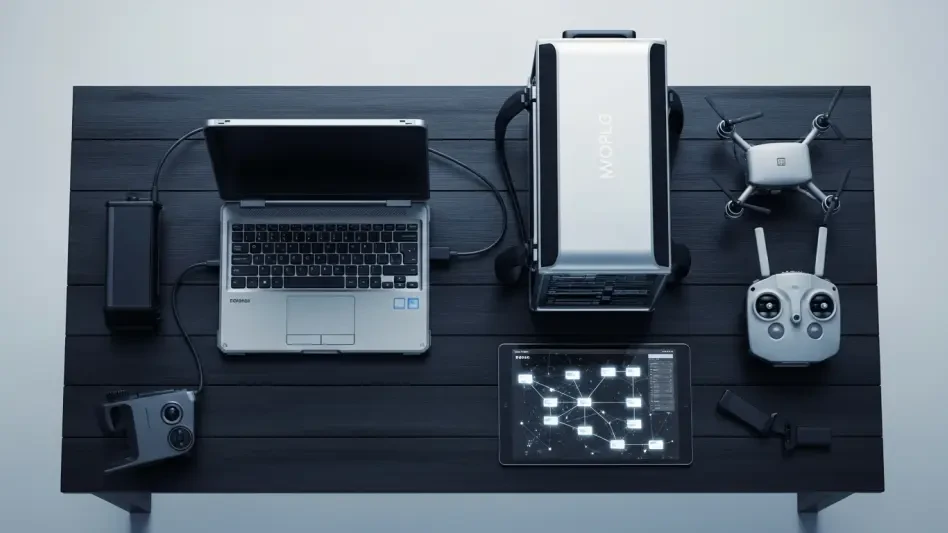
The modern battlefield has undergone a fundamental transformation where digital networks are now as critical as physical terrain, yet training for these environments often remains tethered to stationary facilities and outdated logistical frameworks. The Massachusetts Air National Guard has addressed this challenge by introducing the Agile Cyber Training Environment, a revolutionary portable system that condenses a high-fidelity cyber range into a single backpack. Developed by Senior Master Sgt. Taylor Gow, this innovation was specifically designed to bypass the financial and administrative hurdles that typically prevent smaller units from accessing top-tier training resources. By decentralizing these capabilities, the Guard ensures that service members are no longer dependent on large-scale infrastructure or persistent enterprise connections to maintain their technical proficiency. This shift represents a significant move toward localized readiness, allowing Airmen to simulate complex digital engagements from any location, whether in a standard office or a remote field environment. The platform provides a versatile solution that addresses the immediate need for rapid skill development without the usual delays associated with facility scheduling.
Tactical Mobility in Digital Warfare Training
Breaking the Dependency on Fixed Facilities
Traditional cyber training often requires specialized rooms equipped with high-powered servers and cooling systems, creating a significant bottleneck for units that need frequent hands-on practice. The Agile Cyber Training Environment disrupts this model by utilizing high-performance mobile computing hardware that delivers the same level of simulation complexity within a much smaller footprint. This portability allows commanders to integrate cyber exercises into their standard drill periods without needing to transport personnel to distant regional training sites. Furthermore, the system operates independently of the standard military network, which eliminates the lengthy approval processes usually required for connecting new training tools to secure government lines. This autonomy is vital for staying ahead of adversaries who operate without such bureaucratic constraints. By removing these physical and administrative barriers, the tool provides a persistent training capability that can be deployed at a moment’s notice, ensuring that defensive teams are always prepared for the next evolution in digital warfare.
The logistical advantages of a backpack-sized system extend beyond mere convenience to include substantial long-term financial savings for the Air National Guard. Centralized cyber ranges often involve high maintenance costs and recurring fees for software licenses and facility upkeep, which can strain the budgets of individual wings. In contrast, this portable solution offers a cost-effective alternative that can be easily updated and shared among different squads or units. It facilitates immediate skill development in both defensive and offensive cyber tactics, allowing personnel to experiment with new techniques in a safe, sandboxed environment. This localized approach to training encourages a culture of continuous learning and experimentation, which is essential for maintaining a competitive edge. As the complexity of cyber threats increases throughout 2026, the ability to conduct frequent, low-cost simulations becomes a critical component of national defense. This shift ensures that every member of a cyber unit has the opportunity to master their craft through repeated practice rather than waiting for rare, large-scale exercise events.
Technical Convergence of Reconnaissance and Cyber Defense
One of the most innovative aspects of this new training tool is its integration of photogrammetry, a technology that allows for the creation of precise digital models from drone-captured aerial imagery. This fusion of physical reconnaissance and digital defense adds a layer of realism that was previously unattainable in portable systems. By processing visual data from unmanned aerial vehicles, the system can generate a digital twin of a specific physical location, allowing cyber operators to practice securing the networks associated with that site. This capability is particularly useful for preparing for missions in environments where the physical and digital infrastructures are tightly intertwined, such as power plants or communication hubs. The ability to map a real-world location into a virtual training environment allows for highly specific scenario planning that mirrors the actual conditions service members might face during a deployment. This level of technical sophistication ensures that the training is not just theoretical but grounded in the physical realities of the modern operating environment.
Beyond the imagery processing, the platform supports a wide range of virtual machines and network configurations, enabling users to simulate diverse IT environments. This flexibility allows instructors to tailor scenarios to match the specific software and hardware architectures of their targets or their own home networks. The integration of these various data streams ensures that the training environment remains dynamic and challenging, preventing the stagnation that often occurs with static, pre-packaged training modules. Because the system can be updated with the latest intelligence on adversary tactics, it serves as a live lab for developing countermeasures against emerging threats. This approach naturally leads to a more comprehensive understanding of the digital landscape, where the lines between hardware, software, and physical infrastructure are increasingly blurred. By providing a platform that can evolve alongside the threat environment, the Air National Guard is empowering its personnel to be proactive rather than reactive in their defense of critical networks and national interests.
Strengthening National and International Cybersecurity Ties
Collaborative Impact and the Spark Tank Success
The development of the Agile Cyber Training Environment gained significant momentum through the U.S. Air Force’s Spark Tank initiative in 2026, which provides a platform for service members to pitch transformative ideas. This endorsement from high-ranking leadership validated the project’s potential and provided the necessary support to move from a local prototype to a broader military asset. The success of the project in this competitive environment highlighted the importance of bottom-up innovation, where those closest to the mission identify and solve the problems they face daily. Since its recognition, the tool has been utilized in various joint exercises involving the Army and local law enforcement agencies, demonstrating its versatility across different branches and jurisdictions. These collaborations have allowed for the sharing of best practices and the development of a unified response strategy for multi-agency cyber incidents. This inter-agency cooperation is essential for a holistic defense posture, as cyber threats rarely respect organizational boundaries and often require a coordinated response.
The impact of this tool also reaches the state level through its use by the Massachusetts Cyber Incident Response Team, where it serves as a training ground for responding to domestic digital emergencies. By providing a common platform for state and federal actors, the system facilitates a more seamless integration of efforts during high-stress events. This cooperative model ensures that all parties are familiar with the same tools and procedures, reducing the likelihood of communication failures during a real-world crisis. The platform’s ability to host multiple users in a shared virtual space allows for team-based training that emphasizes communication and leadership alongside technical skills. This social aspect of cyber defense is often overlooked but is just as critical as the underlying code. Through these joint exercises, the Massachusetts National Guard has established itself as a leader in collaborative cyber defense, utilizing the portable range to build stronger relationships with its partners. This focus on community-wide readiness ensures that the entire digital ecosystem is more resilient against the sophisticated attacks launched by non-state actors and foreign adversaries.
Strategic Pathways for Global Cyber Preparedness
The strategic utility of the portable cyber range was further demonstrated through its application in international partnerships, including joint military exercises in Israel and Paraguay. These engagements allowed the Air National Guard to share its technological advancements with global allies, fostering a more robust international cybersecurity coalition. The exportable nature of the backpack-sized system makes it an ideal tool for building capacity in partner nations that may lack the resources for a permanent cyber training facility. By providing these allies with the means to conduct high-level training, the United States strengthens its global security network and creates a more unified front against shared digital threats. These international exercises also provided valuable feedback for the system’s developers, allowing them to refine the hardware and software based on the unique challenges faced in different parts of the world. This global perspective is crucial for understanding the diverse tactics used by international threat actors and for developing a comprehensive defense strategy.
The military leadership established that the future of cyber readiness depended on the widespread adoption of such agile and scalable technologies. Decision makers prioritized the integration of these portable units into the standard equipment kits for all cyber squadrons to ensure that local autonomy was maintained. The project proved that the most effective solutions often came from the field, leading to a renewed emphasis on supporting internal innovation pipelines. Moving forward, the goal was set to expand the system’s library of scenarios to include more complex threats involving artificial intelligence and automated attack vectors. Units were encouraged to utilize the platform for weekly training sessions, ensuring that technical skills remained sharp between major exercises. By institutionalizing this localized training model, the Air National Guard secured a path toward a more flexible and responsive force. The lessons learned from the deployment of this tool provided a blueprint for other branches of the military to follow in their pursuit of modernized, mission-ready cyber education.