While millions of Americans spent the morning logging into Slack and attending virtual stand-ups, a quiet revolution in espionage was unfolding right under the noses of Fortune 500 HR departments and federal security clearances. The recent sentencing of New Jersey residents Kejia Wang and Zhenxing Wang has finally exposed the inner workings of a multi-year operation that allowed foreign operatives to occupy digital desks at over 100 U.S. companies. Far from the cinematic tropes of trench coats and dead drops, these agents utilized the mundane infrastructure of the remote-work economy to embed themselves into the American industrial fabric. By weaponizing high-speed internet connections and forged resumes, North Korean agents bypassed traditional vetting processes in 27 states, proving that the digital office is the new frontline for international conflict.
A Multi-Million Dollar Facade Within the American Workforce
The legal resolution of the case involving the Wangs has peeled back layers of a staggering breach that allowed foreign operatives to sit undetected in the digital offices of major corporations. This operation was not fueled by physical break-ins but by the strategic exploitation of the modern remote economy. Using stolen identities and domestic shell companies, these operatives secured roles ranging from junior software developers to specialized defense contractors. The scale of the infiltration suggests a systemic vulnerability in how Western corporations verify the physical reality of their remote employees.
This scheme demonstrates that a convincing digital presence is now one of the most potent weapons in the arsenal of a rogue state. By appearing as local, qualified professionals, these agents were able to earn salaries that most domestic workers would consider standard, yet these funds served a far darker purpose. The ability to place over a hundred workers into sensitive roles across the country indicates that the traditional borders of corporate security have effectively dissolved in the face of sophisticated remote-identity fraud.
The Strategic Shift: From Revenue Generation to Espionage
While the North Korean regime has historically used its overseas IT workforce primarily as a financial lifeline to bypass international sanctions, this specific infiltration marks a dangerous tactical evolution. By funneling over $5 million back to the regime, these operatives provided a steady stream of capital for prohibited programs. However, the true cost to the United States transcends the immediate loss of payroll funds. This operation represents a convergence of financial crime and national security threats, where workers appearing to write commercial code are simultaneously acting as state-backed intelligence assets.
The vulnerability of the U.S. labor market has become a primary target for regimes looking to embed themselves directly into American military and industrial infrastructure. As the distinction between commercial software and sensitive government systems blurs, an “insider” with a clean background check becomes the ultimate prize. These operatives were not just earning a living; they were building the foundations for persistent access to the most vital sectors of the American economy.
Mechanics of the Infiltration: Forgeries, Shells, and Laptop Farms
The success of this operation relied on a sophisticated logistical network designed to mask the operatives’ true locations and identities through physical deception. Facilitators established front companies, such as Hopana Tech and Independent Lab, to serve as an administrative buffer between the North Korean agents and their unwitting American employers. These entities provided a veneer of corporate legitimacy, making the hiring process appear like a standard business-to-business contract.
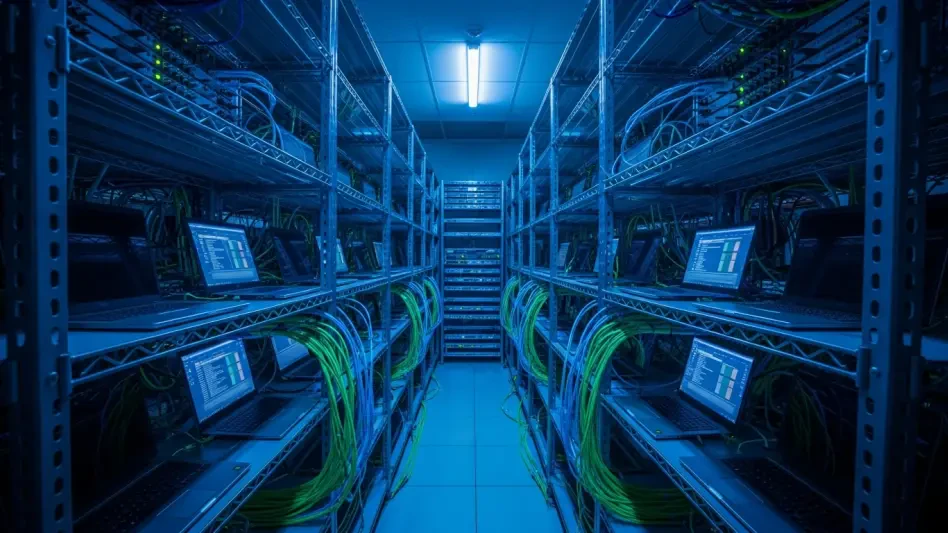
To maintain the illusion of domestic residency, the facilitators managed “laptop farms” in New Jersey and other locations. These farms hosted the hardware used by the operatives, allowing agents located halfway across the globe to remote into computers physically situated within the United States. This ingenious setup bypassed geofencing and IP tracking measures used by corporate IT departments, making the connection appear as if it were coming from a local suburban home rather than a foreign intelligence hub.
National Security Breach: When IT Support Becomes a Direct Threat
The investigation revealed that the risks of these infiltrations extended far beyond payroll fraud, leading to the direct theft of sensitive government information. In one of the most alarming findings, an operative managed to exfiltrate military technology files from a California-based defense firm, directly violating the International Traffic in Arms Regulations. This confirms that once an agent is inside the network, the transition from “employee” to “spy” is instantaneous and often irreversible before the damage is done.
Experts now highlight a triple threat posed by these embedded workers: generating state revenue, stealing intellectual property, and establishing persistent backdoors for future disruptions. While initially focused on earning hard currency, these IT workers are increasingly leveraged to support broader state-sponsored hacking objectives. This transformation of the “insider threat” allows a hostile state to conduct sabotage or extortion from within the very companies they are paid to support.
Strengthening the Corporate Perimeter Against State-Sponsored Insiders
To prevent similar infiltrations, companies must overhaul their vetting processes to account for the sophisticated tradecraft used by foreign intelligence services. Moving beyond document-based verification is essential; organizations should implement live video interviews that include biometric checks and multi-factor authentication tied to physical hardware keys. Simply trusting a digital copy of a driver’s license is no longer a viable security posture in an era of high-quality forgeries and deepfake technology.
Furthermore, infrastructure auditing must become more granular to detect the fingerprints of a laptop farm. Corporations should monitor for anomalies in remote access patterns, such as the consistent use of remote desktop protocols from residential IP addresses that house multiple corporate machines. By conducting deeper due diligence on third-party staffing agencies and shell-like tech firms that lack a verifiable physical history, businesses can begin to close the loopholes that allowed this unprecedented breach to occur. The focus shifted toward proactive defense and the realization that every remote hire carries a potential geopolitical risk.