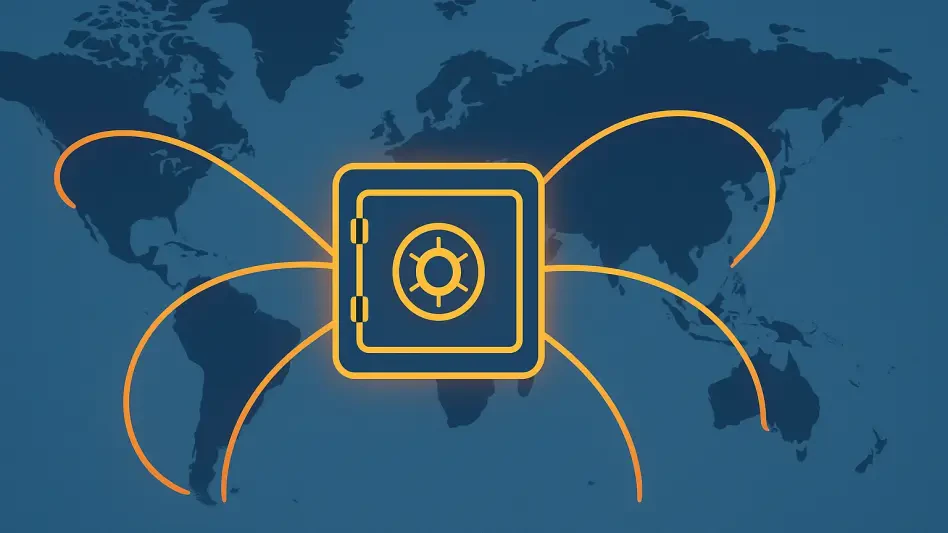
Digital borders have dissolved into a complex web of privately owned fibers and cloud servers that no longer respect the traditional sovereignty of a centralized government defense. Modern national security no longer stops at physical borders; it extends into a digital landscape owned and operated by private entities. As industrialized cyber warfare becomes the norm, the traditional model of isolated government defense has become obsolete. This guide explores the urgent necessity of public-private synergy, outlining the critical strategies required to secure digital infrastructure against sophisticated multi-vector threats. By integrating government oversight with private-sector innovation, nations can move from reactive postures to a unified, proactive defense.
Navigating the Shift toward a Shared Defense Paradigm
The transition to a collaborative defense model is not merely a preference but a survival requirement in a hyper-connected world. Following these best practices is essential because the attack surface now spans across cloud platforms, third-party APIs, and global supply chains that fall outside traditional government jurisdiction. Increased resilience comes from combining real-time private telemetry with state intelligence to create a comprehensive view of the threat landscape.
This shared approach allows for adversarial speed, enabling partners to neutralize AI-driven threats that move too fast for bureaucratic responses. Furthermore, joint disruption efforts target the financial and technical infrastructure of cybercriminals, significantly reducing the multi-billion dollar impact of global digital fraud. Shared defense initiatives ensure that defensive capabilities grow in tandem with the technologies that attackers exploit, creating a balanced ecosystem of security.
Best Practices for Public-Private Cybersecurity Collaboration
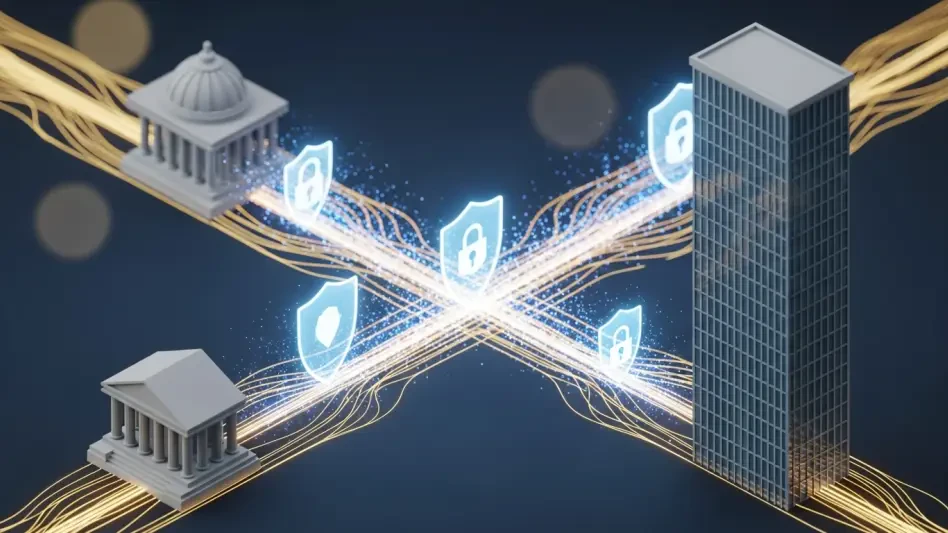
To move at the speed of modern attackers, governments must shift from being sole defenders to coordinators of a vast security ecosystem. This involves creating bi-directional information-sharing pipelines where private firms provide real-time data on infrastructure health while the government provides classified threat context. This integration ensures that a breach in one sector triggers an immediate, automated defense across the entire national network.
Implementing a Shared Defense Paradigm through Operational Integration
Operational integration requires a deep level of trust and technical interoperability that transcends old compliance checklists. Organizations that successfully bridge this gap utilize automated data feeds to sync private sector detection with federal watchlists. This synergy prevents the siloing of information, ensuring that early warning signs in the commercial sector inform national security protocols.
Moreover, true integration involves joint training exercises where government incident responders work side-by-side with private sector engineers. These drills simulate large-scale outages and data breaches, refining the communication protocols needed during a real-world crisis. By hardening these relationships during times of peace, the collective defense remains resilient when high-stakes intrusions occur.
Case Study: The Response to Multi-Vector Campaigns and Lateral Movement
Recent analysis shows that 87% of modern intrusions target multiple surfaces simultaneously, such as cloud identity and network endpoints. In a coordinated response scenario, a private cloud provider’s detection of a lateral pivot allowed government agencies to alert other critical infrastructure providers before the attacker could reach their final objective. This proactive communication effectively contained a breach that would have otherwise bypassed siloed defenses by jumping across disparate networks.
Such successes demonstrate that visibility into one corner of the internet can save thousands of downstream victims. When private telemetry identifies a new credential harvesting technique, the government can immediately update defensive signatures across the public sector. This creates a feedback loop where every thwarted attack strengthens the entire community.
Executing Joint Disruption of Criminal Infrastructure
Defending the perimeter is no longer sufficient; partners must work together to dismantle the tools and financial pathways that empower attackers. Joint disruption involves law enforcement and private hosting providers identifying and de-platforming the infrastructure used by ransomware groups and state-sponsored actors. By targeting the money laundering routes and command-and-control servers, the cost of an attack increases, making the business of cybercrime less viable.
Collaborative action also extends to the legal realm, where private firms provide the evidentiary logs necessary for governments to issue sanctions or indictments. This partnership forces adversaries to spend more time rebuilding their kits than executing strikes. When criminal infrastructure is dismantled at the root, the frequency of successful campaigns drops significantly.
Real-World Example: Neutralizing Third-Party Dependency Vulnerabilities
The compromise of a remote support tool used by the U.S. Treasury highlighted the danger of third-party backdoors. Through a joint disruption initiative, the government and the software manufacturer worked in tandem to identify the specific compromised code and issue a global patch within hours. This rapid response was only possible because a pre-existing channel for emergency technical collaboration was already in place.
They also collaborated to seize the attacker’s server infrastructure, preventing a localized breach from cascading into a systemic failure of the financial sector. This instance proved that the speed of the private sector, combined with the authority of the state, creates a formidable barrier against sophisticated supply chain threats.
Developing Secure-by-Design Artificial Intelligence Standards
With AI accelerating attack timelines by up to 100x, manual security controls have become inadequate for modern protection. Governments and tech leaders must unite to develop Secure-by-Design AI patterns that prioritize safety at the architectural level. This involves creating governed data paths and automated response protocols that can identify and block AI-driven exfiltration attempts within minutes.
This practice ensures that as organizations adopt AI to increase efficiency, they do not inadvertently create unmonitored gateways for hackers. Establishing these standards early in the development cycle allows security to be a feature rather than an afterthought. Furthermore, it creates a common language for risk that both regulators and developers can understand.
Case Study: Countering AI-Driven Data Exfiltration
In a pilot program for secure AI patterns, a consortium of tech companies and defense agencies deployed automated monitors that detected an AI-driven breach attempting to exfiltrate data within the first hour of access. Because the AI was built with a Secure-by-Design framework shared between the public and private sectors, the system automatically severed the connection.
The automated system then quarantined the affected identity management system without human intervention, stopping the leak before significant damage occurred. This case highlighted how automated, pre-coordinated defense protocols are the only viable way to counter machine-speed threats.
Final Evaluation: Building a Resilient Digital Future
The evidence was clear that the government could no longer win the cyber war in isolation. The most effective defense resided in a strategy where the state set accountability standards while the private sector provided the technological engine for enforcement. Organizations that managed critical data or infrastructure—particularly those in finance, healthcare, and energy—found the most benefit from this collaborative approach.
Decision-makers prioritized moving beyond compliance-based security to an active partnership model. Before adopting new technologies like AI or migrating to complex cloud environments, leaders evaluated how their security posture aligned with global threat intelligence networks. This evolution required a unified front that reflected the reality of a privately owned, digitally interdependent world. Success in this era demanded that stakeholders viewed cybersecurity as a collective responsibility rather than a sovereign task. Organizations that embraced this unity achieved a level of resilience that far surpassed the capabilities of those who attempted to defend their assets alone.