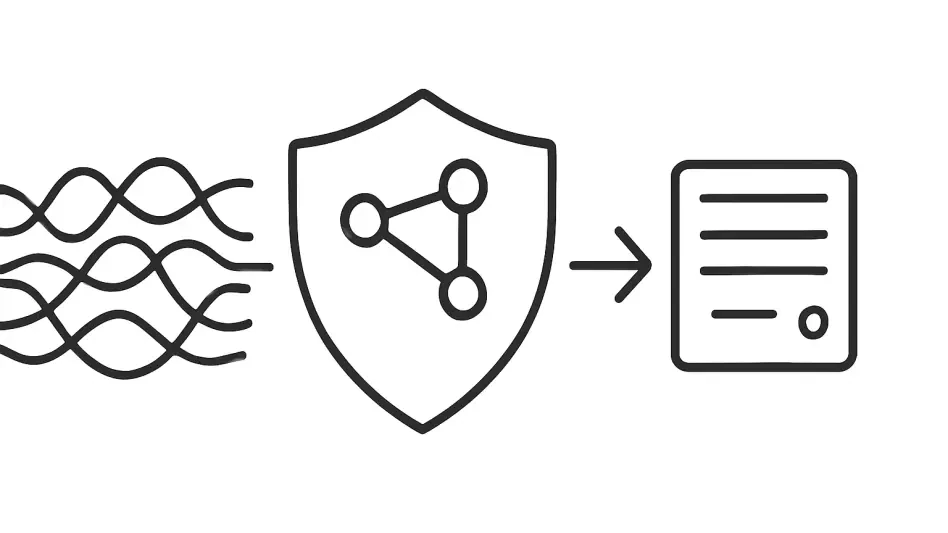
Container fleets with CPU bursting capabilities can scale fast enough to absorb launch-weekend demand while remaining protected by the Player Gateway architecture. This shift represents a fundamental evolution in how session-based multiplayer titles handle network-level threats, moving away from reactive scrubbing and toward a proactive, hidden-infrastructure model. As the industry navigates the high-concurrency landscape of late 2026, the sheer volume of application-layer floods has rendered traditional IP-based defense mechanisms insufficient for modern competitive gaming environments. Player Gateway functions as a sophisticated managed relay that decouples the game server’s network identity from the client’s connection attempt, effectively neutralizing the most common vector for targeted disruption. By funneling all traffic through an AWS-managed ingress point that validates player sessions in real-time, studios can maintain consistent performance even when their title becomes a target for massive volumetric attacks. The integration process requires a coordinated effort across infrastructure, backend services, and client-side networking logic to ensure that every connection is authenticated before it ever reaches the dedicated server process. This architecture not only preserves the availability of the game but also simplifies the operational burden on DevOps teams who no longer need to manage complex, third-party firewall appliances or custom UDP scrubbing solutions. Transitioning to this model is no longer just a security recommendation; it is a prerequisite for launching successful, high-visibility titles that demand 24/7 availability in an increasingly hostile digital environment. The strategic implementation of this technology ensures that the game server’s public-facing footprint is minimized, leaving potential attackers with no direct target for their malicious traffic.
1. Configure IAM Roles and the GameLift Service Identity
Establishing a robust security posture begins with the precise configuration of Identity and Access Management (IAM) roles that govern how Amazon GameLift interacts with other AWS services. A service-linked role must be created to grant GameLift the necessary permissions to manage EC2 instances or container groups on behalf of the developer. This role acts as the foundation for infrastructure automation, allowing the service to scale resources, monitor health, and handle the lifecycle of game server processes without manual intervention. However, in the context of Player Gateway, a standard service role is insufficient; the architecture requires a specialized trust relationship that allows the relay to act as an intermediary for player traffic. This involves defining a policy that specifically trusts the playergateway.gamelift.amazonaws.com principal, which is the entity responsible for validating player tokens and forwarding legitimate UDP packets to the backend fleet. Without this explicit trust, the relay remains unable to assume the necessary identity to interact with your specific fleet, resulting in failed handshakes even if all other network settings appear correct.
Furthermore, the trust policy should be narrowed using condition keys to prevent cross-account vulnerabilities or unauthorized access from other fleets. By using the aws:SourceArn or aws:SourceAccount conditions, engineers can ensure that only the specific relay instances associated with a designated GameLift fleet can assume the role. This level of granularity is essential in 2026, as studios often manage multiple environments across different AWS accounts for development, staging, and production. A well-structured policy documentation will specify exactly which fleet ARN is allowed to trigger the relay’s authentication logic, creating a secure perimeter that adheres to the principle of least privilege. Once this role is attached to the fleet configuration, the GameLift control plane gains the ability to provision the relay infrastructure automatically. This setup phase is critical because it moves the authentication burden from the game server itself to the AWS edge, ensuring that invalid connection attempts are dropped before they can consume any of the dedicated server’s CPU or memory resources.
2. Integrate Server SDK 5 into Your Game Binary
Updating the game server code to incorporate Server SDK 5 is a non-negotiable step for enabling the enhanced DDoS protection features provided by Player Gateway. Whether the project is built on the C++ and Unreal Engine stack (SDK 5.6.0) or the C# and Unity stack (SDK 5.5.1), the integration requires a departure from legacy session-activation patterns used in previous versions. The new SDK introduces refined initialization calls that are designed to communicate more effectively with the modern GameLift control plane. Specifically, the server process must implement the ProcessReady call with updated parameters that acknowledge the relay’s presence in the networking stack. This update ensures that when a server process signals it is ready to host a game, it is correctly registered within the protected infrastructure. Developers must also pay close attention to how they handle internal networking, as the server must bind to its local port without making assumptions about its external-facing IP address. This decoupling is what allows the relay to function as a shield, as the server only needs to know how to listen for traffic forwarded from the internal AWS network rather than directly from the public internet.
In addition to the basic initialization changes, the transition to Server SDK 5 necessitates a rethink of the session activation flow within the game’s lifecycle. When the onStartGameSession callback is triggered, the server must transition to an active state and prepare to receive the relayed UDP packets. In the late 2026 landscape, most high-performance titles are using the SDK’s ability to report granular health metrics and process-termination events, which help the GameLift service determine if a server instance is healthy or if it has been compromised by an attack. The SDK provides the hooks necessary to gracefully handle the intake of players who have already been pre-authorized by the Player Gateway. This means the server-side logic can focus entirely on gameplay mechanics and state synchronization, trusting that the noise of the open internet has been filtered out. For teams migrating older titles, this often involves refactoring the networking layer to remove any hardcoded dependencies on direct IP connectivity, a change that significantly improves the long-term maintainability and security of the codebase.
3. Provision the Fleet With Active DDoS Shielding
Provisioning a fleet with active DDoS shielding in late 2026 is an automated process, yet it requires careful verification to ensure that the protection is indeed operational for the specific deployment. When creating a new fleet—whether it utilizes the traditional EC2 model or the more flexible container-based architecture—the system default for Linux-based instances is to enable enhanced protection. This managed service sits in front of the fleet instances, providing a layer of defense that is physically co-located with the game server infrastructure to minimize latency. Engineers should use the AWS Command Line Interface (CLI) or the AWS Management Console to inspect the fleet attributes after the provisioning cycle is complete. A successful deployment will show a status of ACTIVE, but the definitive proof of Player Gateway integration is found in the connection metadata returned by the service. Instead of receiving a standard IPv4 address, the system will provide a relay endpoint, signaling that the fleet is behind the managed shield. This verification step is vital because it confirms that the traffic will be routed through the relay rather than exposing the underlying instances to the public web.
The choice of instance type and operating system remains a primary factor in the availability of these security features. As of the current progress in 2026, Player Gateway is optimized for Linux-based environments, which have become the industry standard for high-performance session-based hosting due to their efficiency and compatibility with modern container orchestration. While Windows fleets are still supported for legacy applications, they do not currently benefit from the same level of integrated relay protection. Studios must therefore prioritize Linux deployments to take advantage of the automated shielding. Furthermore, when provisioning the fleet, the runtime configuration must be set to handle the expected concurrency levels, ensuring that enough server processes are available to meet demand. The integration of DDoS shielding does not significantly impact the time it takes for a fleet to reach an active state, but it adds a layer of resilience that becomes apparent the moment a title goes live and faces the inevitable scrutiny of the global gaming community.
4. Tighten Fleet Security Groups
Once the Player Gateway is active and the fleet is successfully provisioning sessions, the next logical step is to tighten the network security groups to eliminate any backdoors. By default, many initial fleet configurations use broad inbound rules, such as opening UDP ports to 0.0.0.0/0, to facilitate easy testing and integration. However, in a production environment, this creates a significant vulnerability where an attacker who discovers the server’s IP through other means could bypass the relay and attack the server directly. To prevent this, the inbound security group rules must be modified to restrict traffic specifically to the IP ranges used by the Player Gateway relays in the fleet’s region. AWS publishes these regional relay CIDR blocks, and they should be the only source allowed to send traffic to the game server’s listening ports. This locking mechanism ensures that the dedicated server process is functionally invisible to the broader internet, as any packet not originating from the trusted relay will be dropped at the VPC edge.
Building upon this network isolation strategy, developers should implement a strict protocol for managing these security group updates. As AWS occasionally updates or expands its relay infrastructure, maintaining an automated process to sync the security group rules with the latest published relay IP ranges is a best practice. This can be achieved through AWS Lambda functions that trigger on service updates or through Infrastructure as Code (IaC) templates that are updated regularly. This approach naturally leads to a more secure and predictable environment where the attack surface is limited to a single, well-defended ingress point. By removing the ability for any external entity to communicate directly with the game server, the studio effectively eliminates the risk of volumetric UDP floods reaching the application layer. This level of network hardening is a cornerstone of the Player Gateway architecture, transforming the security group from a simple filter into a critical component of the overall DDoS mitigation strategy.
5. Generate Game Sessions and Retrieve Relay Details
The process of generating game sessions remains largely unchanged for the backend services, but the data handled in the response undergoes a significant transformation. When a matchmaking service or a custom backend calls CreateGameSession and subsequently CreatePlayerSession, the GameLift service identifies that the target fleet is protected by Player Gateway. Consequently, the API response includes a ConnectionInfo object, which is the primary vehicle for secure connectivity. This object contains the RelayEndpoint—a fully qualified domain name (FQDN) that the client must use—along with a cryptographically signed AccessToken. This token is short-lived and serves as the single-use “key” that allows a specific player to pass through the relay to their assigned game session. The backend must be engineered to securely pass this connection packet to the client, ensuring that it is not exposed to unauthorized third parties during transit. This shift in the data model ensures that the client never receives the raw IP of the server, maintaining the integrity of the hidden infrastructure.
Managing the lifecycle of these access tokens is a critical operational task for the backend engineering team. Because these tokens have a defined Time-to-Live (TTL), the timing between session creation and the client’s actual connection attempt must be carefully synchronized. If a player remains in a loading screen or a pre-match lobby for too long, the token may expire, requiring the backend to issue a fresh PlayerSession to generate a new token. In late 2026, most sophisticated backends implement a token-refresh mechanism that can be triggered by the client if a connection failure occurs due to expiry. This proactive management prevents player frustration and ensures that legitimate users are always able to reach the relay. Furthermore, the RelayEndpoint is regional, meaning that the backend must ensure it is routing players to the relay that is geographically closest to their fleet instances to maintain the low-latency requirements of competitive multiplayer gaming. The inclusion of this relay metadata in the session creation flow is what ultimately enables the client-side SDK to establish a secure tunnel through the AWS infrastructure.
6. Implement the Client SDK for Unity or C#
Integrating the dedicated DDoS Protection client SDK, version 1.0.0, into the game client is the step that bridges the gap between the player and the protected server. For studios working with Unity or custom C# engines, this SDK provides a high-level abstraction for the complex UDP handshake required to authenticate with the Player Gateway relay. Instead of using standard socket calls to a bare IP address, the client logic uses the PlayerGatewayClient class to initiate the connection. The SDK takes the RelayEndpoint and AccessToken as inputs and manages the underlying network protocol needed to establish the session. This includes handling the initial packet exchange that proves the client possesses a valid, unexpired token. By offloading this logic to a managed SDK, developers can avoid the pitfalls of manual implementation, such as incorrect token formatting or failure to handle relay-specific retry logic. The SDK is designed to be lightweight, ensuring that it does not introduce significant overhead to the client’s memory footprint or CPU usage.
Moreover, the client-side implementation must be robust enough to handle the various connection states that can occur when interacting with a managed relay. The SDK provides events and callbacks for successful connections, authentication failures, and unexpected disconnections. Proper error handling at this stage is essential for providing clear feedback to the player. For instance, if the relay rejects a connection because the access token is invalid or expired, the client should be able to communicate this back to the matchmaking API to request a session re-validation. This prevents “black hole” connection attempts where a player is stuck indefinitely trying to reach a server that will never admit them. In the fast-paced environment of 2026 gaming, where player retention is heavily influenced by the smoothness of the login and join flows, a well-implemented client SDK integration is a competitive advantage. It ensures that the security benefits of Player Gateway do not come at the cost of a clunky or unreliable user experience, maintaining a high standard of connectivity even under heavy global demand.
7. Perform Server-Side Token Verification
While the Player Gateway relay is responsible for the initial filtering of traffic, a true “defense in depth” strategy dictates that the game server process must also perform its own verification. Once a connection is forwarded from the relay to the dedicated server, the server-side code should intercept the initial player payload to extract the PlayerSessionId. Before the player is fully synchronized into the game world, the server should make an asynchronous call to the GameLift service using the DescribePlayerSessions API. This step confirms that the incoming connection corresponds to a session that is currently in a RESERVED state and has not been terminated or timed out. This double-check ensures that even if an attacker were somehow to spoof a packet through the relay, the server would reject the connection because no matching session exists in the GameLift control plane. This secondary layer of authentication is a vital safeguard against edge cases where relay state might momentarily desynchronize from the actual fleet state.
Furthermore, this server-side check allows the game to implement custom logic for session admission, such as checking player bans or verifying that the player has the correct version of the game assets. By integrating this check directly into the onAcceptPlayerSession flow of the Server SDK 5, engineers can maintain a clean separation between network-level filtering and application-level authorization. The latency introduced by this API call is typically minimal, as it occurs over the internal AWS backbone, but it provides immense security value. In 2026, where sophisticated automated tools are used to probe game servers for vulnerabilities, this final gate ensures that every entity on the server is a legitimate, authorized participant. The server process then transitions the player session status to ACTIVE, signaling to the GameLift service that the slot is now occupied. This complete verification loop, from the relay to the server and back to the control plane, creates a closed-loop security system that is extremely difficult for unauthorized parties to penetrate.
8. Verify IP Masking
The fundamental promise of Player Gateway is that the game server’s real IP address is never revealed to the client, a claim that must be rigorously verified before a title reaches production. To conduct this verification, engineers should use packet sniffing tools like Wireshark or tcpdump on a local machine running the game client. During an active gameplay session, the analyst should examine the destination of every UDP packet leaving the client machine. In a correctly configured protected fleet, every single gameplay packet will be addressed to the FQDN or IP of the Player Gateway relay, and none should be directed toward the actual EC2 instance or container host where the game server is running. This confirmation is the definitive test of the “hidden infrastructure” model. If any packets are found to be bypassing the relay and hitting the server directly, it indicates a flaw in the networking logic or an incorrect SDK integration that must be addressed immediately to prevent IP leakage.
The implications of accidental IP exposure are severe, as it only takes one leaked IP for a motivated attacker to share the target across a DDoS-for-hire network. Beyond simple packet capture, more advanced teams in 2026 often use proxy-monitoring tools and memory-analysis techniques to ensure that the server’s IP is not being inadvertently stored in client-side logs or debug strings. A secure binary will only ever contain the relay metadata, which is useless to an attacker once the short-lived session token has expired. By consistently performing these audits during the Quality Assurance (QA) phase, studios can confidently claim that their infrastructure is resilient against direct targeting. This verification process should be repeated after every major infrastructure change or SDK update to ensure that no regressions have occurred. Maintaining this discipline ensures that the protection remains intact throughout the entire lifecycle of the game, safeguarding the player experience from the disruptive influence of network-layer attacks.
9. Set Up CloudWatch Monitoring for the Relay
Data-driven decision-making is essential for managing high-traffic game fleets, and this requires a robust monitoring setup using Amazon CloudWatch. For fleets protected by Player Gateway, specific metrics are published that provide visibility into the health and performance of the relay layer. One of the most important metrics to track is the connection rejection count, which signals how many connection attempts were blocked by the relay. A sudden spike in this metric is often the first indicator of a DDoS attack in progress; it shows that the gateway is successfully neutralizing unauthorized traffic before it can impact the game servers. By setting up CloudWatch Alarms based on these rejection counts, DevOps teams can be alerted to potential threats in real-time, allowing them to monitor the situation and ensure that legitimate players are not being caught in the crossfire. This level of visibility is a major upgrade over traditional hosting, where an attack might only be noticed when the servers start crashing due to load.
In addition to rejection metrics, studios should monitor the latency between the relay and the backend fleet to ensure that the managed infrastructure is performing as expected. CloudWatch can be configured to display these metrics on a centralized dashboard, giving engineers a holistic view of the networking environment. In late 2026, many teams use these dashboards to correlate marketing events—such as a major influencer stream or a new content drop—with traffic surges. This allows the team to distinguish between a legitimate influx of new players and a volumetric flood. If the session-creation rate remains stable while the rejection rate climbs, it is a clear sign that the gateway is doing its job. Furthermore, by analyzing historical CloudWatch data, studios can fine-tune their scaling policies to ensure they have enough capacity to handle the peaks without overspending on idle resources. This integration of security and observability makes the GameLift platform a powerful tool for maintaining operational excellence in the face of unpredictable network conditions.
10. Execute Pre-Launch Stress Tests
Before a title faces the public, it must be subjected to intense load testing to validate the performance of the Player Gateway relay under peak conditions. These stress tests are designed to simulate thousands of concurrent players all attempting to connect and play simultaneously, mimicking the chaotic environment of a launch weekend. Tools like k6 or custom-built load generators can be used to flood the matchmaking API and the relay with connection requests. The primary objective is to measure the latency impact of the relay hop and ensure that it remains within the acceptable range for the game’s specific tick rate. While the relay overhead is typically negligible, often under 10ms, it is crucial to confirm that this remains consistent even when the relay is processing millions of packets per second. This testing ensures that the security layer does not become a bottleneck that degrades the player experience.
Beyond simple latency measurements, load testing should also evaluate the stability of the token-issuance and validation pipeline. Under extreme load, the backend must be able to generate and distribute access tokens without delay, and the relay must be able to validate them in real-time. If the authentication process begins to lag, players will experience “connection timed out” errors, which can lead to a disastrous launch. In late 2026, best practices include “chaos engineering” scenarios where parts of the infrastructure are intentionally slowed down or disconnected to see how the system recovers. By simulating an attack while also running legitimate player traffic, engineers can prove that the Player Gateway can prioritize authorized connections while discarding the flood. The insights gained from these tests allow the team to optimize their server logic and scaling parameters, ensuring that the infrastructure is hardened and ready for the reality of a global launch.
11. Finalize the Project Integration
Finalizing the integration involves more than just making the code work; it requires organizing the project architecture to support long-term security and maintainability. A clean separation of concerns is essential, where the relay-aware networking logic is decoupled from the core gameplay and state synchronization code. This is typically achieved by creating a dedicated networking module that handles all communication with the GameLift SDK and the Player Gateway client. By isolating these components, studios can easily update to future SDK versions or swap out security configurations without needing to refactor the entire game engine. This modular approach is a hallmark of professional game development in 2026, allowing teams to remain agile as the threat landscape and the underlying cloud technologies evolve. It also simplifies the onboarding process for new engineers, who can work on gameplay features without needing a deep understanding of the infrastructure-level security protocols.
Moreover, the final integration should include a comprehensive suite of automated tests that verify the connection flow after every build. These tests should cover successful authentication, token expiry scenarios, and the handling of relay connection errors. Ensuring that these security checks are part of the Continuous Integration and Continuous Deployment (CI/CD) pipeline prevents regressions that could inadvertently expose the server’s IP in a future update. As the title moves into a live-service phase, this architectural foundation supports the regular rollout of new content and balance patches with minimal risk of introducing network vulnerabilities. The goal is to create a “set and forget” security posture where the managed DDoS protection remains an invisible but invincible part of the game’s infrastructure. By finalizing the project with these principles in mind, the studio ensures that the time and effort invested in integrating Player Gateway pays dividends in the form of a stable, secure, and successful multiplayer experience.
12. Review Fleet Performance Against Alternative Hosting
The landscape of 2026 provides several hosting alternatives, but the performance and security of a protected Linux fleet on GameLift remain the benchmark for most studios. When evaluating this setup against Windows-hosted fleets or self-managed EC2 deployments, the absence of a managed relay in those alternatives becomes a glaring vulnerability. Windows fleets, while necessary for some specific engine builds, lack the integrated Player Gateway support, forcing developers to manage their own firewall rules and scrubbing services. Similarly, self-managed fleets require a significant operational investment to achieve even a fraction of the DDoS resilience that GameLift provides natively. The managed approach of Player Gateway significantly reduces the total cost of ownership by eliminating the need for expensive third-party security licenses and the dedicated personnel required to manage them. This allows studios to reallocate their resources toward creating better gameplay and more engaging content for their players.
In the past phase of the project, developers observed that container-based fleets with CPU bursting capabilities provided the most effective response to rapid scaling needs. This feature allowed fleets to handle sudden spikes in player connections without waiting for new instances to provision, a critical advantage during high-traffic events. The decision to move toward a Linux-only, containerized environment was reinforced by the seamless integration with the 2026 SDK updates, which prioritized these configurations for the latest security enhancements. Studios that adopted this model reported higher uptime and fewer network-related incidents compared to those on legacy hosting plans. As a next step, engineers were encouraged to explore the use of AWS Global Accelerator in conjunction with Player Gateway to further reduce regional latency for international players. This forward-looking approach ensures that the game’s infrastructure remains at the cutting edge of both performance and security, providing a foundation for growth and success in the competitive global market. Moving forward, the industry is expected to see an even deeper integration of these managed security services, making hidden-infrastructure models the standard for all session-based multiplayer gaming.