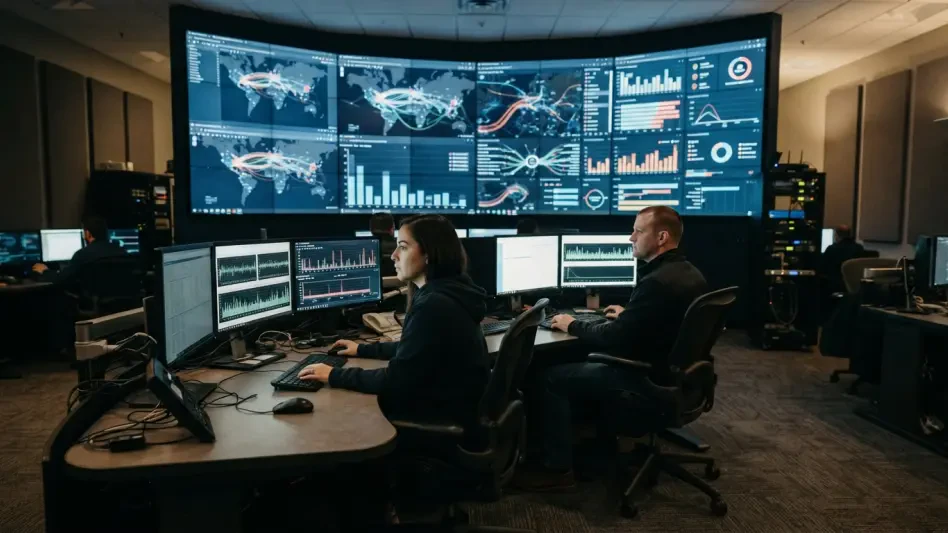

The shift toward a proactive security posture involves establishing voluntary benchmarks that allow operators to modernize without facing immediate regulatory penalties. The Cyber Resilience for Critical Infrastructure Act, recently introduced by Representatives George Whitesides and Josh Gottheimer, addresses a growing anxiety over the stability of essential services that Americans rely on every day. From regional power grids to municipal water treatment facilities, the backbone of society is increasingly becoming a target for sophisticated digital aggression that threatens public safety. This legislative effort provides a blueprint for resilience, acknowledging that the systems providing healthcare and clean water often run on outdated protocols. By coupling financial incentives with technical guidance, the proposal seeks to close the gap between current defensive capabilities and the evolving tools used by adversarial actors. The bill recognizes that national security is no longer just about physical borders but also about the integrity of the invisible networks that manage civilian life.
Modernizing Legacy Systems for National Resilience
The current state of American infrastructure reveals a dangerous disparity between the speed of innovation in cyber warfare and the slow pace of hardware replacement. Many utilities and transport networks still rely on legacy components that were never designed to withstand the interconnected nature of the modern internet. Recent disruptions in aviation and banking systems serve as stark reminders that even a minor glitch in an antiquated system can paralyze entire industries. As hackers utilize automated tools to scan for vulnerabilities, many local operators find themselves in a race they cannot win without systemic change. The Cyber Resilience for Critical Infrastructure Act targets this specific vulnerability by encouraging a shift away from reactive “break-fix” mentalities. Instead, it promotes a lifecycle approach to technology management, ensuring that patches and upgrades are treated as essential maintenance rather than optional expenses. This change is vital for systems that have historically operated on cycles of decades rather than years.
To provide a structured path forward, the legislation tasks the National Institute of Standards and Technology with developing clear, voluntary benchmarks for vulnerability remediation. These standards are not designed as a punitive measure but as a shared language for security that recognizes the unique demands of different sectors. A hospital, for instance, requires a different set of uptime protocols and security layers compared to a regional energy provider or a mass transit system. By creating sector-specific guidelines, the act allows operators to prioritize their most critical risks based on the actual safety implications for the public. This collaborative framework ensures that when a new vulnerability is discovered, there is a predefined roadmap for how quickly and effectively it should be addressed. This move toward standardization helps eliminate the guesswork often associated with cybersecurity, providing even small-scale operators with a professional-grade strategy to safeguard their systems against both external threats and internal failures.
Bridging the Resource Gap with Competitive Grants
Implementing high-level security measures often comes with a prohibitive price tag that many municipal and private operators struggle to justify within their annual budgets. The legislation addresses this economic reality by authorizing $250 million in competitive grants, which are to be managed by the Cybersecurity and Infrastructure Security Agency. These funds are specifically earmarked for high-impact projects, such as the rapid deployment of security patches, the replacement of obsolete hardware, and the integration of advanced containment strategies. By providing direct financial backing, the act ensures that the modernization of the nation’s infrastructure is driven by technical necessity and safety requirements rather than the limitations of local tax bases. This investment acts as a catalyst for widespread improvement, allowing for the adoption of cutting-edge defensive technologies that might otherwise remain out of reach for entities serving smaller populations or niche markets across the country.
A significant portion of this legislative effort is dedicated to supporting the most vulnerable entities, particularly those in rural and tribal communities. Small-scale utility operators frequently face a dual challenge: they lack the large-scale budgets of urban corporations and struggle to recruit the specialized personnel needed to manage complex digital defenses. To level the playing field, the bill allows for 100% coverage of eligible project costs for small, rural, tribal, and territorial governments, ensuring that financial constraints do not lead to security blind spots. Furthermore, by reserving 30% of the total grant funding exclusively for these smaller operators, the legislation prevents larger metropolitan entities from monopolizing the available resources. This targeted approach recognizes that a vulnerability in a rural water system or a remote power cooperative can have cascading effects on the broader national network, making the protection of these smaller nodes a critical component of the overall strategy for nationwide resilience.
Defending Against Advanced AI-Driven Threats
The emergence of artificial intelligence has reached a critical inflection point, serving as a significant force multiplier for actors seeking to disrupt critical infrastructure. With the ability to automate the discovery of system flaws and generate sophisticated malicious code in seconds, hackers can now exploit vulnerabilities at a scale and speed that was previously unimaginable. The Cyber Resilience for Critical Infrastructure Act, supported by the bipartisan AI Safety and Innovation Caucus, acknowledges this reality by prioritizing defensive innovation that matches the efficiency of modern attackers. By encouraging the adoption of automated patching systems and AI-enhanced monitoring tools, the legislation seeks to provide operators with the digital reflexes needed to intercept threats before they can manifest as physical disasters. This focus on technological parity ensures that American infrastructure is not left defending 21st-century threats with 20th-century processes, creating a dynamic defense capable of evolving.
In the final analysis, the legislation successfully shifts the perspective of infrastructure security from a private technical challenge to a core pillar of public safety. The act establishes a new precedent for accountability by tracking how grant recipients accelerate their remediation timelines, ensuring that federal investments translate into measurable improvements in national security. Strict protections for sensitive information were integrated to ensure that the data shared during the reporting process remains secure, preventing it from being misused by adversarial entities. Moving forward, the focus remains on the continuous adaptation of these standards and the expansion of training programs for the specialized workforce required to maintain these modern systems. The implementation of this act provides a scalable model for resilience, emphasizing that the long-term safety of the nation depends on a proactive commitment to modernization. This collaborative approach ensures that the essential services American families rely upon remain functional.