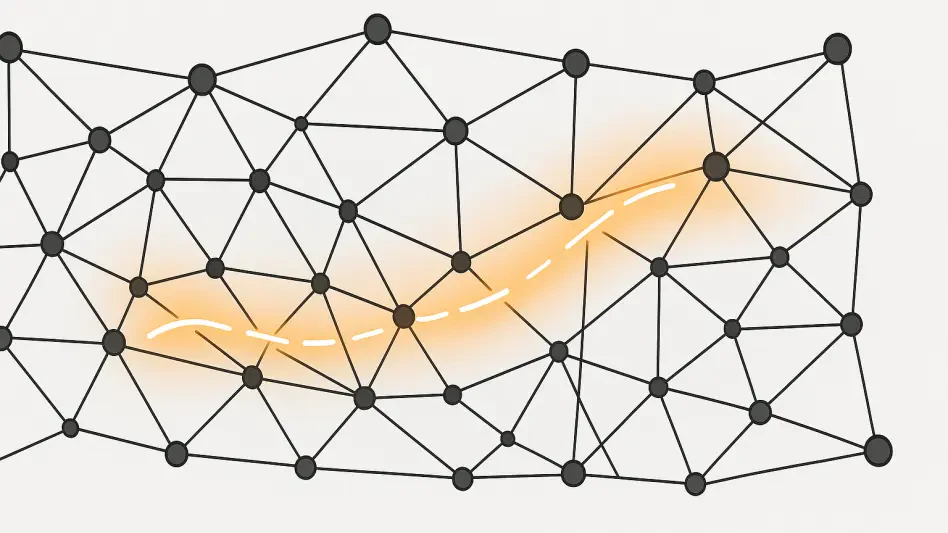

The rapid proliferation of connected objects has transformed modern environments into complex digital ecosystems where every appliance, from industrial sensors to kitchen gadgets, serves as a potential entry point for malicious actors. The N-BaIoT benchmark dataset demonstrates that common consumer devices like smart cameras and doorbells are frequently infected with Mirai and Bashlite malware to launch coordinated disruptions. This trend represents a fundamental shift in the cybersecurity landscape, as Distributed Denial-of-Service (DDoS) attacks no longer require a fleet of high-powered servers but can instead be orchestrated through a swarm of vulnerable IoT nodes. As these devices become more integrated into critical infrastructure, the traditional methods of defense, which often involve reactive patching or centralized traffic filtering, are proving insufficient to handle the sheer scale and speed of modern botnets. The current challenge lies in developing a system that can identify these threats locally, preventing the aggregate traffic from ever reaching a volume that could cripple a regional network or disrupt essential services. This evolution in digital warfare necessitates a proactive and decentralized approach to security, ensuring that detection occurs at the very edge of the network where the data is first generated.
Hybrid Architectures: Analyzing Complex Traffic Patterns
The architectural foundation of modern intrusion detection relies heavily on the ability to interpret the multifaceted nature of network telemetry. Network traffic is not merely a collection of isolated data points but a continuous stream of statistical observations that possess both spatial and temporal characteristics. To address this complexity, a hybrid model combining Convolutional Neural Networks and Long Short-Term Memory units has emerged as a superior solution for identifying malicious behavior. The convolutional layers of this architecture are specifically designed for spatial feature extraction, enabling the system to recognize localized patterns within packet statistics that indicate a potential breach. By analyzing the structural properties of network packets, such as size variance and destination density, the model can pinpoint the subtle anomalies that often precede a full-scale attack. This spatial awareness is crucial in a landscape where cybercriminals constantly vary their tactics to bypass simple rule-based filters that lack the depth of a deep learning approach.
While spatial analysis provides a snapshot of the network’s current state, the temporal component introduced by Long Short-Term Memory units offers a much-needed historical perspective. Network behavior is inherently sequential, and distinguishing between a legitimate surge in activity and a coordinated DDoS flood requires an understanding of how traffic evolves over time. For instance, a smart camera might upload a high-definition video clip, creating a temporary spike that an unsophisticated system might misinterpret as an attack. However, the temporal memory of an LSTM unit allows the system to recognize the difference between such standard operational bursts and the sustained, repetitive, and synchronized signatures characteristic of a botnet. By processing sequences of data rather than individual packets, the hybrid CNN-LSTM model captures the “what” and the “when” of network activity, resulting in a significantly higher diagnostic accuracy that is essential for maintaining the integrity of modern IoT deployments without generating excessive false alarms.
Federated Learning: A Privacy-First Aggregation Mechanism
One of the most transformative developments in decentralized security is the implementation of Federated Learning, a framework that prioritizes data sovereignty while maintaining collective intelligence. Traditionally, intrusion detection systems required raw traffic data to be moved from local devices to a central repository for analysis, a practice that is increasingly untenable due to latency issues and strict privacy regulations. In a federated setup, the central server no longer requires access to raw logs; instead, individual IoT devices act as independent clients that train the deep learning model locally using their own data. This decentralized method ensures that sensitive information, including personally identifiable data and proprietary network configurations, never leaves the local environment. By keeping the training process at the edge, organizations can comply with global data residency laws while simultaneously reducing the bandwidth costs associated with transmitting massive volumes of telemetry to a cloud-based server.
The aggregation of knowledge in this system is facilitated by the Federated Averaging algorithm, which orchestrates the collaboration between diverse network nodes. Once a local training round is completed on an IoT device, only the resulting model weights or gradients are sent to the central server. The server then aggregates these updates, weighting them based on the contribution of each client, to create a refined global model that represents the shared experience of the entire network. This global model is then redistributed to all participating devices for further localized refinement, creating a continuous loop of learning and improvement. This iterative process allows a device in one part of the world to benefit from the security insights gained by a device in another, without either party ever exchanging raw data. This design is particularly valuable for large-scale enterprise environments where devices operate across different administrative domains, making centralized data collection functionally and legally impossible.
Addressing Device Heterogeneity: Strategies for Diverse Environments
A significant hurdle in securing the Internet of Things is the extreme heterogeneity of the devices themselves, as a smart thermostat and a high-definition industrial camera exhibit radically different traffic profiles. In a centralized detection system, these differences are often smoothed over or treated as noise, which can lead to a loss of specificity in detection. The federated approach, however, embraces this diversity by allowing each device to serve as an independent client with its own unique distribution of normal and malicious behavior. Validation using benchmarks like N-BaIoT has shown that federated learning can effectively generalize across these varying device types, creating a robust global detector that performs well even on specialized hardware with unusual traffic patterns. This adaptability is key to creating a universal defense layer that can protect an entire ecosystem of disparate devices, ensuring that a vulnerability in one niche product does not become a backdoor for an entire network.
Beyond device diversity, the persistent issue of class imbalance in network security data requires sophisticated mitigation strategies. In any healthy network, the vast majority of traffic is benign, while attack signatures represent a tiny, albeit dangerous, minority of the observations. Models trained on such imbalanced datasets often develop a majority bias, where they become excellent at identifying normal traffic but fail to catch the rare, high-impact events that constitute a DDoS attack. To counter this, researchers have implemented adaptive global decision-threshold optimization, which moves away from the default probability cutoffs typically used in classification. By tuning the operating point to be more sensitive to threats, the system achieved a near-perfect recall rate of 0.9963. While this increased sensitivity can lead to a slight rise in false alarms, the trade-off is justified by the economics of network defense, where missing a single attack can lead to catastrophic failure, while a false alarm is a manageable operational burden for a security team.
Advanced Metrics: The Role of Explainable AI in Security
Measuring the success of a security model requires a more nuanced approach than standard accuracy metrics, particularly when dealing with the high-stakes environment of DDoS detection. The study emphasizes the importance of Precision-Recall Area Under the Curve over the more traditional ROC-AUC analysis, as the former provides a more honest assessment in imbalanced scenarios. ROC curves can often appear overly optimistic because the large volume of true negatives in a healthy network dilutes the perceived impact of false positives. In contrast, the PR-AUC focuses specifically on the model’s ability to rank and identify the minority class, which in this case is the malicious traffic. The high PR-AUC scores achieved by the federated CNN-LSTM model indicate that the system is exceptionally skilled at distinguishing attacks from normal activity, providing a reliable foundation for automated security responses in real-world environments where precision is as important as sensitivity.
The integration of explainability through game-theoretic attribution, such as SHAP values, further enhances the utility of these deep learning models by providing transparency into their decision-making processes. Security analysts are often hesitant to trust “black box” algorithms, especially when an automated decision could result in shutting down a critical network segment or blocking an essential device. By identifying which specific features, such as packet size or connection frequency, most heavily influenced a particular classification, the system provides a clear rationale for its actions. This level of transparency serves two purposes: it allows human operators to validate the model’s logic to ensure it is not reacting to irrelevant artifacts of the data, and it provides a necessary audit trail for regulatory compliance. This human-centric approach ensures that the transition toward automated, AI-driven security remains grounded in verifiable evidence, fostering trust between the technology and the people responsible for managing it.
Strategic Outlook: Future Frontiers in Network Defense
The potential for federated deep learning extends far beyond consumer electronics, offering a compelling blueprint for high-stakes environments like the healthcare sector. In clinical settings, where connected medical devices like infusion pumps and patient monitors are vital for life safety, the threat of a DDoS attack is a matter of physical security as much as digital integrity. Because healthcare organizations are subject to some of the strictest data privacy laws in the world, the federated approach is uniquely suited for this sector, allowing hospitals to participate in collective security intelligence without ever sharing sensitive patient data outside their firewalls. This creates a collaborative defense shield where the entire healthcare industry can learn from localized attacks, strengthening the resilience of all participants against the evolving tactics of cybercriminals who target critical infrastructure for ransom or disruption.
Looking ahead, the practical deployment of these systems must account for the inherent constraints of edge computing, including limited battery life and fluctuating connectivity. The phenomenon of client dropout, where a device goes offline during a training round, remains a challenge that requires robust aggregation rules to prevent the global model from becoming skewed. Furthermore, as the system becomes more prevalent, the threat of adversarial participation, where a compromised client attempts to poison the global model with malicious updates, will require the implementation of anomaly detection at the server level. Despite these challenges, the progress made in adaptive federated learning provided a clear path toward a more resilient and private internet. The combination of high detection sensitivity, explainable outputs, and data sovereignty established a new standard for IoT defense, ensuring that as the world became more connected, it also became more secure through decentralized intelligence.