
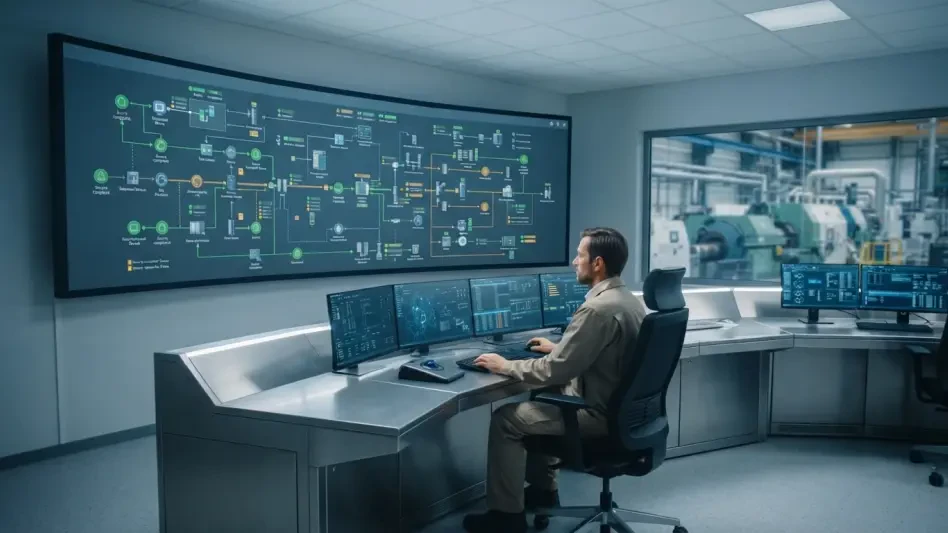
The realization that a single unmonitored lateral move within a power grid can lead to catastrophic cascading failures has forced industrial operators to reconsider the adequacy of their existing perimeter defenses. As of 2026, the transition from traditional IT-centric security models toward specialized operational technology (OT) protection has become a necessity for ensuring industrial control system integrity. This shift prioritizes the availability and safety of high and medium-impact BES Cyber Systems, which represent the backbone of global infrastructure.
Protecting these systems requires more than just standard firewall updates; it demands a deep understanding of how physical processes interact with digital commands. Market leaders have recognized this by integrating network visibility with endpoint intelligence, creating a comprehensive shield for industrial environments. This dual-layered strategy ensures that every device, from a legacy PLC to a modern sensor, is accounted for and monitored against potential threats.
The Evolving Landscape of Operational Technology Cybersecurity
The focus of industrial security has expanded from simple asset inventory to the protection of complex interconnected grids. Protecting BES Cyber Systems now involves a sophisticated analysis of how internal traffic flows between critical nodes. By isolating and monitoring these communications, operators can prevent a minor breach from escalating into a widespread blackout.
Furthermore, the integration of network visibility with endpoint intelligence allows for a more holistic view of the security landscape. Security teams no longer have to jump between disparate tools to understand what is happening on the plant floor. Instead, they can rely on a unified perspective that correlates physical asset health with network traffic patterns to identify anomalies before they impact production.
Navigating Market Dynamics and Technological Innovations in Industrial Security
Bridging the Gap: Endpoint Intelligence and Network Visibility
The emergence of Internal Network Security Monitoring (INSM) has established a new standard for operational resilience in the utility sector. This technology moves beyond simple anomaly detection by providing context-aware monitoring that understands the specific protocols used in industrial automation. By correlating network alerts with the historical configuration of an endpoint, the system can distinguish between a legitimate maintenance update and a malicious intrusion.
This context is vital for maintaining uptime in high-stakes environments where every second of downtime counts. When an alert is triggered, the ability to see the exact state of the affected device allows for immediate, accurate troubleshooting. As these tools evolve through 2028, the depth of this correlation will only increase, providing even greater granular control over internal network behaviors.
Analyzing the Growing Demand for Audit-Ready Compliance Platforms
Market data indicates a significant surge in the adoption of automated logging and data retention tools among global industrial sectors. The manual collection of compliance evidence is becoming obsolete as organizations look for ways to reduce the administrative burden of regulatory audits. Automated platforms that maintain continuous logs of every change and communication are now the preferred solution for meeting stringent transparency requirements.
Unified interfaces that consolidate vulnerability management and protocol baseline monitoring are also seeing increased traction. These platforms allow operators to view their entire security posture through a single pane of glass, making it easier to spot trends and identify systemic risks. This consolidation is a primary driver for the modern industrial security strategy, ensuring that data is both accessible and actionable.
Overcoming the Obstacles of Alert Fatigue and Operational Silos
Managing a high volume of security alerts without disrupting continuous operations remains a significant hurdle for many industrial facilities. The sheer noise generated by traditional monitoring tools often leads to alert fatigue, where critical warnings might be overlooked. To combat this, risk-based modeling has become essential for filtering out irrelevant data and prioritizing the most impactful security patches.
Actionable playbooks further bridge the gap between security analysts and field technicians by translating complex cyber threats into specific maintenance tasks. By integrating these playbooks with existing work-management systems, organizations ensure that remediation efforts are handled with the same rigor as physical equipment repairs. This alignment of IT and OT workflows is critical for maintaining a cohesive defense strategy across the entire organization.
Strengthening Resilience Through Mandatory Regulatory Alignment
The FERC-approved NERC CIP-015-1 standard has fundamentally changed how utilities manage internal traffic and monitoring. This mandate requires organizations to maintain a high level of visibility into their internal communications, specifically focusing on the identification of anomalies within BES Cyber Systems. Meeting these requirements is no longer optional, making automated compliance tools a vital component of the modern utility infrastructure.
Beyond North America, frameworks such as NIS2 and the NIST Cybersecurity Framework (CSF) are exerting a similar influence on global industrial sectors. These regulations emphasize the need for robust data retention and “audit-ready” features, including timestamped rationales for every security decision. Such capabilities ensure that an organization can provide a defensible record of its security posture at any time, significantly reducing the stress of regulatory oversight.
The Future of Proactive Risk Management in Critical Infrastructure
Looking ahead through 2028, the rise of closed-loop defense mechanisms will likely redefine industrial risk management. These systems not only detect and remediate threats but also automatically verify that the fix was successful and update the asset’s risk score accordingly. This level of automation reduces the reliance on manual intervention and ensures that security gaps are closed as quickly as possible.
While the utility sector has led the way in adopting these advanced tools, other industries like oil and gas, chemical processing, and manufacturing are following suit. The expansion of sophisticated OT security tools into these sectors reflects a growing recognition that all critical infrastructure is interconnected. AI-driven risk signals will play a central role in this expansion, helping to automate the path from threat detection to measurable risk reduction.
Synthesizing Visibility and Action for a Defensible Security Posture
The strategic benefit of moving from basic change detection to a deep understanding of operational impact became clear as industrial environments grew more complex. Organizations discovered that simply knowing a change occurred was insufficient; they required the context to determine if that change posed a legitimate risk to safety. This evolution allowed for more precise resource allocation and strengthened the overall resilience of critical infrastructure.
The implementation of integrated risk management systems provided a clear path for organizations seeking to modernize their compliance workflows. By centralizing endpoint and network intelligence, industrial operators successfully moved toward a more proactive and defensible security posture. These advancements ensured that compliance became a byproduct of a robust security strategy rather than a burdensome administrative task.