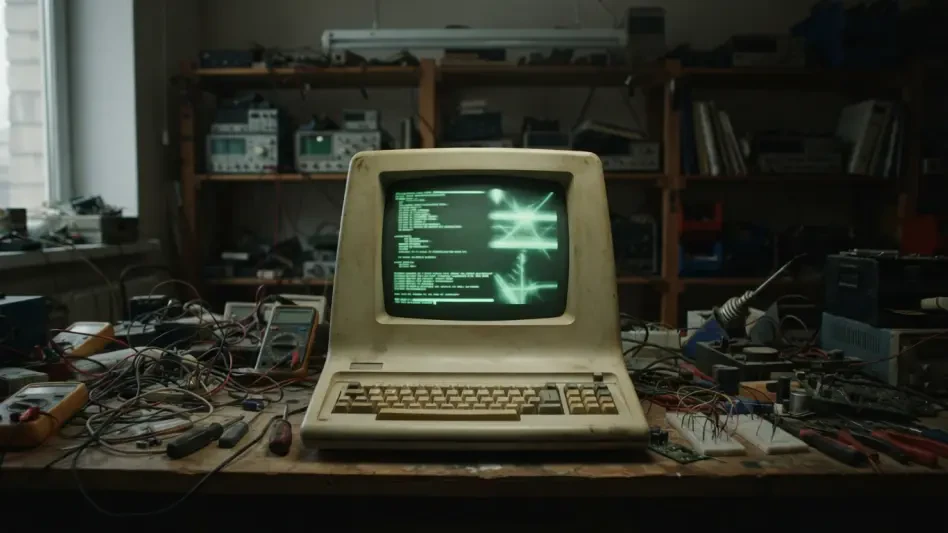
The modern cybersecurity landscape is often inundated with hyperbole where every minor bug is branded with a logo and a dramatic name to capture headlines. In an era where security researchers compete for attention, the emergence of “Terminal2Shell” serves as a provocative mirror reflecting the industry’s obsession with sensationalism. This supposed zero-day vulnerability, allegedly dating back to 1971, claims to affect over two billion devices with a catastrophic CVSS score of 11.0 out of 10. While the marketing materials appear professional and urgent, the actual technical premise is a sophisticated satire designed to expose the lack of critical analysis in vulnerability reporting. The “exploit” requires a user to have physical access to a machine, an active login session, and a keyboard to perform the revolutionary act of typing commands into a terminal. By framing standard operating system functionality as a critical breach, the creators highlight a growing fatigue among professionals who must navigate a sea of branded threats daily.
Anatomy of a Security Parody
Dissecting the Terminal2Shell Disclosure
The specific mechanics of the Terminal2Shell report are intentionally designed to trigger automated scanning tools and uncritical security aggregators that prioritize score-based metrics. Because the official Common Vulnerability Scoring System (CVSS) version 4.0 explicitly caps numerical ratings at 10.0, the assertion of an 11.0 rating acts as a deliberate “canary in the coal mine” for discerning analysts. This satirical disclosure mimics the aesthetic of major industry announcements, complete with a dedicated website and alarming statistics regarding its total reach across legacy and modern systems. It mocks the trend of “brandjacking,” where security firms prioritize market visibility over the actual technical utility of their findings. By claiming that the simple act of a user executing a shell command constitutes a catastrophic failure of security logic, the parody forces a re-evaluation of how risk is quantified in a world where marketing often precedes genuine evidence.
Beneath the humor lies a serious critique of the current state of threat intelligence, where volume often triumphs over nuance and context. Many Security Operations Centers (SOCs) rely on automated feeds that may not distinguish between a satirical post and a legitimate critical alert if the metadata is formatted correctly. Terminal2Shell highlights the danger of relying solely on automated severity scores without understanding the prerequisite conditions for exploitation. To “exploit” this specific non-vulnerability, an attacker would already need to possess the very permissions they are supposedly trying to gain, rendering the entire concept of an “attack” moot. This highlights the importance of human intuition in the verification process, as a machine might flag the keyword density of the report while failing to recognize the inherent absurdity of the technical claims. The persistence of such satires suggests a deep-seated need for more rigorous standards in vulnerability disclosure and communication.
The Critical Role of Security Boundaries
A fundamental concept in cybersecurity is the security boundary, which represents the line between different levels of privilege or access within a computing environment. For an event to be classified as a true vulnerability, an attacker must be able to cross this boundary without authorization, such as escalating privileges from a standard user to a root administrator or executing code remotely. In the case of Terminal2Shell, no such boundary is crossed because the user is simply utilizing the interface they were already permitted to access via their existing authentication. This distinction is vital for practitioners who must decide how to allocate limited resources when facing hundreds of new Common Vulnerabilities and Exposures (CVEs) every month. Without a clear understanding of what constitutes a boundary violation, security teams risk falling into a state of “alert fatigue,” where they spend excessive time investigating non-issues while missing subtle indicators of a genuine breach.
The confusion surrounding Terminal2Shell underscores the necessity of distinguishing between intentional system features and unintentional flaws that can be weaponized. While a command-line interface provides immense power to a user, that power is restricted by the permissions granted by the operating system’s security model. If an attacker cannot bypass these restrictions to gain unauthorized data or control, then the tool itself is not a vulnerability, regardless of how “scary” a terminal window might appear to a non-technical observer. Understanding this helps clarify why certain configurations, such as restricted shells or “jail” environments, are used to limit the surface area for potential abuse. By stripping away the hyperbolic language of the satirical report, analysts can see that it essentially describes the intended operation of Unix-like systems since their inception. This realization reinforces the idea that security is not just about tools, but about the logical constraints placed upon users.
Distinguishing Satire from Severe System Threats
Case Studies in Legitimate Remote Exploitation
Contrast the satirical nature of Terminal2Shell with legitimate and dangerous vulnerabilities like those identified in N-able’s Able2Shell or the Plex Media Server’s Plex2Shell exploits. In these real-world scenarios, attackers leveraged specific flaws in how applications handled inputs or managed sessions to gain unauthorized access to underlying system shells. For instance, the Plex2Shell vulnerability allowed remote actors to bypass existing security controls and install unauthorized software, including cryptocurrency miners, without any prior interaction from the system owner. This type of exploit represents a true security failure because it enables a transition from an unauthenticated external state to an internal state with execution privileges. These incidents demonstrate that while the “2Shell” naming convention has been co-opted for satire, the underlying threat of gaining shell access through software vulnerabilities remains a primary concern for modern enterprise IT infrastructure.
Further examples of genuine threats can be found in the WordPress ecosystem with the WP2Shell exploit, which allowed for the creation of unauthorized administrative accounts through session manipulation. Unlike a user simply opening a terminal, this exploit bypassed the very authentication mechanisms designed to keep the site secure. Similarly, the technical bugs identified as HTTP2Shell and Node2Shell involved deep-seated flaws in Brotli decoding libraries that could lead to system crashes or arbitrary code execution. These are not mere “features” being misused, but rather structural weaknesses in the code that provide attackers with leverage they should not possess. The complexity of these exploits, often requiring multiple steps or “chains” to achieve full system compromise, highlights the technical rigor required to validate a true security incident. Comparing these to the Terminal2Shell parody clarifies that the risk in a shell lies not in its existence, but in how an unauthorized person gains access to it.
Strategic Responses for Modern Security Operations
Navigating the influx of security information requires a disciplined approach to threat intelligence that prioritizes objective data over marketing-driven narratives. Security professionals must develop a methodology for vetting disclosures that includes looking past dramatic titles like “TermGeddon” to identify the actual impact and the level of access required for exploitation. A robust evaluation framework should ask whether the flaw allows for remote code execution, if it requires physical access, and if there is a verified patch available from a reputable vendor. By focusing on these core technical attributes, organizations can avoid the distraction of high-profile but low-impact news and instead focus on mitigating risks that actually threaten their operational continuity. This analytical mindset is essential in 2026, where the speed of information dissemination often outpaces the speed of technical verification, leading to potential chaos if teams react to every claim.
Implementing a multi-layered defense strategy involves not just technical controls, but also an educated workforce capable of discerning the validity of security alerts. Training for Security Operations Center analysts should include exercises in identifying “brandjacked” or satirical vulnerabilities to sharpen their critical thinking skills and reduce the likelihood of unnecessary escalations. Furthermore, maintaining a close relationship with trusted vendors and security communities provides a secondary layer of verification that can quickly debunk claims like Terminal2Shell. This collaborative environment ensures that when a real threat emerges, the response is swift and based on evidence rather than fear. Ultimately, the goal is to create a resilient security posture that remains calm under pressure, distinguishing between the noise of industry satire and the signals of an actual adversary. This balance between technical proficiency and media literacy is what defines a mature security organization in the current technological climate.
The discussion surrounding Terminal2Shell provided a necessary pause for the cybersecurity community, highlighting the fine line between urgent warnings and marketing theater. While the “vulnerability” itself required no remediation, the incident served as a critical reminder that a shell is only as dangerous as the path taken to reach it. Organizations that prioritize the hardening of authentication mechanisms and the strict enforcement of the principle of least privilege position themselves most effectively against genuine threats. Future security assessments benefited from a more skeptical approach to numerical scores, focusing instead on the practical exploitability of a bug within a specific environment. By refining the process of threat validation, practitioners successfully reduced the impact of alert fatigue and enhanced their focus on significant architectural weaknesses. This shift toward evidence-based risk management ensured that resources were directed toward genuine system defense rather than the hollow pursuit of every publicized trend.