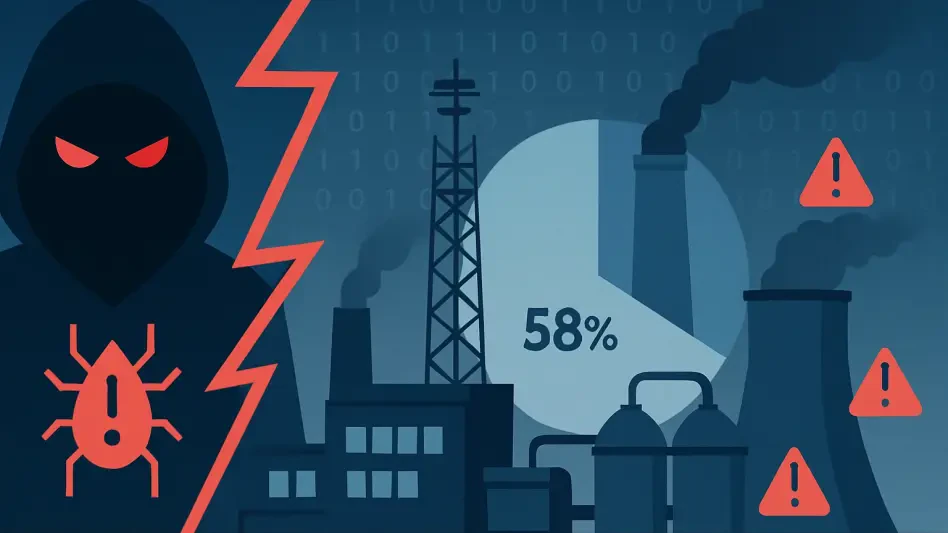

Security teams are currently battling severe alert fatigue because rule-based systems lack the environmental context to distinguish between active threats and orphaned assets. This systemic issue persists because modern cloud environments are inherently dynamic, yet the tools used to monitor them often rely on rigid, static definitions that do not evolve alongside the infrastructure. As organizations scale their digital operations in 2026, the gap between a theoretical technical vulnerability and an actual exploitable risk continues to widen, leading to a state where security operations centers are buried under a mountain of false positives. The persistent challenge of cloud security lies in the disconnect between generic risk assessments and the specific reality of a production environment. Traditional security platforms rely on fixed severity ratings, flagging every configuration violation as a major threat regardless of whether the affected resource is actually vulnerable or completely isolated from external traffic.
The Limitations: Rule-Based Monitoring
Static Severity and the Severity-Rule Gap
Rule-based systems are inherently limited because they can only account for the specific context encoded by the author at the time the security rule was originally written. When a cloud platform identifies a configuration error, such as an open port or a permissive identity policy, it assigns a severity level based on a hypothetical worst-case scenario rather than the actual state of the asset. This failure to account for real-world environmental factors—such as whether a resource is orphaned, shielded by a robust corporate firewall, or entirely disconnected from live workloads—leads to a skewed perception of risk. A rule can carry only as much intelligence as its static logic allows, meaning it cannot distinguish between a database exposed to the public internet and one that is correctly restricted to a private subnet if both share a similar configuration flag. Consequently, the reliance on these rigid frameworks ensures that the volume of high-severity alerts remains artificially inflated.
The Psychological Toll of Alert Fatigue
The persistent generation of low-context alerts creates a phenomenon known as alert fatigue, which significantly degrades the efficiency of even the most sophisticated security teams. Security professionals are frequently overwhelmed by thousands of findings that, upon manual inspection, turn out to be inert or irrelevant to the organization’s actual threat profile. This constant noise causes a dangerous desensitization to high-severity warnings, as analysts begin to assume that most flags are simply artifacts of a flawed monitoring system. When every configuration drift is treated as an emergency, the few alerts that represent genuine, exploitable dangers are easily lost in the shuffle. This environment not only increases the likelihood of a major breach being overlooked but also contributes to high turnover rates among cybersecurity personnel who feel their expertise is wasted on repetitive, manual validation of non-threats that an automated system should have filtered.
Enhancing Accuracy: AI Analysis and the Asset Graph
Evidence-Based Re-grading and Attack Path Modeling
To bridge the gap between static rules and environmental reality, an intelligent approach using AI agents can perform sophisticated, context-specific evaluations of security findings. For every alert generated by a traditional tool, the AI agent constructs a theoretical attack path to determine if a malicious actor could realistically reach and exploit the flagged resource. This process involves a deep dive into the asset graph, examining the complex web of relationships between virtual machines, containers, and network gateways. Operating under a strict evidence policy, the agent only lowers a severity grade when it identifies clear proof of non-exploitability, such as a verified lack of network connectivity or the absence of a running service. Conversely, it only upgrades a finding if the surrounding environment significantly magnifies the danger, ensuring that every verdict is grounded in observed data rather than the generic assumptions of a rule-based engine.
Quantifying Inaccuracy in Traditional Security Tools
Recent large-scale research involving nearly 10,000 high-severity alerts has revealed the true extent of misclassification in modern cloud environments. The study demonstrated that 75.1% of alerts were fundamentally mislabeled by vendor-provided severity levels, with nearly 60% of these findings requiring a significant downgrade. The primary driver of this inaccuracy was the presence of inert resources—assets that were either orphaned or not attached to any functional workload, rendering their configuration flaws harmless. Furthermore, nearly half of the accurate verdicts provided by AI agents relied on outside evidence gathered from the broader environment rather than the specific resource being flagged. These patterns highlight that the same security rule can have vastly different implications depending on its placement, proving that a high-severity rating in a vacuum is often a poor indicator of the actual risk a resource poses to the business.
Strategic Shift: The Future of Defense Operations
The Move Toward Context-Aware Security
The transition toward context-aware security operations represented a fundamental shift in how risk was managed within complex cloud ecosystems. Organizations that successfully integrated real-time environmental data into their remediation workflows moved away from the noisy, static metrics that previously obscured genuine threats. This evolution proved that automated environmental interpretation was an essential prerequisite for defensive agility, as it allowed teams to focus exclusively on the small fraction of truly critical vulnerabilities. By utilizing advanced AI agents to bridge the gap between rule-based alerts and environmental reality, these entities significantly reduced the operational burden on their human analysts. This strategic direction provided a clear roadmap for progress, emphasizing that the accuracy of a security posture depended less on the number of rules triggered and more on the depth of the context analyzed during the evaluation.
Implementing Adaptive Remediation Workflows
Modern enterprises improved their security posture by adopting adaptive workflows that prioritized verified risk over theoretical configuration errors. By grounding remediation efforts in factual evidence, leadership teams ensured that limited engineering resources were directed toward fixing the 16.6% of vulnerabilities that were truly critical. The shift from manual triage to evidence-based automation allowed for a more robust defense, as security tools finally began to reflect the actual architecture of the production environment. While the transition from reading context to taking autonomous action involved careful consideration of operational stability, the move toward verified risk scores provided a necessary foundation for future autonomy. Ultimately, these organizations discovered that clarity in security monitoring was achieved not by increasing the number of rules, but by empowering systems to understand the complex reality in which those rules were applied.