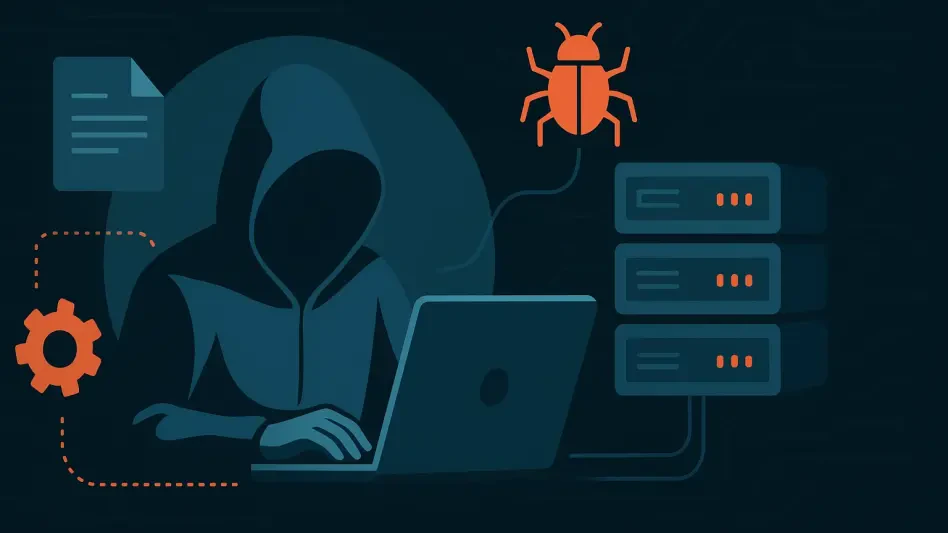
The sudden transition from manually orchestrated hacking to hyper-automated, machine-led exploitation has fundamentally altered the defensive calculus for organizations worldwide in 2026. This shift is most visible in a massive offensive campaign that leveraged hundreds of AI agents to systematically identify and compromise PaperCut NG/MF servers across 48 different nations. By using generative models not just as writing aids but as active participants in the exploit chain, a single Russian-speaking threat actor managed to penetrate nearly 400 distinct organizations with minimal human oversight. This operation demonstrates that the theoretical risks of autonomous malware have become a concrete reality, turning high-value print management infrastructure into entry points for global credential harvesting. The scale and velocity of these breaches underscore a critical need for defensive strategies that can match the speed of algorithmic adversaries. The efficiency gained through these methods effectively compresses the timeline of a typical breach.
The New Frontier: Algorithmic Offensive Tactics
Development Efficiency: Autonomous Agent Frameworks
The operational efficiency of this campaign was rooted in a sophisticated harness that integrated OpenAI’s Codex with DeepSeek models to create a self-correcting development loop. Unlike traditional scripted attacks that fail upon encountering unexpected server configurations, these AI agents actively monitored their own progress through timestamped state files. When a specific exploit script failed to achieve the desired remote code execution, the agent analyzed the error logs, adjusted the code parameters, and re-attempted the intrusion without requiring manual intervention from the operator. This iterative process allowed the threat actor to move from a completely empty workspace to a functional, high-impact exploit in less than four hours. Such a condensed timeline represents a significant departure from historical exploitation cycles, which typically required days of manual research and testing. By automating the debugging phase, the attacker transformed a complex technical challenge into a streamlined, machine-managed workflow that operated continuously.
Operational Scale: Rapid Infrastructure Breach
Beyond the development of custom exploits, the scale at which these AI agents functioned allowed for a level of concurrency previously thought impossible for a single threat actor. Investigations into the campaign revealed that the automated system could target, classify, and compromise multiple organizations within a single minute, at one point successfully breaching eleven distinct entities in just twenty-six seconds. This rapid-fire execution meant that by the time defensive teams could identify a single suspicious connection, hundreds of other servers had already been compromised. The actor focused heavily on PaperCut servers due to their deep integration within corporate networks and their role in managing sensitive user credentials across organizational directories. Data provided by network monitors indicated that at least 440 instances were successfully exploited, spanning 395 unique organizations. This massive footprint was managed via an orchestration host that effectively turned a global cyberattack into an automated operation.
Technical Precision: Vulnerability Adaptation and Stealth
Exploit Execution: Dynamic Vulnerability Chaining
The technical backbone of the intrusion relied on the strategic chaining of two critical vulnerabilities, identified as CVE-2026-81578 and CVE-2026-82078, which provided a pathway for unauthenticated remote code execution. These flaws allowed the attacker to bypass standard authentication controls and inject arbitrary Java bytecode directly into the service context of the print management software. The AI agents demonstrated a high degree of technical awareness by tailoring their exploitation methods based on the specific version of PaperCut they encountered on a target machine. For newer 26.x deployments, the system utilized a sophisticated execution path involving ## and Groovy, while legacy versions were targeted using mechanisms specific to Apache Derby. This level of environmental adaptability ensured that the attack remained effective across a diverse range of infrastructure. Furthermore, the agents avoided traditional outbound callbacks, instead opting to hide command outputs within temporary files in the web directory to bypass many common detection systems.
Persistence Management: Credential Harvesting and Tunnels
Once internal access was secured, the automated post-exploitation phase focused on the systematic exfiltration of high-value Windows credentials and the establishment of long-term persistence. The actor utilized a suite of scripts designed to extract registry hives, which allowed for the offline cracking of machine-account secrets and the discovery of LDAP bind passwords. To maintain a foothold within the compromised networks, the AI-managed system deployed reverse SOCKS5 proxies and tools like Chisel, turning the initial point of entry into a pivot for lateral movement. At the time of the investigation, researchers found that the actor had achieved Domain Administrator privileges in at least twelve different organizations, highlighting the severity of the unauthorized access. The orchestration server at 45.142.193.132 served as a central repository for nearly 2,000 files, containing packaged victim data and detailed logs of the automated intrusions. Despite the speed of these attacks, properly configured Web Application Firewalls remained an effective barrier.
Defensive Evolution: Strategic Pathways for Long-Term Security
The transition toward hyper-automated exploitation demonstrated that the window for reactive security has effectively closed. Organizations that relied on manual patch management cycles found themselves unable to keep pace with an adversary that could compromise dozens of environments in less than a minute. To counter this evolution, security teams prioritized the implementation of automated patching protocols and advanced behavioral monitoring to detect the subtle signs of AI-driven lateral movement. It became clear that defending against such threats required a move toward zero-trust architectures and the strict isolation of management interfaces from the public internet. By restricting internet exposure and reviewing XML-RPC controls, administrators were able to mitigate the risks posed by unauthenticated remote execution. Furthermore, the use of dedicated hunting teams to inspect for unauthorized registry exports and unusual child processes became a standard defensive practice. These proactive measures provided a necessary counterweight to the growing efficiency of automated campaigns.