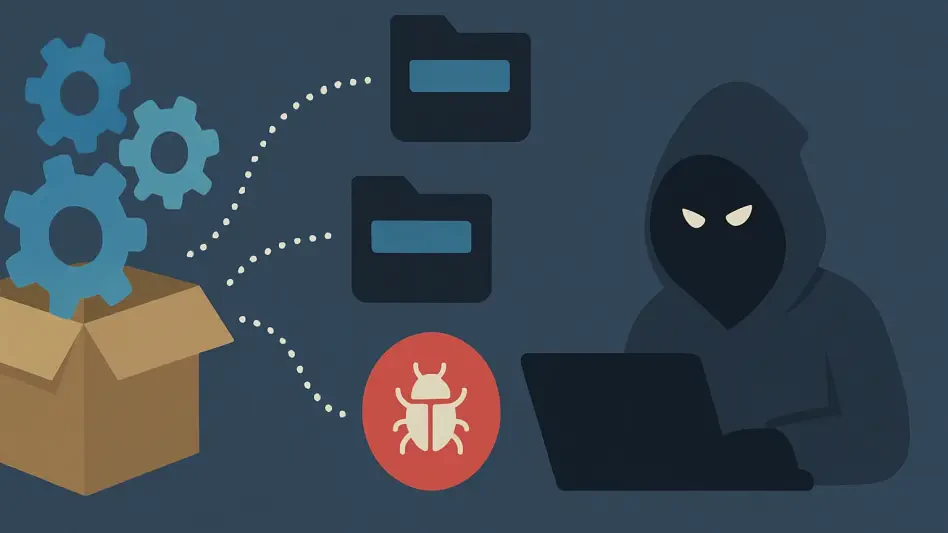

The sophisticated tactical evolution of modern corporate espionage has moved beyond the simple smash-and-grab tactics of the past, focusing instead on deep integration within a target’s network infrastructure for long-term data collection. Organizations currently face a surge in stealthy backdoors that leverage legitimate administrative tools to avoid detection. These campaigns prioritize the quiet exfiltration of proprietary documents over immediate system disruption, allowing adversaries to remain active for months or even years.
The Evolving Landscape of Cyber Espionage and Stealthy Data Theft
Corporate espionage has transitioned toward a model of long-term persistence, where staying invisible is more valuable than causing damage. The Living off the Land methodology has become a cornerstone of this shift, as attackers use trusted Windows components to bypass traditional security perimeters. By blending in with standard system operations, these threats effectively neutralize many conventional defense strategies.
High-value business documents and intellectual property serve as the primary targets for these sophisticated actors. The move from noisy executable files toward script-based backdoors reflects a broader trend in the cybersecurity market where stealth is the ultimate currency. Advanced persistent threats continue to shape defensive standards, pushing for more granular monitoring of internal network activity.
Technical Innovations and Market Impact of Fileless Malware
The market for malicious tools has increasingly favored fileless designs that leave minimal footprints on physical storage. These innovations focus on utilizing memory-resident payloads that can execute complex commands without triggering standard antivirus scans. Such a shift significantly raises the stakes for enterprise security teams who rely on legacy detection methods.
Sophisticated Persistence and Self-Healing Infection Cycles
Recent malware variants utilize Windows components like PowerShell and Task Scheduler to maintain a constant presence on compromised machines. Timestomping is frequently employed to modify file creation dates, tricking forensic investigators into believing the system is clean. This level of deception ensures that the malicious scripts remain hidden in plain sight among legitimate system files.
Redundant persistence mechanisms create a self-healing loop where multiple scheduled tasks monitor and restart each other if one is terminated. This behavior ensures that the infection survives reboots and basic cleanup attempts. By residing primarily in memory, these backdoors avoid the scrutiny of hard drive scans, making them nearly impossible to find without specialized forensic equipment.
Quantifying the Threat and Economic Consequences of Data Exfiltration
The economic impact of undetected data theft is growing as targeted campaigns focus on specific industry sectors with high research costs. Successful exfiltration is often measured by the duration of the breach rather than the volume of data initially moved. This long-term access allows attackers to harvest sensitive information as it is created, providing a continuous stream of intelligence.
Market data indicates that the loss of competitive advantage and the subsequent legal liabilities represent a massive financial risk. Organizations are now forced to defend against custom C# helpers and encrypted communication channels that bypass standard network security. The cost of remediating these deep-seated infections often exceeds the immediate losses from the stolen data itself.
Navigating the Obstacles to Detecting Memory-Resident Backdoors
Identifying malicious activity within user-writable folders poses a significant challenge for modern security operations centers. Many backdoors masquerade as legitimate services, hiding their operations within folders that appear harmless to the average user. This complexity requires a shift toward more intensive behavioral analysis rather than simple signature-based detection.
Modern network security is also hampered by techniques that bypass TLS certificate validation, allowing attackers to communicate with control servers undetected. Strategic solutions involve implementing aggressive logging for script engines and monitoring for unexpected changes in scheduled system tasks. Balancing high-speed system performance with these deep monitoring requirements remains a critical hurdle for IT departments.
Security Governance and the Regulatory Impact of Persistent Threats
Global data protection laws like GDPR and CCPA have increased the pressure on organizations to detect and report long-term exfiltration. The TASK#STOMP methodology directly challenges these requirements by obscuring the true timeline of a data breach. Compliance audits now demand a higher level of visibility into administrative tools to ensure that no unauthorized lateral movement is occurring.
The role of corporate liability has expanded, particularly when organizations fail to detect intrusive features like screenshot capture and clipboard harvesting. Failing to secure administrative scripts can lead to severe regulatory penalties and a loss of public trust. As a result, maintaining a robust defense against persistent threats has become a legal necessity as much as a technical one.
The Future of Enterprise Defense Against Advanced Backdoors
The next generation of defensive tools will likely focus on using machine learning to identify anomalous behavior within the Windows Script Host. AI-enhanced timestomping and automated exfiltration filters are expected to become more common, requiring a more proactive approach to threat hunting. Zero-trust architectures will serve as the primary framework for limiting the damage caused by compromised system tools.
Future growth in the cybersecurity market will be driven by forensic tools capable of reconstructing memory-only infections. Organizations are expected to move away from reactive security toward a model that assumes a state of constant compromise. This evolution will prioritize the isolation of sensitive processes and the continuous monitoring of all script-based activity.
Strategic Outlook and Recommendations for Business Resilience
The analysis of modern document-theft capabilities highlighted the urgent need for deeper visibility into all scheduled system tasks. Security teams recognized that safeguarding intellectual property required the deployment of endpoint detection and response systems with advanced memory scanning. Proactive threat hunting became the standard for identifying the subtle signs of persistence that traditional scanners missed.
Investment priorities shifted toward behavioral analysis to counter the threat of masquerading services and script-based backdoors. Organizations that implemented zero-trust principles and aggressive logging were better positioned to identify unauthorized data movement. The transition to these sophisticated defensive strategies proved essential for protecting the long-term integrity of sensitive business assets against evolving digital threats.