
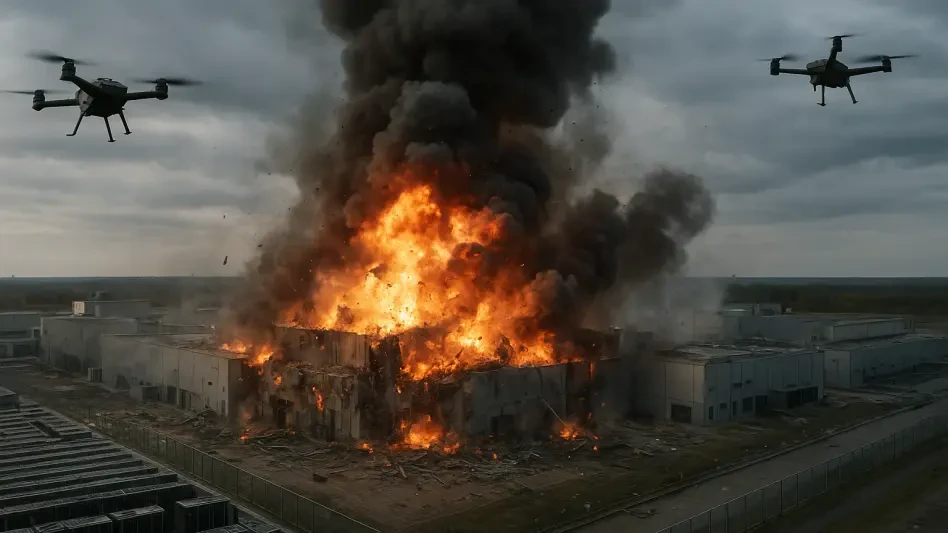
The massive engineering challenge of transitioning from Western NVIDIA chips to Chinese hardware alternatives makes it nearly impossible for Russian tech firms to recover quickly from infrastructure loss. This operational reality shifted from a theoretical concern to a catastrophic crisis during October 2026, as a wave of targeted kinetic strikes systematically dismantled the physical nodes of Russia’s digital sovereignty. For years, the Russian technology sector relied on the resilience of its distributed cloud networks, yet the precision of modern drone warfare has proven that even the most advanced virtual systems possess physical vulnerabilities that cannot be easily mitigated. By focusing on data centers rather than traditional energy infrastructure, these strikes targeted the cognitive capacity of the state, aiming to blind the logistical, financial, and military-administrative systems that depend on high-performance computing. This campaign marks a fundamental change in the nature of asymmetric conflict, where the destruction of a few thousand specialized server racks can impose a greater economic and strategic cost than the leveling of an entire industrial factory. As the primary provider of these services, Yandex has found itself at the epicenter of this technological attrition, illustrating how the consolidation of digital power into a few national champions creates high-value targets that are nearly impossible to defend or replace under a regime of international sanctions.
The Chronology of the Kinetic Campaign
Part 1: Systematic Destruction of Data Nodes
The campaign initiated on October 8, 2026, when a long-range drone strike successfully penetrated the airspace around Sasovo, Ryazan, targeting the repurposed Sasta plant that served as a primary high-performance computing node. This facility was not a standard storage site; it housed the Chervonenkis and Lyapunov supercomputers, which represented the pinnacle of Russian artificial intelligence and data processing capabilities. These machines utilized thousands of NVIDIA A100 graphics accelerators, components that are now impossible to source through legitimate global trade due to stringent export controls. The resulting conflagration did not just destroy physical hardware but effectively severed the computational nerves of various state-linked projects, forcing an immediate suspension of operations across several sensitive sectors. The intensity of the fire, fueled by the complex cooling systems and high-density electronics, ensured that any remaining equipment would be rendered useless by corrosive smoke and extreme heat, creating a vacuum in the nation’s ability to process massive datasets in real-time.
Building on the initial disruption, the offensive moved toward Grabtsevo, Kaluga, on October 9, hitting a cornerstone of the Yandex Cloud ecosystem designed for massive scalability. This facility was particularly critical because it contained over 3,800 server racks and maintained a power capacity of nearly 50 megawatts, serving as a primary hub for web traffic and corporate cloud hosting across Western Russia. The strike disabled multiple critical modules simultaneously, preventing the system from executing its automated load-balancing protocols and causing immediate stability issues for thousands of dependent businesses. When the servers at Grabtsevo went offline, the “elasticity” that typically defines modern cloud infrastructure was shattered, as the remaining nodes in the network were suddenly overwhelmed by redirected traffic they were never configured to handle. This created a cascading failure effect, where even undamaged facilities began to experience latency and timeouts, proving that the destruction of a single “mega-site” can effectively paralyze a supposedly distributed national network.
Part 2: The Final Blows to Computational Capacity
On October 11, the campaign reached a decisive peak with a strike on a data center in Vladimir, which housed the Galushkin supercomputer, completing the destruction of Yandex’s high-performance triad. Following this event, Yandex Cloud was forced to announce that its systems were entering “read-only” modes, a technical state indicating that the infrastructure could no longer support new data writes or complex processing tasks. This was a significant admission of operational failure, as it meant that every transaction, update, or simulation across the network was effectively frozen in time. The loss of the Galushkin site removed the last remaining redundancy for high-level calculations, leaving the Russian digital economy in a state of suspended animation where existing data could be viewed but not acted upon or expanded. The strategic timing of this strike ensured that the psychological impact on the tech community was maximized, signaling that no amount of geographic distribution could protect the remaining assets from being systematically identified and neutralized.
The sequence of strikes concluded on October 14 in Balakovo, Saratov, where a “mega data center” belonging to Sberbank was successfully targeted. This facility was the intended primary host for GosTech, the unified digital platform designed to consolidate all Russian public administration and financial services into a single, sovereign environment. The damage to this site was particularly egregious for the state bureaucracy, as it directly threatened the transition toward a fully digitized government and the stability of the national banking sector. By hitting a facility planned to house up to 120,000 servers, the campaign struck at the future of Russia’s domestic digital infrastructure, ensuring that even if the conflict were to end immediately, the state would lack the physical foundation to manage its modern administrative needs. The destruction in Balakovo highlighted a critical vulnerability: the more a government centralizes its digital services for the sake of control, the more it creates a singular, catastrophic point of failure that can be exploited by precision kinetic actions.
The Strategic Role of Yandex
Part 3: From Innovation to State Utility
Yandex was historically celebrated as a “success story” of Russian innovation, maintaining a dual structure with headquarters in the Netherlands and a listing on the Nasdaq that allowed it to compete with global giants like Google. However, the forced “Russification” process that culminated in 2024 transformed the company from a Western-facing tech leader into a state-aligned domestic utility. This transition involved a complex divestment from its international parent, now known as the Nebius Group, and a sale to a consortium of Kremlin-linked investors who sought to ensure the company’s alignment with national security objectives. While this move initially appeared to protect the company from external political pressure, it effectively trapped its physical and intellectual assets within the Russian borders, making them indispensable to the state’s daily operations. Consequently, Yandex evolved from a mere search engine and service provider into the literal backbone of the national digital economy, managing everything from logistics for Russian Railways to the cloud environments of major telecommunications firms like MegaFon.
This integration into the state apparatus fundamentally altered the risk profile of Yandex’s infrastructure, moving it from the category of private commercial property to that of a high-value strategic target. Because the company now provides the underlying systems for state-sponsored artificial intelligence initiatives and essential public services, its data centers are considered dual-use assets that are directly relevant to the country’s military and administrative resilience. The centralization of so much critical functionality under a single corporate umbrella created a profound strategic bottleneck; when Yandex’s physical nodes are hit, the repercussions are felt not just in search results or food delivery, but in the core functionality of the Russian state itself. The transition to a closed national system meant that the company could no longer rely on global redundancy or international support, leaving it entirely dependent on domestic resources that were already being stretched thin by the ongoing conflict and the pressures of a wartime economy.
Part 4: The Impact of Geographic Concentration
Despite the vast size of the Russian Federation, its high-tech infrastructure remains remarkably concentrated in a few specific regions around Moscow and the surrounding industrial zones. This geographic clustering was originally a matter of logistical convenience and access to stable power grids, but in the context of long-range drone warfare, it has become a significant liability. Yandex’s decision to build its most powerful supercomputing nodes in Sasovo, Vladimir, and Kaluga created a “target-rich” environment that allowed for a focused campaign of attrition. Each of these facilities represented billions of dollars in investment and years of specialized construction, and their relative proximity to one another allowed a single campaign to dismantle the majority of the nation’s high-performance computing capacity in less than a week. The concentration of these assets reflects a broader trend in Russian infrastructure development where efficiency and centralized control were prioritized over the decentralized resilience required to withstand a sustained kinetic offensive.
Moreover, the physical architecture of these data centers was designed to protect against digital threats like hacking or localized fires, but they were largely unprepared for the direct impact of explosive-laden drones. The heavy reliance on centralized cooling towers and external power substations meant that a strike did not even need to hit the server room directly to cause a total system failure. By disabling the life-support systems of the data center, a single drone could initiate a process of thermal runaway that would destroy millions of dollars of delicate hardware in a matter of minutes. This vulnerability underscored the reality that Russia’s digital sovereignty was built on a foundation of physical fragility, where the high-performance “brain” of the country was housed in buildings that were easily identified through satellite imagery and public corporate filings. The failure to adapt these facilities to the new reality of the theater of war has left the nation’s technological leaders scrambling to find ways to harden remaining sites that were never intended to be on the front lines.
Hardware Bottlenecks and Sanctions
Part 5: The Irreplaceability of Western Components
The most daunting obstacle to the recovery of the Russian tech sector is the “hardware bottleneck” created by the synergy between kinetic destruction and international sanctions. The supercomputers destroyed in Ryazan and Vladimir were built using high-end components such as NVIDIA A100 GPUs and AMD EPYC processors, which are the industry standards for artificial intelligence and massive data processing. Under current export controls enforced by the United States Bureau of Industry and Security and the European Union, Russia is legally barred from acquiring the next generation of these semiconductors, including the #00 or the Blackwell architectures. This means that every server rack destroyed by a drone is a permanent loss of capability that cannot be replaced through traditional procurement channels. The parallel import markets, while effective for consumer electronics, cannot provide the tens of thousands of specialized chips required to rebuild a “mega data center” without attracting immediate international scrutiny and further sanctions.
This technological scarcity creates a situation where Russia is effectively consuming its existing high-tech capital without any way to replenish it, leading to a state of permanent degradation. Even if the state can acquire a limited number of chips through clandestine networks, the volume required to restore Yandex’s previous supercomputing capacity is simply too great to be hidden. Furthermore, modern high-performance computing depends on the integration of hardware with proprietary software ecosystems like NVIDIA’s CUDA, which are also increasingly restricted. Attempting to run advanced AI models on mismatched or older hardware leads to significant performance penalties and operational instability, further widening the technological gap between Russia and the global leaders. The destroyed facilities represented the peak of what Russia could achieve while still integrated with the global supply chain; in their absence, the country is forced to rely on a patchwork of older, less efficient systems that are ill-suited for the demands of the modern era.
Part 6: The Limitations of the Chinese Alternative
In an effort to bypass Western sanctions, major Russian entities like Sberbank and Yandex have attempted to pivot toward Chinese hardware alternatives, such as chips from Biren Technology or Moore Threads. However, this transition has proven to be a massive engineering undertaking fraught with technical hurdles and performance limitations. Chinese high-end semiconductors currently lag several generations behind their Western counterparts in terms of raw processing power and, perhaps more importantly, the maturity of their software ecosystems. Migrating an entire supercomputing stack from a Western architecture to a Chinese one requires a total rewrite of existing software and algorithms, a process that can take years of dedicated engineering effort. This is not a task that can be easily accomplished during an active conflict where resources are already diverted to more immediate military needs, leaving the Russian tech sector in a state of perpetual transition that hinders its ability to recover from the recent strikes.
Furthermore, China’s own semiconductor industry remains vulnerable to US export controls on chip-making equipment, which limits its ability to supply Russia with the highest-tier components at the necessary scale. The 130-nanometer lithography currently achievable by domestic Russian manufacturing is decades behind the 3-nanometer and 2-nanometer processes used by global market leaders, making domestic production a non-viable solution for high-performance computing needs. This dependence on a single, increasingly cautious partner like China creates a new form of vulnerability, where Russia’s digital future is subject to the geopolitical calculations of Beijing. The result is a technological landscape where Russia is forced to accept “good enough” hardware that is significantly slower and more power-hungry than what was lost. This “forced obsolescence” ensures that the Russian tech sector will remain at a disadvantage, unable to compete in the rapidly advancing fields of automated warfare and large-scale data analysis.
Economic and Social Consequences
Part 7: Immediate Ripples and Operational Paralysis
The physical destruction of the Yandex and Sberbank data centers translated almost immediately into measurable economic instability, causing Yandex shares to drop by 4% in the hours following the reports of the Vladimir strike. Beyond the stock market, the impact was felt by millions of citizens as banking services, particularly those involving real-time transfers and digital wallets, began to experience significant latency and transaction failures. In a modern economy that has largely moved away from cash, the inability to verify a balance or process a payment at a point-of-sale terminal creates immediate social friction and a loss of public confidence in the financial system. These disruptions were not limited to the digital realm; they manifested as long lines at automated teller machines and paralyzed retail operations, demonstrating how quickly a digital failure can evolve into a broader social crisis. The psychological toll of realizing that the nation’s most prominent tech firm could not protect its core infrastructure contributed to a sense of vulnerability that resonated throughout the Russian business community.
In a country as geographically vast as Russia, the disruption of digital logistics platforms has physical consequences that ripple across eleven time zones. Yandex provides the essential software infrastructure for managing complex supply chains and rail networks, and when these systems stutter, the movement of goods and people slows down. Russian Railways, which relies on Yandex Cloud for various operational tasks, saw its digital platforms experience significant downtime, leading to delays in freight scheduling and passenger services. This operational paralysis is particularly dangerous for an economy that is already under the strain of war production, as any delay in the logistics chain can have a multiplier effect on industrial output. The transition from a seamless digital experience to one characterized by timeouts and errors has forced many organizations to revert to manual processes that are less efficient and more prone to human error, further hampering the nation’s overall economic productivity during a critical period.
Part 8: The Crisis of Frozen Data
There is a critical technical distinction between the storage of data and the capacity to process it, a reality that is currently being demonstrated by the “read-only” status of many Russian systems. While Yandex and state officials have been quick to claim that customer data is replicated and was not “lost” in the fires, this data is effectively frozen if the servers required to process it have been destroyed. A backup of a banking ledger or a logistics database is useless if there is no high-performance hardware available to execute a complex transaction, verify a balance against a massive dataset, or run an optimization algorithm. The loss of computing capacity means that the “velocity” of data has ground to a halt; information exists, but it cannot be used to drive real-time decisions or services. This state of affairs creates a massive backlog of unprocessed requests that will only continue to grow as the remaining, overstretched infrastructure struggles to keep up with the daily demands of the population and the state.
This “data paralysis” has long-term implications for the development of artificial intelligence and machine learning in Russia. Training modern AI models requires immense computational power that is only available in the kind of “mega data centers” that were targeted in the recent campaign. Without these facilities, Russian tech firms are unable to update their search algorithms, improve their voice assistants, or develop new automated systems for defense and industry. This stagnation means that while the rest of the world continues to innovate at an accelerating pace, the Russian tech sector is effectively trapped in its pre-October 2026 state. The inability to process and learn from new data creates a widening gap in technological capability that will be felt for years, as the algorithms that run the modern state become increasingly outdated and out of touch with the evolving needs of the economy. The result is a digital environment that is not only physically broken but intellectually stagnant, unable to adapt to new challenges or opportunities.
Impact on Information Operations
Part 9: Automated Traffic and the Collapse of Botnet Infrastructure
In the immediate aftermath of the strike on the Vladimir data center, internet monitoring services like Cloudflare Radar recorded a staggering 94% decline in automated HTTP requests originating from Yandex-controlled IP ranges. This collapse in “bot” traffic provides a rare and quantifiable window into the scale of automated operations that were being managed within these high-performance facilities. While a significant portion of this traffic was likely composed of legitimate activities, such as Yandex’s own search crawlers and indexing tools, the sheer scale of the drop suggests that a massive amount of automated activity was localized in these targeted nodes. The sudden silence from these networks indicates that the technical tools Yandex uses to map the internet and update its search engine were temporarily paralyzed, leaving the Russian domestic internet in a state of informational decay where new content could not be effectively discovered or ranked.
Beyond legitimate indexing, there has been widespread speculation among cybersecurity analysts that these data centers also hosted the underlying infrastructure for domestic influence operations and “troll farms.” These automated networks are used to amplify state-approved narratives, drown out dissent, and manipulate social media trends within the Russian digital space. The destruction of the servers that run these automated scripts represents a major blow to the Kremlin’s ability to manage its domestic information environment through technical means. While human-operated disinformation efforts can continue from any location with an internet connection, the high-volume, automated amplification that creates the illusion of broad public consensus requires the kind of centralized computing power that was housed in these facilities. The strikes have, at least temporarily, dismantled the “digital megaphone” that the state uses to maintain control over the domestic narrative, forcing a reliance on more traditional and less effective methods of censorship and propaganda.
Part 10: Resiliency of Global Disinformation Networks
While the domestic infrastructure for influence operations took a significant hit, analysts warn that Russia’s global “firehose of falsehood” remains a resilient and decentralized threat. Sophisticated state-sponsored actors often avoid using domestic IP ranges for their international operations to prevent easy detection and blocking by Western tech companies. Instead, they utilize a global network of grey-zone infrastructure, including virtual private servers in Southeast Asia, hijacked Internet-of-Things devices in Europe, and cloud proxies located in neutral jurisdictions. These decentralized botnets would be entirely unaffected by a fire in a Ryazan data center, meaning that while the Russian people might see a decrease in automated propaganda, the international community must remain vigilant against ongoing interference efforts. This distinction highlights the dual nature of Russia’s digital strategy: a centralized domestic system for internal control and a decentralized global network for external disruption.
However, the loss of high-performance computing capacity within Russia does hamper the development of the next generation of disinformation tools, such as deepfake generation and AI-driven personalized messaging. These technologies require the very NVIDIA chips and supercomputing power that have been the focus of the Ukrainian campaign. By degrading the R&D capabilities of the Russian tech sector, the strikes have slowed the “innovation cycle” of the country’s information warfare apparatus. The inability to train new, more convincing language models or generate high-fidelity synthetic media at scale forces Russian actors to rely on older, more easily detectable techniques. In the long run, this technological stagnation may prove to be more damaging to Russia’s influence operations than the temporary loss of a few botnet controllers, as it prevents them from keeping pace with the rapidly evolving defensive technologies used by the rest of the world to identify and mitigate disinformation.
Labor and Maintenance Challenges
Part 11: The Human Capital Crisis in a War Economy
The physical destruction of Russia’s data centers occurred against the backdrop of a profound “brain drain” that has hollowed out the country’s tech sector. Since 2022, tens of thousands of top-tier IT professionals, software engineers, and systems architects have emigrated to Europe, Central Asia, and the Middle East, seeking to escape the constraints of a sanctioned economy and the threat of military mobilization. This mass exodus has left firms like Yandex with a severe shortage of the specialized talent required to manage and maintain complex supercomputing environments. The loss of human capital is particularly acute in the field of data center engineering, where a high degree of specialized knowledge is needed to operate advanced cooling systems and high-speed fiber networks. When a facility is damaged by a strike, the challenge is not just finding replacement parts, but finding the people who have the expertise to rebuild and reconfigure these systems under emergency conditions.
This crisis is further exacerbated by the fact that many remaining tech workers have been diverted into military-industrial roles or have been mobilized for service, leaving civilian tech companies to compete for a dwindling pool of talent. In an economy that is operating at full employment due to the demands of war production, the wage competition is fierce, and the state often has the first claim on any available technical expertise. This means that even if a company like Yandex can somehow source the hardware needed to restore its operations, it may struggle to find the engineers necessary to install and optimize it. The specialized skills required to run a “mega data center” are not easily taught and cannot be replaced by low-skilled labor, leaving the nation’s digital infrastructure in a state of permanent vulnerability due to mismanagement and a lack of proper maintenance. The human element of the tech sector has become a critical bottleneck, as the knowledge needed to innovate and recover is no longer present within the country’s borders.
Part 12: Rebuilding Under Emergency Conditions
Attempting to rebuild a destroyed data center in the middle of an active conflict presents logistical challenges that are almost insurmountable for a civilian corporation. Modern data centers require a complex array of specialized equipment beyond just servers, including industrial-grade cooling units, uninterruptible power supplies, and sophisticated fire suppression systems. Many of these components are manufactured by a handful of global companies that are strictly adhering to international sanctions, making it difficult for Russian firms to acquire the necessary infrastructure even through parallel imports. The time required to source, transport, and install these heavy industrial systems can take months or even years under normal circumstances; in a wartime environment where logistics are prioritized for the military, the timeline for recovery becomes indefinitely extended. This ensures that the facilities targeted in the October campaign will likely remain at diminished capacity for the foreseeable future.
Furthermore, the act of rebuilding itself creates new security risks, as the reconstruction process involves a high degree of activity that can be easily monitored by modern surveillance assets. Any attempt to move large quantities of specialized hardware into a known data center site would likely be identified by satellite imagery, potentially making the facility a target for a follow-up strike before it even returns to full operation. This creates a “recovery trap” where the effort required to restore capacity only serves to invite further destruction. This reality has forced Russian tech firms to consider smaller, more decentralized facilities, but this approach loses the “economies of scale” that make mega data centers so efficient and powerful. The shift toward a less efficient, more fragmented infrastructure is a direct consequence of the physical threat to centralized nodes, illustrating how the theater of war is forcing the Russian tech sector into a state of permanent, defensive contraction.
The Supercomputing-Military Nexus
Part 13: Strategic Loss of Dual-Use Computational Power
The loss of Yandex’s supercomputing triad represents a catastrophic reduction in Russia’s national research and development capability, particularly in areas that are directly relevant to modern warfare. High-performance computing is not merely a tool for commercial AI; it is an essential asset for simulating missile aerodynamics, conducting cryptographic analysis, and optimizing the complex logistics required by the Ministry of Defense. By striking these centers, Ukraine has degraded the Kremlin’s ability to process the sophisticated mathematics that underpin the development of next-generation weaponry and secure communication systems. The ability to run high-fidelity simulations allows a military to refine its designs and strategies without the need for costly and time-consuming physical testing; when this capacity is removed, the pace of innovation slows to a crawl, forcing a reliance on older, proven, but less capable technologies.
Furthermore, the degradation of supercomputing power limits Russia’s ability to compete in the burgeoning field of automated battlefield management. Modern conflict is increasingly defined by the use of AI to process sensor data from thousands of drones and satellites, providing commanders with real-time situational awareness and targeting information. Training the models that drive these systems requires the kind of massive computational resources that were housed in the Yandex data centers. Without this “digital brain,” the Russian military is at a significant disadvantage compared to adversaries who have unfettered access to the latest global advancements in AI and high-performance computing. This “asymmetric attrition” imposed by the strikes creates a widening gap in the “automated” battlefield, where the speed and accuracy of decision-making are the primary factors in determining victory.
Part 14: Comparing Global Computational Power
To understand the gravity of the loss, one must look at the comparative supercomputing capacity of Russia against other global powers prior to the strikes. Before the October 2026 campaign, Russia’s top five systems combined for approximately 68.98 PFLOPS of processing power, with Yandex’s three supercomputers accounting for nearly 73% of that total. In contrast, the United States maintains a commanding lead with systems like El Capitan and Frontier providing thousands of PFLOPS, while even regional European powers like Spain possess significantly more capacity. The destruction of the Chervonenkis, Lyapunov, and Galushkin systems has effectively wiped out the majority of Russia’s high-tier computing power, leaving it with a total capacity that is comparable to a single mid-range European research university. This collapse in national computing power is not just a commercial setback; it is a strategic demotion that places Russia in a lower tier of technological capability for the foreseeable future.
This loss of standing in the global supercomputing rankings has profound implications for Russia’s ability to attract and retain technical talent and international research partnerships. Supercomputers are symbols of a nation’s technological ambition and its commitment to the frontiers of science; when these symbols are destroyed and cannot be replaced, it signals a broader decline in national power. The inability to provide world-class computing resources to domestic scientists and engineers will only accelerate the “brain drain” as ambitious professionals seek out the tools they need in other countries. The degradation of Russia’s HPC capacity ensures that the country will remain a consumer rather than a creator of high-tech innovation, forced to watch from the sidelines as the rest of the world enters the era of exascale computing and advanced quantum research. The strikes have effectively locked Russia out of the future of high-technology development, imposing a cost that cannot be measured in currency alone.
Infrastructure Fragility in the Age of Precision Strikes
Part 15: The Illusion of Distributed Safety
The Ukrainian campaign against Yandex has shattered the illusion that cloud computing is inherently resilient due to its “distributed” nature. While the architecture of the cloud is designed to survive the failure of individual servers or even small clusters, the loss of massive, high-capacity nodes creates a “cascading failure” that can overwhelm an entire network. Modern tech firms tend to consolidate their most expensive and powerful assets into “mega-sites” to take advantage of centralized cooling, high-voltage power lines, and specialized security. However, these mega-sites act as “single points of failure” in a kinetic conflict where a few kilograms of explosives can do more damage than a million cyberattacks. The recent strikes demonstrated that physical geography still matters in the digital age; when the primary nodes of a network are located in the same geographic region and are subject to the same physical threats, the “resilience” of the cloud becomes a technical fiction.
This failure of the distributed model in the face of physical aggression has forced a rethink of how critical infrastructure should be designed in the future. The traditional approach of building larger and more centralized data centers is no longer tenable in a world where long-range precision strikes are a common feature of conflict. However, the alternative—a truly decentralized network of thousands of small, hardened sites—is prohibitively expensive and difficult to manage, especially for a country that is isolated from the global supply chain. Russia’s current dilemma is that it possesses neither the resources to rebuild its centralized mega-sites nor the technical capacity to pivot to a more resilient, decentralized model. This leaves the remaining infrastructure in a state of high vulnerability, as the surviving nodes are now forced to operate at near-maximum capacity, making them more prone to hardware failure and less capable of absorbing the impact of any future strikes.
Part 16: Environmental Impact and Collateral Damage
An often-overlooked aspect of the damage caused by these strikes is the environmental impact within the data centers themselves, which can be as fatal to delicate electronics as the explosions. Fires in facilities housing tens of thousands of servers produce intense heat and a thick, corrosive soot composed of vaporized plastics and heavy metals. This soot can be pulled into the ventilation systems of parts of the building not directly affected by the fire, coating circuit boards and causing short circuits or long-term corrosion. Even if a server rack appears to be physically intact, the particulates from the smoke can render it unreliable or useless over time. This means that the total hardware loss from a drone strike is often far higher than what is initially visible, as entire floors of equipment may need to be decommissioned due to environmental contamination.
Furthermore, the fire suppression systems used in modern data centers, while designed to protect electronics, can also cause their own forms of damage during a catastrophic event. In cases where water-based systems are triggered as a last resort, or where fire crews are forced to use water to prevent the collapse of the building’s structure, the resulting humidity and direct water damage can destroy any remaining electronics that survived the initial fire. The time and cost required to professionally clean and certify a data center as “clean room” standard after a major fire are immense, further delaying any efforts to return the site to operational status. Given the difficulty of sourcing replacement parts, the Russian tech sector is now faced with the daunting task of trying to salvage contaminated hardware, a process that is likely to result in high failure rates and continued operational instability for years to come.
The Strategic Horizon of Digital Security
The campaign against the technological heart of Yandex and Sberbank represents a definitive moment in the history of modern warfare, proving that the digital “brain” of a nation is as vulnerable to kinetic attrition as its industrial “muscles.” By systematically dismantling the high-performance computing capacity that underpins the Russian state, these strikes imposed a strategic cost that far outweighs the immediate economic loss. The synergy between physical destruction and international sanctions has created a state of permanent technological degradation, where the hardware that was lost cannot be replaced and the software that remains is increasingly outdated. The transition from a global tech player to a sovereign state utility has turned Yandex into a critical point of failure, illustrating the risks of centralizing essential digital services under a regime that is isolated from the global supply chains that provide the building blocks of the modern era.
Moving forward, the primary takeaway for digital security professionals and national strategists is the urgent need to reconcile the virtual resilience of the cloud with the physical fragility of the data center. The era of “mega-site” consolidation may be coming to an end in regions of high geopolitical tension, as the cost of defending these concentrated assets becomes prohibitive. For Russia, the path to recovery is obstructed by a severe shortage of technical talent, a lack of access to cutting-edge Western semiconductors, and the inherent limitations of available Chinese alternatives. The digital front of the war is no longer confined to the realm of code and firewalls; it is a matter of physical survival, where the future of a nation’s technological development can be derailed by a single, well-placed strike against the servers that process its collective intelligence. This new reality demanded a total reassessment of what it meant to be a digitally sovereign nation in the twenty-first century.