
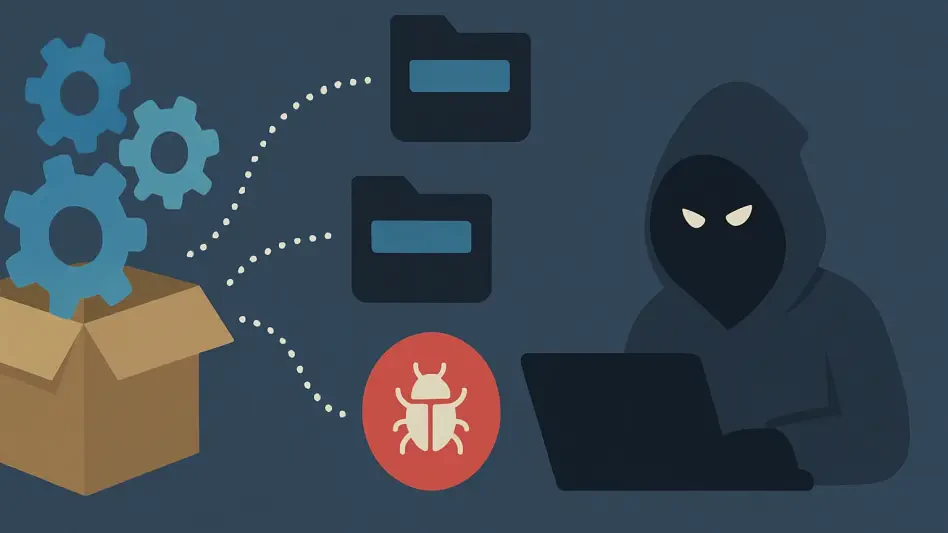
A single execution of the command string “npm install” can inadvertently bypass every perimeter defense and grant a remote adversary absolute administrative authority over a developer’s local machine. This command is the cornerstone of modern software development, yet it has become a powerful delivery mechanism for the MALFEX campaign. While security teams focus on patching known vulnerabilities in established software, this silent crisis illustrates how persistent attackers hide within the very repositories that developers trust most. This is not a random act of vandalism but a calculated operation that turns legitimate package management into a conduit for sophisticated surveillance tools.
The Invisible Threat Lurking in Your Dependency Tree
The software supply chain is currently facing a fundamental crisis where the speed of development often outpaces the ability to verify security. The MALFEX campaign demonstrates that a calculated operator can remain active for over a year within public repositories, turning package management into a delivery system for malware. By embedding malicious code in deep dependency trees, the attackers ensure that their presence remains undetected even as the software they infect is deployed across various enterprise environments.
This persistence is made possible by the sheer volume of packages, which allows malicious code to remain available for months despite security advisories. The campaign is not just about stealing data but about maintaining a long-term presence on a workstation. When a developer downloads a compromised package, they are essentially handing the keys of their infrastructure to a threat actor who has spent months refining their evasion techniques.
Why the npm Ecosystem Is a Prime Target for Supply-Chain Attacks
Modern software development relies heavily on open-source packages, creating a complex web of dependencies that is increasingly difficult to audit. The npm ecosystem is a prime target because it allows for automated installation scripts that trigger infection chains the moment a package is downloaded. This “set and forget” mentality among developers creates a structural blind spot that attackers are eager to exploit.
The MALFEX campaign, linked to a GitHub profile known as “cavecrew,” utilizes multiple accounts to distribute malicious code across the platform. Because the automated nature of these tools is designed for efficiency, security checks are often bypassed in favor of speed. This vulnerability is exacerbated by the fact that many organizations do not have a formal process for vetting new dependencies, allowing malicious actors to hide in plain sight for extended periods.
Anatomy of the MALFEX Infection Vectors
The MALFEX campaign utilizes two distinct delivery chains designed for full system compromise and rapid data exfiltration. One branch focuses on deploying the Overlord RAT, a Go-based remote access trojan that utilizes the Solana blockchain to retrieve command-and-control server addresses. This decentralized approach makes the infrastructure incredibly resilient, as attackers can change their C2 destination without needing to update the malware itself, effectively bypassing traditional IP-blocking measures.
The second vector focuses on high-speed data theft by delivering a massive Node.js bundle that injects code directly into Discord clients. This allows attackers to hijack authentication tokens and scan the system for browser cookies, login credentials, cryptocurrency wallets, and Telegram sessions. All stolen data is then funneled back to the attackers through Discord webhooks, a method that often bypasses corporate firewalls because the traffic appears to be legitimate communication.
Insights From the Frontlines of Cyber Defense
Research highlights a disturbing reality where removing a single malicious package is often a game of “whack-a-mole.” Because the operator—who likely speaks Portuguese based on code artifacts—spreads dependencies across various repositories and external payloads, the threat persists even after an initial cleanup. This campaign represents a shift toward more sophisticated, decentralized malware operations that weaponize the infrastructure of the modern web to remain undetected.
Security experts note that the use of legitimate services like Discord for data exfiltration and blockchain for C2 addresses indicates a high level of operational maturity. Attackers are no longer relying on easily identifiable malicious domains; instead, they are blending in with the traffic that already exists on a developer’s machine. This evolution requires a shift in how organizations perceive the safety of their development environments.
Strategies for Securing the Software Supply Chain
Organizations moved beyond reactive security measures by adopting a proactive stance toward dependency management. Developers implemented automated scanning tools that analyzed the behavior of installation scripts rather than just searching for known vulnerability signatures. Pinning dependencies to specific, audited versions prevented the automatic download of malicious updates that previously plagued the npm ecosystem.
Restricting execution environments through isolated containers ensured that malicious scripts could not access sensitive system files or reach out to external servers. These strategies, combined with network monitoring for unusual outbound connections to blockchain gateways or Discord webhooks, provided the necessary defense to secure the software supply chain. By treating every external package as untrusted by default, security teams established a more resilient posture that successfully neutralized the silent advantages once held by the MALFEX campaign.