
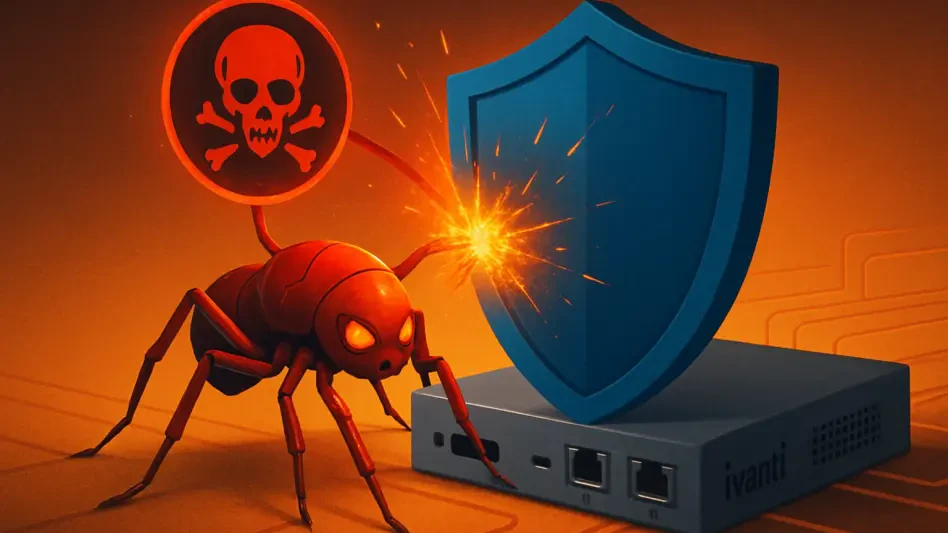
Security professionals currently face a landscape where invisible digital intruders bypass standard defenses by remaining completely silent until a specific, mathematically calculated trigger awakens them from their dormancy. The emergence of the RESURGE malware marks a significant evolution in cyber espionage, specifically targeting Ivanti Connect Secure devices through the critical exploitation of the CVE-2025-0282 vulnerability. This sophisticated implant operates with a level of stealth that challenges traditional security paradigms, making the updated Malware Analysis Report from federal experts an indispensable resource for protecting both national and private sector interests. The gravity of this threat lies in its ability to embed itself within the core processes of a gateway device, effectively turning a security tool into a primary vulnerability for the entire organization.
Grasping the technical nuances of this threat requires a deep dive into its multi-component attack chain and specialized evasion tactics. RESURGE does not merely infect a system; it integrates into the native web process to monitor incoming traffic for specific cryptographic triggers. This guide illuminates the mechanics of these passive command-and-control models and details the defensive best practices necessary to neutralize such persistent threats. By focusing on technical indicators and behavioral patterns, organizations can move toward a more resilient security posture that anticipates rather than just reacts to intrusions. Understanding these mechanisms is the only way to ensure that critical infrastructure remains shielded from long-term exploitation.
Why Defending Against RESURGE Is Essential for Enterprise Security
Defending against RESURGE is not merely a matter of routine maintenance but a fundamental requirement for maintaining enterprise security in an era of advanced persistent threats. Adhering to the rigorous standards set by cybersecurity experts provides a roadmap for identifying threats that standard automated scanners frequently overlook. The passive nature of the malware means that typical traffic analysis might fail to trigger alerts because the device does not reach out to a malicious server on its own. This shift in attacker methodology requires a corresponding shift in defensive strategy, emphasizing the detection of “passive” models that remain dormant for extended periods.
Beyond the immediate protection of data, implementing these best practices offers significant operational advantages and long-term cost savings. Organizations that successfully detect and isolate these implants avoid the astronomical costs associated with extensive forensic investigations and the remediation of lateral movement within a corporate network. Furthermore, ensuring that Ivanti devices function as intended maintains the integrity of the remote access gateway, preventing it from serving as a tactical staging ground for deeper incursions. Maintaining operational integrity ensures that the perimeter remains a solid barrier rather than a revolving door for unauthorized actors seeking to exfiltrate sensitive information.
Best Practices for Mitigating and Detecting RESURGE Malware
Effective mitigation begins with a comprehensive understanding of the defensive strategies that network administrators must employ to protect their environments. The process of neutralizing a threat as complex as RESURGE involves multiple layers of security, ranging from network-level inspection to internal system hardening. By breaking these strategies down into actionable steps, security teams can build a robust defense that addresses each phase of the attack chain. This proactive approach is essential for identifying the subtle footprints left by sophisticated implants before they can be used to compromise the broader corporate network.
Implement Advanced Network Monitoring and Certificate Inspection
The first layer of defense involves a shift toward granular network inspection, particularly regarding the unique cryptographic fingerprints utilized by the RESURGE implant. Unlike common malware that initiates outbound connections, this threat waits for a specific inbound TLS HELLO packet to activate its functions. Administrators must monitor for specific CRC32 hashes within the TLS random values, which the malware uses to identify its operators. This requires a level of visibility into the initial handshake of encrypted connections that many standard monitoring tools may not provide by default.
Detecting these subtle anomalies requires specialized tools capable of deep packet inspection and the ability to parse encrypted handshake metadata. By focusing on these specific technical markers, security teams can identify the presence of a compromise even when the malware remains otherwise inactive. This level of scrutiny ensures that the initial communication attempt by a threat actor is flagged before a full command-and-control session is established. Monitoring for these specific artifacts is a critical component of a modern defense-in-depth strategy that accounts for passive engagement.
Real-World Detection: Identifying Forged Certificates in Network Logs
Security analysts can gain the upper hand by searching network logs for the forged TLS certificates that the RESURGE malware employs for mutual authentication. These certificates are not used for standard encryption but serve as a digital “secret handshake” between the attacker and the compromised device. When an unauthorized operator attempts to establish a secure shell tunnel, the exchange of these forged certificates leaves a detectable trail in the connection logs. Identifying these non-standard or self-signed certificates in environments where they do not belong is often the first definitive sign of an active compromise.
A practical application of this detection method involves auditing all successful mutual TLS connections to the Ivanti gateway and comparing the certificate authorities against a known list of approved providers. If a connection is established using a certificate that lacks a proper chain of trust or contains anomalies identified in recent malware reports, it should be treated as a high-priority security event. This specific focus on cryptographic artifacts allows defenders to spot unauthorized tunnels even when the traffic itself is encrypted and hidden from traditional content filters.
Enforce Strict System Integrity and Patch Management
Neutralizing the initial infection vector is perhaps the most critical step in preventing the deployment of the RESURGE implant. Administrators must prioritize the application of patches for CVE-2025-0282, as this vulnerability provides the entry point for the entire attack chain. Beyond just patching, hardening the underlying Ivanti operating system is necessary to prevent the malware from successfully injecting itself into the web process. This involves restricting the ability of processes to modify system files and ensuring that integrity checks are performed frequently and automatically.
System hardening also includes the rigorous management of local files and directories that the malware might target for persistence. By ensuring that the system environment is as restrictive as possible, administrators can create a hostile environment for any malware that manages to bypass the initial perimeter defenses. This structural integrity is the foundation upon which all other security measures are built, as it prevents the malware from gaining the “root” level access it needs to manipulate logs or hide its presence from the operating system itself.
Case Study: Blocking the Multi-Component Attack Chain
In a practical scenario, stopping the RESURGE threat requires more than just a single patch; it requires a coordinated defense against the various components of the attack. For instance, the SPAWNSLOTH variant is specifically designed to erase forensic logs and hide the activities of the primary implant. By keeping antivirus signatures updated and strictly enforcing the principle of least privilege, organizations can prevent this secondary component from executing its cleanup routines. If the malware cannot erase the evidence of its presence, the chances of early detection increase exponentially.
Furthermore, restricting local administrator privileges ensures that even if a component like SPAWNSLOTH is introduced to the system, it lacks the necessary permissions to tamper with critical system logs. This multi-layered approach effectively breaks the attack chain by denying the malware the tools it needs to maintain long-term stealth. When forensic logs remain intact, security teams can reconstruct the timeline of the intrusion and identify exactly what data may have been targeted, allowing for a much faster and more effective response.
Strengthen Operational Hygiene and Access Control
Reducing the attack surface of Ivanti devices involves disabling any unnecessary services and auditing user permissions on a regular basis. Services such as file and printer sharing, which are often enabled by default, can provide additional avenues for attackers to move laterally once they have established a foothold on the gateway. By disabling these features and isolating the Ivanti device from high-risk external activities like unverified email attachments or web browsing, organizations can significantly limit the potential impact of a breach.
Operational hygiene also extends to the way administrators interact with the device. Multi-factor authentication should be mandatory for all administrative access, and session timeouts should be strictly enforced to prevent session hijacking. These common-sense security measures, while seemingly basic, are often the difference between a minor incident and a catastrophic breach. Ensuring that the gateway is dedicated solely to its primary function as a secure access point minimizes the “noise” and makes it much easier to spot the unusual activity associated with an implant.
Case Study: Preventing Lateral Movement via Shell Script Extraction
The threat of lateral movement is exemplified by the Custom Embedded Binary toolkit, which attackers use to move from the Ivanti device into the broader corporate network. This toolkit often includes shell scripts and applets that allow the extraction of system images and the execution of additional payloads. By isolating the Ivanti device within a restricted network segment (a “DMZ”) and disabling file-sharing services, administrators can prevent these tools from reaching other servers. This containment is vital for ensuring that a compromised gateway does not lead to the compromise of the entire data center.
In one documented instance, a robust network segmentation policy prevented an attacker from using an extracted kernel image to pivot into a sensitive financial database. Because the Ivanti device was prohibited from initiating new connections to internal servers, the Custom Embedded Binary toolkit was effectively neutralized, even though the gateway itself had been compromised. This illustrates the power of defensive architecture in limiting the blast radius of a sophisticated malware threat, providing the time needed for the security team to identify the intrusion and remediate the infected device.
Final Evaluation: Securing the Perimeter Against Persistent Threats
The evolution of the RESURGE threat demonstrated that perimeter devices are no longer just barriers; they were transformed into high-value targets for persistent actors. The sophisticated nature of the implant, with its reliance on passive triggers and cryptographic evasion, proved that traditional, reactive security models were insufficient for modern challenges. CISA’s guidance provided a necessary framework for shifting toward a more proactive, artifact-based hunting strategy. Organizations that adopted these best practices moved beyond simple patch management and toward a holistic understanding of their network’s behavior.
This technology remained most relevant for organizations that relied on Ivanti Connect Secure for remote access, particularly those within the critical infrastructure sectors. Because RESURGE operated as a passive threat, the responsibility fell on administrators to prove their systems were clean through active scanning and network artifact hunting. The lessons learned from this threat emphasized that assuming a system was secure without deep inspection was a dangerous gamble. Ultimately, the effectiveness of the response depended on the speed at which security teams integrated these technical indicators into their daily operations. Proactive monitoring became the standard for those who successfully defended their perimeters against these advanced digital implants.