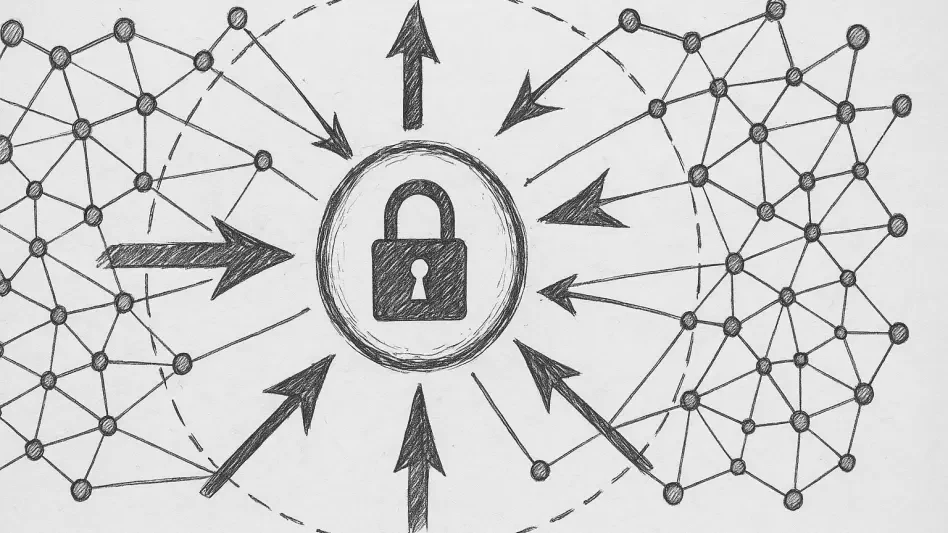
A single bot click rippled across thousands of pipelines when a trusted update path quietly swapped security for speed, and the breach that followed revealed how CI now decides who holds the keys to modern software.
Software Supply Chains at an Inflection Point: CI/CD, Trusted Bots, and the New Trust Boundary
Continuous delivery sits at the center of software production, and by 2026 it runs on automation-first patterns where commits trigger ephemeral infrastructure, containers, and policy engines. Platform-native services such as GitHub Actions and Dependabot now mediate trust, deciding which code, images, and tools enter pipelines. That shift expands the boundary from developers to machine identities and service accounts that act at scale.
Ecosystems span npm and Docker Hub to CI runners, scanners, and AI coding assistants, all wrapped by IaC, SBOM pipelines, and containerized tooling. Major vendors anchor this landscape, while SLSA, NIST SSDF, OpenSSF, and zero trust norms define acceptable practice. The result is a market with strong guardrails available but uneven adoption across organizations.
How the Campaign Unfolded: Chained Compromises and Automation-Driven Scale
From Trojanized Tools to Autonomous Propagation
The operation began with a compromise of the @bitwarden/cli npm package, threatening scripted secret retrieval in developer and build flows. The decisive pivot arrived on April 22, 2026, when Dependabot fetched checkmarx/kics:latest, pulling a poisoned image that executed in CI with elevated permissions and siphoned repository secrets with no human in the loop.
From there, lateral movement rode organization-wide permissions and permissive runners. A worm dubbed Shai-Hulud, also called CanisterSprawl, propagated autonomously, using fallback C2 that mined public commits for a tag and stashed encrypted blobs in repos created under victim accounts to mimic normal activity. It also hunted for AI assistant CLIs and wrote heredocs into shell RC files to ensure persistence.
Data-Backed Indicators and What They Signal Next
Investigators correlated Docker image timestamps and digests with Dependabot PR timelines, then matched CI logs showing atypical secret reads. Telemetry flagged anomalous repo creation and public commits bearing LongLiveTheResistanceAgainstMachines, including a tell like helloworm00/hello-world that announced a fresh exfiltration domain.
Performance signals painted the macro risk: high auto-merge rates, widespread use of “latest,” and slow human review inside fast pipelines. Forecasts modeled steep spread under automation triggers, with measurable reduction when images pin to digests and policy gates block unsigned or unverifiable artifacts.
Friction Points in the Pipeline: What Makes Automation a Double-Edged Sword
Trusted bots often run with broad scopes, ephemeral runners inherit powerful tokens, and “latest” tags invite silent drift. Transitive dependencies multiply surface area, while containerized tools mask where execution truly occurs. In practice, speed outpaces scrutiny.
Operationally, noisy CI telemetry, fragmented ownership, and living-off-the-land on GitHub complicate detection. Adversaries use public commits for covert C2 and exfiltrate into repos controlled by victims. Practical countermeasures combine registry allowlists, immutable digests, OIDC-backed, least-privilege secrets, and pre-merge sandboxes with canary rollouts.
Guardrails and Governance: Standards and Policies Shaping CI/CD Security
Regulatory and industry guidance now maps cleanly to CI controls. NIST SSDF anchors hardening patterns, while executive directives push SBOM and provenance. EU measures add pressure on disclosure and resilience. SLSA, Sigstore, and OpenSSF Scorecards translate expectations into verifiable checks.
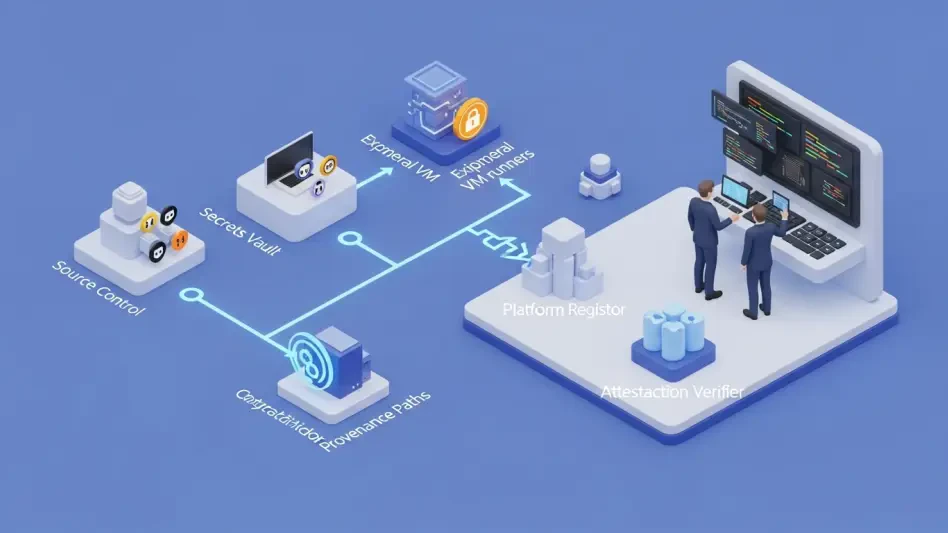
Platforms enforce 2FA and publisher verification, and repositories can require artifact signatures, attestations, and restricted bot behavior. In mature programs, attestation gates, SBOM verification, and baselined secrets management align with audit-ready response playbooks.
Where This Is Heading: Bot-Aware Security, Provenance by Default, and AI-First Tooling Risks
Policy-as-code for automation identities, isolated ephemeral VMs, hermetic builds, and signed attestations embedded in dependency graphs are converging into default posture. New entrants promise provenance-aware update services and eBPF-based runtime sensors for CI.
Developer habits are adjusting: delayed auto-merges for vetting, digest pinning, curated toolchains, and hygiene for assistant-driven workflows. Growth is strongest in AI-tooling hardening, CI secret-scoping, cross-org threat intel, and managed provenance. Consolidation around trusted registries and OpenSSF collaboration accelerates this reset.
Executive Takeaways and Action Plan for Resilient Pipelines
The breach showed that trusted automation and security tools had become prime intrusion vectors, and that CI represented a critical blast radius. Effective programs treated bots as privileged identities with mandatory review, pinned to digests, verified signatures and provenance, staged Dependabot rollouts behind policy, hardened runners with OIDC-bound, short-lived credentials, segmented secrets, watched for GitHub-native signals, and locked down AI assistant CLIs and shell RC integrity. Taken together, those steps shifted organizations from hope to verification, and positioned pipelines to contain the next automation-triggered incident.