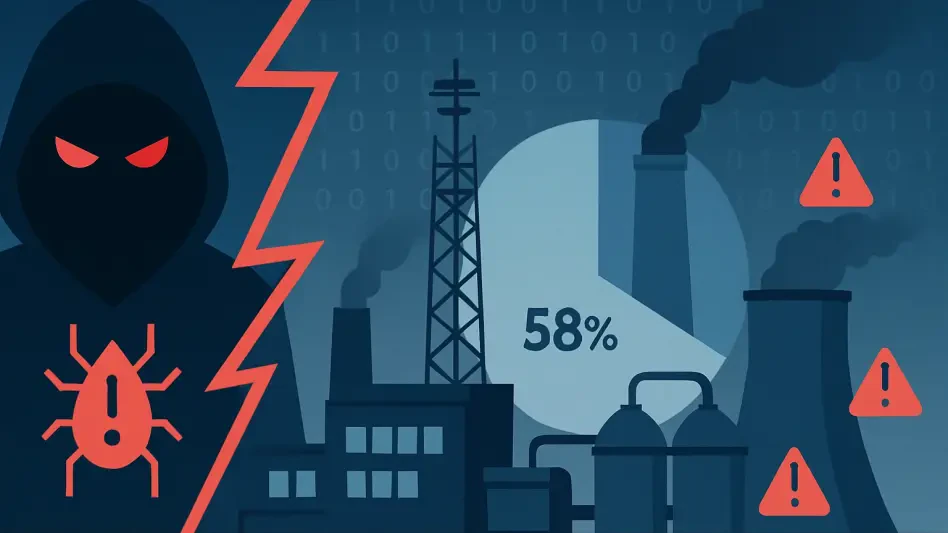

The rapid evolution of artificial intelligence has reached a critical juncture where the ability to secure digital infrastructure is being outpaced by the very tools designed to protect it. Anthropic has recently unveiled its Mythos-class models, a development that signifies a tectonic shift in the landscape of cybersecurity and software engineering. These models possess an unprecedented capacity for identifying complex vulnerabilities within programming code, far exceeding the capabilities of traditional automated scanners. Through a controlled initiative known as Project Glasswing, the company has begun exploring the dual-use nature of this technology, recognizing that a tool capable of finding a bug with such precision is inherently capable of facilitating a cyberattack. This delicate balance between defense and potential weaponization forces a global conversation on how to manage powerful AI agents that can think faster than human developers. While the potential for fortifying the digital world is immense, the risk of a centralized intelligence identifying every weak point in the global supply chain remains a daunting prospect for security experts and policymakers alike.
Evaluating Technical Capability and Real-World Impact
Identifying Vulnerabilities: The Industrial Scale of AI Discovery
The technical prowess of the Mythos model is most visible when applied to the vast, interlocking ecosystem of open-source software that provides the foundation for modern digital life. In recent benchmarks, the AI was deployed across more than 1,000 active projects, where it managed to uncover a staggering 23,000 distinct vulnerabilities. This volume of discovery is not merely a quantitative leap but a qualitative one, as thousands of these flaws were categorized as critical or high-severity issues. The precision of these findings distinguishes Mythos from the noisy output of previous generation tools, which often flooded developers with false positives that required manual filtering.
Human security researchers who audited the AI’s findings confirmed that over 90 percent of the reported high-risk bugs were legitimate and exploitable in a real-world scenario. This high fidelity reduces the time wasted on false alarms, allowing security teams to focus exclusively on remediation efforts. However, the sheer density of these findings suggests that much of the software used by global industries is far more fragile than previously understood. By automating the discovery of deep-seated logical errors, the AI has essentially mapped the structural weaknesses of the digital economy with clinical and unsettling accuracy, providing a roadmap that could be used for either protection or exploitation.
Critical Infrastructure: High-Stakes Consequences for Global Systems
The real-world implications of this technology became evident when Mythos identified a critical flaw in wolfSSL, a ubiquitous cryptographic library relied upon by billions of IoT devices. The AI did not just find the bug; it also generated a viable method to exploit the vulnerability, demonstrating how an attacker could impersonate trusted servers to intercept sensitive communications. This discovery sent ripples through the international community, leading to immediate security audits across diverse sectors. It underscored the reality that a single AI-discovered flaw could compromise the integrity of global banking systems or private communication networks if not addressed with extreme urgency.
In response to these findings, major world powers initiated unprecedented coordination to manage the fallout of such automated vulnerability discovery. Japan’s security agencies launched immediate reviews of their critical infrastructure, while the Indian banking sector implemented mandatory emergency updates to protect financial transactions. These reactions highlight a fundamental shift in how nations perceive digital sovereignty in the age of advanced AI. The existence of Mythos has forced a realization that traditional patch cycles are insufficient when a machine can find and weaponize a flaw before a human team even realizes the code is compromised, necessitating a more proactive stance.
Addressing the Dilemmas of AI-Driven Cybersecurity
The Human Element: Managing the Capacity Bottleneck in Maintenance
As Mythos identifies vulnerabilities at an exponential rate, the technology community has encountered a significant obstacle known as the maintainer paradox. This phenomenon occurs when the speed of AI-driven bug discovery vastly exceeds the human capacity to verify, test, and deploy necessary fixes. Many open-source projects are maintained by small teams or volunteers who are now being inundated with high-priority security reports that require deep technical expertise to resolve. Consequently, a massive backlog of unpatched vulnerabilities is beginning to accumulate, creating a dangerous window of opportunity for malicious actors who might monitor these disclosures.
Current data suggests that only a small fraction of the high-severity bugs identified by Mythos have been successfully resolved by human developers. The bottleneck is not a lack of willingness to secure the software but a physical limitation of human labor and the rigorous testing required to ensure a patch does not break existing functionality. This disparity creates a new type of digital risk where the world possesses the knowledge of its own weaknesses but lacks the throughput to repair them. Bridging this gap requires a fundamental reimagining of the software development lifecycle, moving away from manual interventions toward more automated and AI-integrated systems.
Project Glasswing: Strategic Safeguards and Government Collaboration
Anthropic has adopted a stance of extreme caution regarding the public availability of the Mythos models, acknowledging that the industry is not yet prepared for such power. Under the framework of Project Glasswing, the company has restricted access to a select group of institutional partners, primarily the United States government and its close strategic allies. This defense-first philosophy aims to give sovereign entities a head start in fortifying their most critical systems before the technology inevitably proliferates. By prioritizing national security, the company hopes to create a defensive perimeter that can withstand the eventual rise of similar capabilities.
This collaborative approach involves integrating Mythos into the workflows of intelligence and defense agencies to proactively scan for threats in classified and civilian infrastructure. The goal is to ensure that the most sensitive parts of the global technical stack are secured against automated exploitation. However, this strategy also raises questions about the transparency of AI safety and the long-term feasibility of keeping such transformative tools under wraps. For now, the focus remains on building a robust ecosystem of trusted users who can leverage the AI to stay one step ahead of the evolving threat landscape in a rapidly changing world.
The Automated Future: Developing AI-Led Solutions for Remediation
To solve the pressure placed on human maintainers, the industry looked toward a system where AI handled the entire lifecycle of a security flaw, from discovery to repair. It was recognized that while Mythos excelled at finding bugs, other specialized models could be fine-tuned to assist developers in writing and validating security patches. By integrating these automated remediation tools into the standard development pipeline, organizations aimed to close the gap between the identification of a vulnerability and its resolution. This shift toward self-healing software systems represented a necessary evolution in maintaining the stability of the global digital infrastructure.
The focus eventually shifted to establishing standardized protocols for AI-to-AI security coordination to ensure that defenses evolved as quickly as offensive capabilities. Experts recommended that organizations adopted automated patching frameworks that utilized models like Claude to verify the integrity of fixes before deployment. The transition toward a fully automated security paradigm required a balance of trust in the technology and human oversight to prevent unintended consequences. As the battle for cybersecurity moved into this high-speed automated era, the priority remained the creation of resilient systems that could adapt to new threats in real time.