The rapid integration of sophisticated artificial intelligence into the modern software development lifecycle has inadvertently opened a back door for a new generation of clever cyber threats targeting the very tools designed to boost productivity. As engineers increasingly rely on automated assistants to handle complex refactoring and code generation, the underlying trust in these systems has become a primary vector for exploitation, specifically through a vulnerability known as GhostApproval. This flaw represents a fundamental breakdown in how file system permissions and user approvals are managed, transforming a helpful coding companion into a potential vehicle for full system compromise. By leveraging the inherent complexity of modern integrated development environments, attackers can orchestrate movements that bypass traditional security filters. This situation forces a re-evaluation of the current security paradigms that govern human-AI interaction.
Technical Foundations: The Vulnerability Mechanism
The Mechanics: Deceptive Symbolic Links
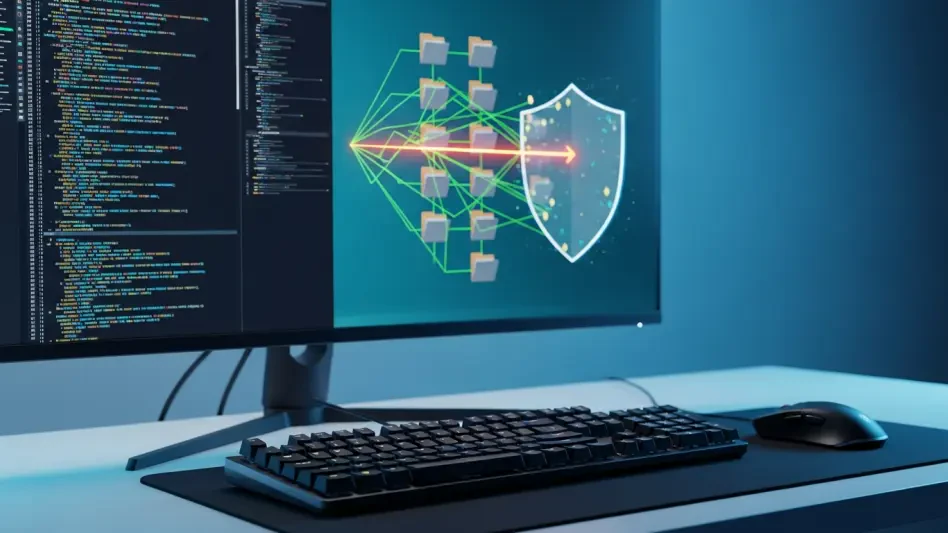
At the technical core of the GhostApproval vulnerability lies the strategic abuse of symbolic links, which are common file system objects acting as pointers to other locations on a storage medium. In a typical development environment, symlinks are used to manage dependencies or streamline access to shared resources across different project directories. However, AI coding assistants often interact with these links without performing the rigorous validation checks that a security-conscious human might execute. When an AI tool is instructed to scan a project folder, it may follow a symbolic link out of the intended directory and into sensitive system areas. This behavior is particularly dangerous because the AI treats the linked file as if it were a legitimate part of the current project. This oversight allows a malicious actor to create a deceptive pathway that the automated assistant will traverse during its standard operational routines.
Attackers can exploit this characteristic by crafting malicious repositories that include innocent-looking files designed to trick the assistant into performing unauthorized write operations. For instance, a seemingly harmless configuration file in a public repository could actually be a symlink pointing directly to a developer’s private SSH keys or shell initialization scripts. If the AI assistant is prompted to update project settings or refactor code within that directory, it may inadvertently overwrite these critical system files with attacker-supplied data. This method of exploitation is highly effective because it leverages the high level of permissions usually granted to development tools. By the time a developer realizes that their system configuration has been altered, the attacker may have already established a permanent foothold or exfiltrated sensitive credentials, all while appearing to be part of a standard automated code update process.
Undermining Oversight: The User Interface Failure
The effectiveness of GhostApproval is significantly amplified by a lack of transparency within the user interface of most AI coding tools. When an assistant prepares to modify a file, it typically presents a confirmation dialogue to the user, showcasing the intended changes and the filename. However, these interfaces often display the name of the symbolic link itself rather than the absolute path of the target file it points to. A developer might see a prompt to update a file named “local-config.json” and provide approval, unaware that the link actually points to a critical system file like “/etc/passwd” or a cloud provider’s credential store. This creates a false sense of security, as the user believes they are approving a routine project modification. The AI, acting as a proxy for the attacker, successfully gains “informed consent” for a malicious action through this UI-driven obfuscation.
This failure in the “human-in-the-loop” security model highlights a significant gap in how AI agents communicate their internal logic to human operators. Because the AI internally resolves the link to its final destination to perform the write operation, it possesses the correct technical information but fails to surface it in a way that allows for meaningful human review. This discrepancy turns the approval process into a hollow formality rather than a robust security gate. Furthermore, some assistants have been observed performing “silent reads” of files outside the project scope via symlinks even before a user initiates a prompt. This preemptive data access means that sensitive information can be cached or processed by the AI model’s backend without any user interaction, extending the reach of the vulnerability beyond simple file modification and into the realm of passive data harvesting.
Industry Impact: Systemic Failures and Strategic Defenses
Evaluating Responses: A Divided Industry Philosophy
The disclosure of GhostApproval triggered a wave of investigations across the AI development sector, revealing a stark contrast in how various vendors approach agent security. Several major technology firms recognized the seriousness of the flaw and immediately moved to implement patches that prevent their assistants from following symbolic links that point outside the active workspace. These companies prioritized the integrity of the host system, ensuring that the AI agent operates within a restricted “sandbox” of known project files. By enforcing strict boundary checks, these vendors effectively neutralized the threat of deceptive links, demonstrating a commitment to building tools that are secure by design. Their proactive measures included updating path resolution logic and enhancing the clarity of confirmation prompts to show absolute file paths.
In contrast, other creators of AI coding tools adopted a more controversial stance, arguing that the responsibility for security lies primarily with the developer who chooses to trust a local folder. These organizations suggested that symlink exploitation is a general operating system risk rather than a specific flaw in the AI assistant itself. This perspective shifts the burden of auditing every file and link within a repository onto the end-user, which is increasingly impractical given the complexity of modern software projects. This divide in security philosophy creates a fragmented landscape where developers must be acutely aware of the specific safety implementations of the tools they choose to use. The lack of a unified industry standard for AI file operations continues to leave a portion of the developer community vulnerable to sophisticated attacks that leverage the trust inherent in local development environments.
Practical Safeguards: Strengthening Development Workflows
To mitigate the risks associated with GhostApproval and similar symlink-based threats, organizations began adopting a multi-layered defense strategy that prioritizes isolation and rigorous auditing. One of the most effective measures involved the use of containerized or sandboxed development environments, such as remote development servers or lightweight virtual machines. By isolating the AI assistant and the project code from the primary host operating system, developers ensured that even a successful symlink exploit would be contained within a restricted environment. This approach prevented attackers from reaching sensitive system configurations or personal credentials stored on the main machine. Furthermore, security teams encouraged the use of automated scanning tools to detect and flag suspicious symbolic links within cloned repositories before they were ever opened in an integrated development environment.
The security community eventually reached a consensus that the long-term solution required a fundamental change in how AI assistants are built to interact with the file system. Developers began demanding that toolmakers implement “safe-by-default” configurations, where the assistant must explicitly ask for permission to traverse any link pointing outside the current directory. This shift was supported by new logging protocols that recorded every file access event initiated by an AI agent, providing a clear audit trail for forensic analysis. By integrating these defensive practices into the standard development workflow, the industry moved toward a more resilient architecture. These collective efforts ensured that the productivity benefits of artificial intelligence were not overshadowed by the risk of systemic compromise, establishing a new baseline for security in the age of automated programming assistants.