
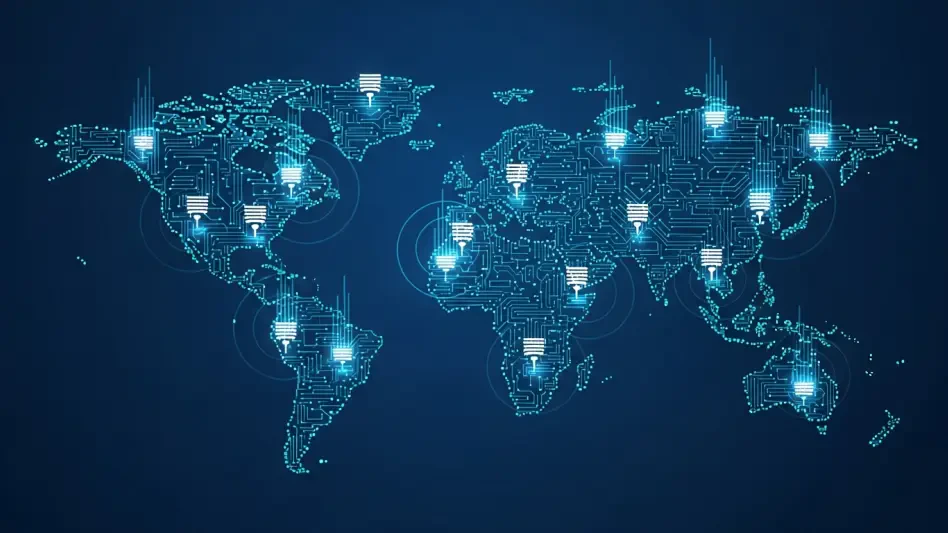
Cybersecurity analysts recently discovered a massive intelligence operation involving advanced persistent threat actors who successfully bypassed traditional perimeter defenses without requiring any user interaction across sixteen different sovereign nations simultaneously. The sophisticated nature of this campaign, attributed to the group known as Laundry Bear, represents a shift in digital espionage where human error is no longer the primary entry point for breaches. By targeting vulnerabilities in networking equipment, the attackers demonstrated that security awareness training cannot protect an organization against zero-click exploits. These intrusions remained undetected for months, allowing the actors to exfiltrate vast quantities of sensitive data while maintaining presence within critical infrastructure. The scale of the operation, spanning diverse regions and government sectors, highlights a level of coordination rarely seen. This methodology allowed the group to compromise secure networks by exploiting the hardware intended to protect them, turning firewalls into conduits for surveillance.
The Technical Architecture: Bypassing the Human Element
Laundry Bear focused their efforts on unpatched vulnerabilities within enterprise-grade routing hardware and specialized security appliances that often sit outside the direct scrutiny of endpoint detection tools. These devices, which serve as the gatekeepers for internal corporate and governmental traffic, were compromised through sophisticated memory corruption exploits that required no authentication or physical access. Once the initial foothold was established, the attackers deployed custom-built rootkits designed specifically for the underlying operating systems of these network devices. This approach enabled the actors to intercept traffic in real-time, effectively performing a man-in-the-middle attack on a national scale. Because the exploitation happened at the hardware level, traditional antivirus software and desktop security suites were entirely blind to the presence of the intruders. The persistence mechanism utilized by the group ensured that even after device reboots, the malicious code remained active.
Building on this foundation of hardware-level access, the threat actors implemented a multi-stage command and control infrastructure that utilized legitimate cloud services to blend in with normal outbound traffic. This stealthy communication channel allowed the group to push updates to their malware and exfiltrate data without triggering common network anomaly detection systems that typically flag connections to unknown domains. The automation of the lateral movement phase was particularly noteworthy, as the scripts utilized by Laundry Bear were capable of identifying and exploiting internal servers within minutes of the initial breach. By leveraging built-in administrative tools, the attackers moved across the sixteen targeted nations with an efficiency that suggested extensive testing prior to the campaign. This strategy minimized the noise generated within the internal network, ensuring that the lateral migration appeared as standard administrative activity to most monitoring tools, extending the lifespan of the operation across all jurisdictions.
Strategic Defensive Transformations: Lessons from Global Intrusion
The selection of sixteen diverse nations as targets indicates a broad strategic objective aimed at gathering intelligence on regional trade agreements, energy security, and defense collaborations. The victims spanned several continents, including significant governmental bodies in Southeast Asia, Eastern Europe, and South America, suggesting that Laundry Bear is an actor with global interests and significant resources. Evidence suggests that the primary focus was the acquisition of confidential documents related to long-term economic planning and maritime security. By accessing the communications of high-ranking officials and policy advisors, the threat actors gained an unprecedented window into the decision-making processes of multiple sovereign states. This level of access provided more than just a tactical advantage; it offered a strategic overview of geopolitical shifts and potential alliances that could be used to influence international relations. The coordination required to manage such an operation across time zones points to a highly disciplined organization.
Addressing these sophisticated threats necessitated a total overhaul of the traditional perimeter-based security model, shifting focus toward zero-trust architectures and hardware integrity verification. Organizations that successfully mitigated the impact of these attacks did so by implementing continuous monitoring of network device telemetry and adopting more frequent firmware update cycles for all edge appliances. It was determined that the integration of hardware-rooted security, such as Trusted Platform Modules and secure boot configurations, provided the only reliable defense against the persistent rootkits used by Laundry Bear. Furthermore, the decoupling of management interfaces from the public internet proved essential in reducing the attack surface available to zero-click exploits. Security teams moved toward a model where every network flow was inspected for behavioral anomalies. This proactive approach to infrastructure hardening served as a blueprint for modern resilience, emphasizing that foundational visibility was a prerequisite for security.