
The convergence of high-stakes clinical care and sophisticated computational power has fundamentally transformed the medical landscape, moving beyond simple mechanical tools to interconnected digital ecosystems. This rapid digital transformation, while offering unparalleled improvements in patient monitoring and therapeutic precision, has simultaneously dismantled the traditional security perimeter that once protected life-critical hardware. A recent comprehensive analysis by MITRE underscores a paradigm shift where traditional air-gapped security strategies are no longer viable in an era defined by cloud-native applications and decentralized care models. As the healthcare industry integrates advanced technologies such as distributed cloud services and generative artificial intelligence, the attack surfaces available to malicious actors have expanded in both scale and complexity. This shift necessitates a complete reimagining of how manufacturers and healthcare delivery organizations approach the safety of devices that are now inherently part of a larger, often unsecured, global network. The core challenge lies in the fact that while these technological leaps forward provide life-saving benefits, they introduce unique vulnerabilities that can directly compromise device functionality and patient safety in ways that were previously unimaginable.
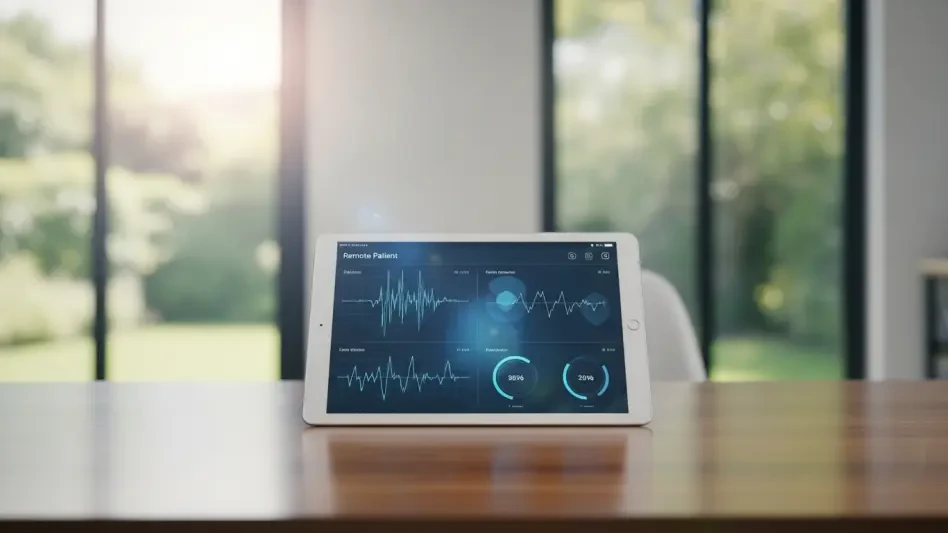
The movement of medical device operation from the strictly controlled environment of a hospital into the private residences of patients represents one of the most significant changes in modern healthcare delivery. Historically, medical devices functioned within the secure “four walls” of a clinical facility, where healthcare delivery organizations maintained absolute control over network protocols and physical access. Today, the operational context has shifted toward ambulatory settings and home-based care, driven by the ubiquity of connected wearables, smart infusion pumps, and remote monitoring apps. This decentralization significantly complicates risk ownership, as healthcare providers have limited visibility into the security of a patient’s home Wi-Fi network or the various third-party devices interacting with a medical tool. When a critical device relies on a consumer-grade router or an unpatched smartphone to transmit vital health data, the responsibility for maintaining security shifts from a centralized IT department to a shared, multi-stakeholder burden involving manufacturers, regulators, and the patients themselves. This new reality demands that security protocols be designed to withstand the inherent instability and potential compromises of a standard residential internet environment.
Beyond the challenges of physical location, the inherent design constraints of diverse medical hardware create a persistent security gap that is difficult to bridge. Many implantable devices, such as cardiac pacemakers or neurostimulators, operate with extremely limited computing resources, including low processing power and minimal memory capacity to preserve battery life. These constraints often prevent the implementation of robust, modern encryption or active monitoring software that is standard in other industries. Conversely, large-scale clinical systems like magnetic resonance imaging scanners or computed tomography units suffer from the “legacy software” problem; because of their high capital costs and long operational lifecycles, these machines frequently run on outdated operating systems that have reached their end-of-life status. This creates a situation where the medical infrastructure is populated by a mix of resource-constrained modern implants and aging industrial-sized systems, both of which are highly susceptible to modern cyber threats. Addressing these vulnerabilities requires a specialized approach to cybersecurity that respects the physical limitations of the hardware while providing enough protection to ensure continuous, safe operation throughout the entire lifecycle of the device.
The Systemic Risks Of Cloud Integration And Infrastructure Dependency
Medical device manufacturers are increasingly leveraging cloud computing to achieve the scalability and real-time data processing speeds required for modern diagnostic tools. While this transition allows for more efficient data management and cost-effective operations, it introduces a “blast radius” problem that did not exist when data was stored locally. A single vulnerability or service outage at a major cloud service provider can simultaneously impact thousands of medical devices across hundreds of healthcare facilities, potentially halting treatments for a vast number of patients. The reliance on third-party infrastructure means that a manufacturer’s security posture is now inextricably linked to the performance and resilience of their cloud partner. If a ransomware attack or a technical failure disrupts the cloud service, the critical clinical functions of the medical device—and by extension, the safety of the patient—may be severely compromised. This systemic dependency necessitates that manufacturers treat cloud providers as an extension of their own production environment, requiring rigorous oversight and high-availability designs that can withstand significant service interruptions without losing core clinical capabilities.
The adoption of cloud technology also blurs the traditional lines of accountability, forcing manufacturers to transition from hardware builders to ongoing service operators. This shift requires the implementation of sophisticated Service Level Agreements and the adoption of modern development practices like DevSecOps to manage continuous digital threats. Because medical devices now frequently receive updates and process data through remote servers, manufacturers must maintain secure continuous integration and continuous deployment pipelines to ensure that every software patch is verified and protected from interference. Furthermore, regulatory compliance becomes significantly more complex as patient data flows across different geographic regions and legal regimes. To mitigate these risks, organizations must adopt a “security by design” philosophy, where defense mechanisms are baked into the cloud architecture from the earliest development stages. This includes implementing local caching and offline operation modes, which allow devices to perform their primary life-saving functions even if the connection to the cloud is completely severed. Such architectural resilience is essential for maintaining trust in a healthcare system that is becoming more dependent on invisible, remote infrastructure.
The Inherent Unpredictability Of Artificial Intelligence In Healthcare
The integration of artificial intelligence and machine learning into medical devices represents a transformative shift from deterministic software to stochastic, non-deterministic systems. Unlike traditional software, where a specific input always leads to a predictable and repeatable output, AI models can produce varying results based on the complexity of their training data and the context of the inquiry. This inherent unpredictability creates a new class of safety and security risks that traditional validation methods are ill-equipped to handle. The trustworthiness of an AI-enabled medical device is entirely dependent on the integrity of the data chain, which includes raw training data, validation sets, and the model weights themselves. Adversaries can target this chain through “data poisoning,” where subtle alterations to the training data cause the algorithm to develop biases or produce incorrect clinical outputs, such as a misdiagnosis or a failed alert, once the device is deployed. This vulnerability means that the security of a medical device is no longer just about protecting the code, but about ensuring the absolute purity and provenance of the massive datasets used to train the machine’s decision-making logic.
Beyond the risks of data integrity, AI-enabled devices face unique operational threats such as adversarial inputs and prompt injections that can trick the system into behaving erratically. In environments utilizing generative AI, there is also the risk of “hallucinations,” where the model creates false medical information that could lead to dangerous patient care decisions. There are also significant privacy concerns related to “membership inference attacks,” where an attacker can determine if a specific individual’s data was used to train a model, potentially violating strict health privacy regulations like HIPAA. Even the software development process itself is changing, as many engineers now use AI-assisted coding tools to write the firmware for medical devices. If these tools introduce unusual bugs or “hallucinated” vulnerabilities that are difficult for human reviewers to spot, the resulting software may contain hidden flaws that remain undetected until they are exploited in a clinical setting. To manage these risks, manufacturers must implement rigorous guardrails and engage in frequent “red teaming” exercises, where security experts intentionally try to break the AI model to identify its weaknesses before it reaches the patient.
Transitioning To Post-Quantum Cryptography For Long-Term Data Safety
The looming reality of quantum computing introduces a significant threat to the cryptographic standards that currently protect sensitive medical data and device communications. While powerful quantum computers are not yet ubiquitous on a commercial scale, the “harvest now, decrypt later” strategy employed by sophisticated adversaries makes this a current and pressing concern. In this scenario, encrypted data is stolen today with the intention of unlocking it once quantum technology matures enough to break traditional encryption algorithms. Given that medical records and genomic data are highly sensitive and must remain private for decades, the industry is under immense pressure to begin the transition to post-quantum cryptography immediately. However, implementing these new standards is a complex technical challenge because post-quantum algorithms are far more computationally intensive than their predecessors. They require significantly more memory, greater processing power, and larger digital signatures, which can be a major hurdle for resource-constrained devices like cardiac implants or glucose monitors that must prioritize battery efficiency above all else.
The transition to a quantum-resistant ecosystem is further complicated by the need for legacy interoperability and the physical reality of implanted hardware. For many years, new post-quantum enabled devices will have to communicate with older systems that still use traditional encryption, creating a hybrid environment where the weakest link remains a potential point of failure. The most difficult challenge, however, involves the long-term planning required for medical implants that are intended to remain inside a patient’s body for ten or twenty years. Updating the cryptographic standards on such a device is not a simple software patch; in many cases, it could require an invasive medical procedure to replace the hardware entirely if the original design lacked the necessary “cryptographic agility.” Manufacturers are now forced to weigh the clinical risks of such surgeries against the cybersecurity benefits of a more robust encryption standard. This highlights the urgent need for new devices to be built with flexible, evolvable security architectures that can be updated remotely without compromising the physical well-being of the patient, ensuring that the technology remains secure against future threats throughout its entire operational life.
Strategic Mitigations For A Resilient And Secure Medical Ecosystem
The medical community moved toward a strategy of proactive resilience and shared responsibility to counter the evolving threats associated with digital transformation. Threat modeling was integrated into the earliest phases of the design process, allowing engineers to identify potential attack vectors in cloud and artificial intelligence components before any physical hardware was produced. This shift in perspective ensured that security was treated as a fundamental safety requirement rather than a secondary feature added late in the development cycle. Additionally, the widespread adoption of Software Bills of Materials provided a necessary level of transparency within the complex global supply chain. By maintaining a detailed “ingredient list” of every software component, healthcare delivery organizations were able to quickly identify which specific pieces of equipment were affected when a new vulnerability was discovered in a common third-party library. This level of visibility proved essential for managing the security of massive, heterogeneous hospital networks and allowed for much faster response times during active cyber incidents.
Governance frameworks also evolved to reflect the shared nature of cybersecurity responsibility between manufacturers, hospitals, and third-party service providers. Service Level Agreements were redefined to include specific security and availability requirements, ensuring that cloud providers were held accountable for the integrity of the medical services they hosted. As patient care continued to move into the home, education on basic security hygiene became a standard part of the patient onboarding process, though the primary burden of protection remained firmly with the manufacturers. Most importantly, the ability to securely and remotely update software over the entire lifespan of a device was established as a core clinical requirement. This capability allowed for the rapid deployment of patches and the updating of cryptographic algorithms in response to an ever-changing threat landscape. By focusing on design-in security, architectural resilience, and clear lines of accountability, the healthcare industry successfully established a foundation where technological innovation and patient safety existed in a state of constant, proactive balance. These efforts ultimately ensured that the integration of advanced technology enhanced the quality of care without introducing unacceptable risks to the people who relied on it.