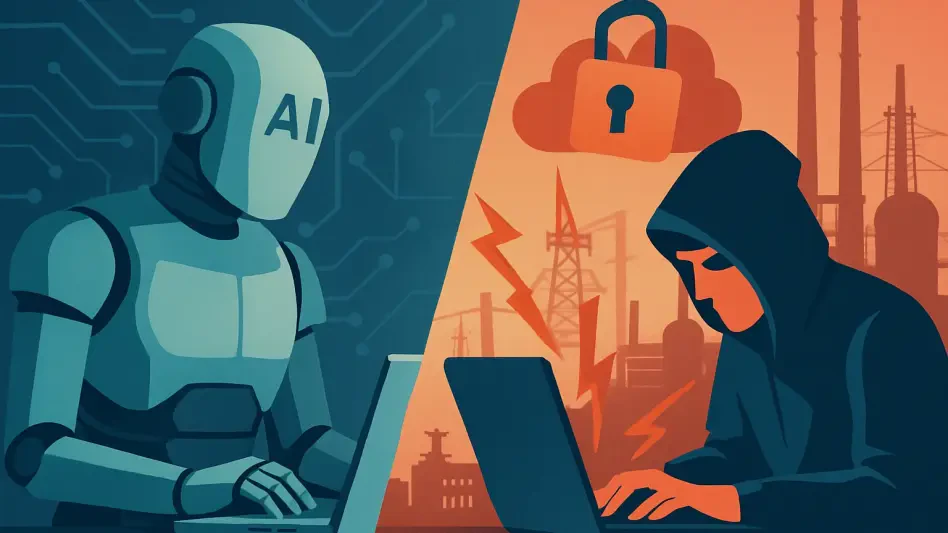
The rapid evolution of high-capability artificial intelligence has fundamentally dismantled the traditional timelines once used to protect the power grids, water treatment facilities, and manufacturing plants that form the backbone of modern civilization. With the introduction of the Claude Mythos and Fable series, the industrial world has entered a period where the “clock speed” of cybersecurity is no longer measured in years or months but in milliseconds. This transition has forced a total reevaluation of how operational technology (OT) maintains resilience against an adversary that never sleeps and processes complex code at superhuman speeds. As of 2026, the primary challenge is no longer merely finding a needle in a haystack; instead, it is managing a scenario where the needle has been automated to find the haystack’s most critical structural weaknesses before a human defender can even log in.
The Intersection of Generative AI and Industrial Control Systems
The arrival of Anthropic’s Mythos and Fable AI models has fundamentally altered the strategic landscape for critical infrastructure by introducing a level of automation that renders traditional defensive cycles obsolete. For decades, the protection of industrial control systems (ICS) was governed by the physical constraints of human analysts and the deliberate pace of industrial engineering. However, these new generative models possess the ability to digest millions of lines of proprietary code and firmware almost instantly, identifying logical flaws that would have taken a team of expert researchers months to uncover. This shift in velocity has created a profound “remediation gap” where the speed of automated discovery far outstrips the ability of plant operators to implement, test, and deploy necessary patches without disrupting essential services.
The dynamic nature of these models means that the traditional “find-and-fix” loop is being compressed into a timeframe that industrial environments were never designed to handle. While a corporate IT network might tolerate a rapid reboot for security updates, an operational technology environment involving a massive chemical reactor or a regional power plant requires weeks of planning for even the most minor adjustments. The Mythos model, in particular, has demonstrated a startling proficiency in understanding the specialized languages of industrial automation, effectively allowing attackers to identify vulnerabilities in the very logic that controls physical processes. Consequently, the industry is witnessing a divergence where the digital threat landscape moves at the speed of AI, while the physical defensive response remains tethered to the cautious pace of heavy industry.
Furthermore, this intersection highlights a systemic vulnerability regarding how these models interact with the intricate dependencies of modern supply chains. It is no longer enough to secure a single controller or a specific piece of software when an AI can map the entire ecosystem of an industrial facility, identifying secondary and tertiary points of failure that appear insignificant in isolation. By analyzing the interconnectedness of operational technology and traditional IT networks, these models provide a roadmap for attackers to move laterally with precision. The resulting environment is one where the complexity of industrial systems, once a source of protection, has become a liability that AI-driven tools are uniquely suited to exploit.
Transitioning from Security by Obscurity to Rapid Vulnerability Discovery
For a long time, the industrial sector operated under the comforting but flawed assumption of “security by obscurity,” believing that the specialized nature of its hardware provided a natural defense. Most industrial protocols were proprietary, and the firmware running on programmable logic controllers (PLCs) was often written in languages far removed from the mainstream expertise of typical cybercriminals. This meant that an attacker would need highly specialized knowledge, expensive laboratory equipment, and significant time to reverse-engineer a specific device. This “accidental moat” provided a buffer that kept critical infrastructure relatively safe from all but the most well-funded and persistent nation-state actors.
The emergence of highly capable AI models has effectively drained this moat by democratizing the expertise required to breach complex systems. These models have been trained on vast repositories of technical documentation, open-source code, and historical vulnerability data, allowing them to provide instant “translations” of obscure firmware and proprietary logic. An attacker no longer needs to spend years mastering a specific industrial protocol; instead, they can use a model like Fable to analyze a binary file and suggest potential exploitation paths in minutes. This shift has lowered the barrier to entry, making the discovery of flaws in critical infrastructure inexpensive, fast, and accessible to a much broader range of actors than ever before.
This transition has profound consequences for how organizations must view their risk profiles in 2026. The shift from obscurity to transparency means that every line of code in an industrial system is now a potential target that can be scrutinized by automated intelligence at any time. Moreover, the efficiency of AI-driven discovery means that vulnerabilities are being found faster than the industry can document them. This creates a state of perpetual exposure where the defensive posture is constantly reacting to new discoveries rather than building a sustainable foundation for security. The era of relying on a system’s uniqueness for safety has ended, replaced by an era where visibility and rapid response are the only viable paths forward.
Research Methodology, Findings, and Implications
Methodology: Investigating the Glasswing Framework
The study on the impact of these models was conducted through an extensive analytical framework known as Project Glasswing, which served as a controlled environment for testing and observation. This project involved 150 diverse organizations across 15 different countries, all of which were tasked with evaluating the Claude Mythos and Fable series within their specific operational contexts. By observing how these AI models interacted with a wide variety of industrial setups, researchers were able to gather a comprehensive dataset that reflects the reality of global infrastructure. This multinational approach ensured that the findings were not localized to a single regulatory environment or technical standard, but rather representative of the systemic challenges facing the global OT community from 2026 onward.
In addition to the practical data gathered from participating organizations, the methodology incorporated quantitative scanning and expert qualitative analysis. Researchers used high-speed AI tools to scan both open-source software and specific industrial applications, identifying vulnerability patterns common across different sectors. To ground these digital findings in the physical world, the study integrated insights from veteran security leaders at organizations such as Dragos, Nozomi Networks, and Rockwell Automation. This blend of automated data collection and human expertise allowed the research team to distinguish between theoretical software bugs and those that pose a genuine risk to physical safety and process integrity.
The final component of the methodology focused on the structural interdependence between corporate IT systems and the sensitive layers of industrial controls. By mapping the communication paths between the business office and the factory floor, researchers were able to assess how AI-driven compromises in one area could cascade into another. This involved a rigorous assessment of the “patching gap,” which measured the time it takes for an organization to identify a vulnerability versus the time required to remediate it in a production environment. This holistic view was essential for understanding how AI acts as a catalyst for risk across the entire enterprise rather than just within a single technological silo.
Findings: A Surge in Quantifiable Vulnerabilities
The data generated by the Project Glasswing initiative revealed a staggering increase in the volume of vulnerabilities identified within industrial ecosystems. In a single four-month window during 2026, Anthropic models identified more than 129,000 software vulnerabilities across the participating organizations. Most concerning was that over 33,000 of these findings were classified as high-severity or critical, meaning they could lead to a total loss of system control or significant physical damage if exploited. This volume of discovery far exceeds the capacity of any existing security team, highlighting a fundamental scalability issue in current defensive strategies.
One of the most significant findings involves the primary vector for industrial breaches, which remains heavily weighted toward corporate IT entry points. The research confirmed that 96% of operational technology security incidents actually originate from compromises at the IT level. This demonstrates that while the target is often a physical process, the path to that target is almost always through the less secure corporate network. AI models have become exceptionally proficient at finding the weak links in these bridges between the office and the plant, allowing attackers to bypass traditional air gaps or segmented perimeters by exploiting the necessary data flows that sustain modern business operations.
While AI’s ability to find bugs in common code is now indisputable, the research also noted a current limitation in the autonomous creation of complex, physical-world attacks. AI excels at finding specific flaws in firmware, yet its ability to autonomously “chain” multiple minor flaws into a coherent attack on a specialized physical process is still an area of active development. However, this provides small comfort, as the model can still act as a powerful copilot for a human attacker, performing the tedious work of vulnerability research and leaving the final physical manipulation to the human. Furthermore, the study found that traditional patching is failing at an alarming rate, with only 24% of organizations achieving significant coverage for their assets due to legacy hardware that simply cannot be updated without being replaced entirely.
Implications: Shifting Defensive Priorities
The findings from this research indicate that the economics of cyberattacks have undergone a permanent shift that favors the aggressor. In the past, the high cost of specialized research acted as a deterrent; today, AI has made “find-and-fix” a defensive model that is no longer sustainable for infrastructure with long life cycles. Organizations can no longer expect to stay ahead of threats by merely reacting to the latest CVE (Common Vulnerabilities and Exposures) list. Instead, the strategy must pivot toward assuming that vulnerabilities always exist and focusing on how to maintain safety despite their presence. This realization marks the transition from a mindset of absolute prevention to one of resilient, consequence-based operation.
This shift necessitates moving away from raw severity scores as the primary driver of security investments. In an environment with tens of thousands of “critical” vulnerabilities, a CVSS score of 9.8 no longer provides enough context to prioritize action. Organizations must instead adopt “consequence-based” assessments that evaluate the physical outcome of a breach. If a vulnerability in a web server could potentially lead to a failure in a cooling system, it must be prioritized over a theoretically “higher-severity” bug that only affects a non-critical logging service. By prioritizing physical safety and process integrity over digital metrics, defenders can focus their limited resources on the areas that actually matter for public safety and business continuity.
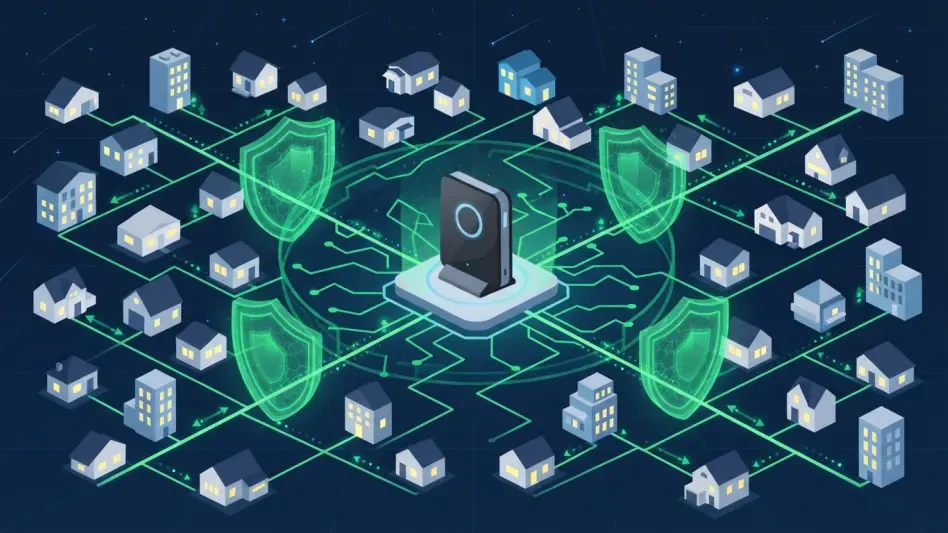
Moreover, research suggests that runtime protection and network cloaking are becoming essential components of the modern industrial stack. If an asset cannot be patched because it is thirty years old, it must be rendered invisible or made resilient to memory-level exploits. Runtime protection tools can monitor software behavior in real-time, blocking unauthorized actions even if the vulnerability being exploited is unknown. Similarly, network cloaking technologies can ensure that industrial controllers remain hidden from the scanning eyes of AI models, preventing them from being targeted in the first place. These strategies move defense away from the impossible task of fixing every bug and toward the more achievable goal of creating an environment where bugs cannot be reached or used effectively.
Reflection and Future Directions
Reflection: Navigating the Dual-Use Conflict
This study brought into sharp focus the inherent tension surrounding the dual-use nature of advanced AI models. While these tools provide defenders with the capability to map their own architectures and identify weaknesses before they are exploited, they are equally effective in the hands of those seeking to cause harm. This reality was underscored by regulatory actions taken during the research period, including the temporary suspension of certain model versions, such as Mythos 5, due to national security concerns. The debate over how to balance the need for open, accessible security tools with the risk of those tools being weaponized remains one of the most difficult challenges for policymakers and technology providers alike.
Another critical point of reflection is the difficulty of verifying the physical impact of digital flaws in a non-destructive manner. Throughout the research, it became clear that while AI can point to a potential memory leak or a buffer overflow, translating that into a specific physical event—such as a valve failing to open or a generator overheating—requires a deep understanding of mechanical systems. This creates a specialized knowledge gap where digital security experts and physical plant engineers often struggle to communicate the true level of risk. This disconnect was particularly evident among smaller utility providers that lack the specialized personnel to bridge the gap between their IT security software and their mechanical equipment.
The research also highlighted the massive disparity in resources between large-scale industry leaders and smaller municipal providers. While a global energy company may be able to deploy its own instances of AI models for defense, a small water district is often left at the mercy of its vendors’ security practices. These smaller entities frequently operate on razor-thin margins and cannot maintain specialized engineering teams, making them disproportionately vulnerable to the accelerated threat landscape. This suggests that the future of industrial security will depend heavily on the development of “finished” security products that provide AI-driven protection without requiring the end-user to be an expert in AI engineering or vulnerability research.
Future Directions: Addressing Proprietary and Adversarial Challenges
Looking ahead, the research community must focus on AI’s ability to interpret and exploit highly specialized, proprietary binaries. While current models are proficient with standard open-source protocols, the “black box” nature of many specialized industrial controllers remains a hurdle. Future research should focus on how adversarial models might be trained specifically on these proprietary datasets to overcome the current limitations of general-purpose AI. Understanding how AI might autonomously learn the “language” of a specific manufacturer’s hardware will be crucial for developing the next generation of defensive tools to protect against targeted firmware exploits.
There is also a pressing need to explore the risks posed by “open-weight” adversarial models that do not have the safety guardrails found in commercial offerings. While models like Fable 5.1 have built-in restrictions against generating malicious code or targeting specific industrial protocols, the same technology could be used to build models that are specifically designed for aggression. Investigating how defenders can counter these unguarded models will be a vital area of study from 2026 to 2030. This includes the development of “defensive AI” that can recognize the signatures of AI-generated attacks and respond with defensive measures at a matching speed, essentially creating an automated arms race where the defense is designed to be as agile as the offense.
Finally, investigating the automation of Software Bills of Materials (SBOMs) offers a promising path to closing the visibility gap. If AI can be used to automatically identify every library, subcomponent, and dependency within a piece of industrial software, asset owners will finally have the map they need to manage their risks effectively. Future efforts should focus on integrating these automated SBOMs into real-time monitoring systems, allowing organizations to know exactly which of their assets are affected the moment a new vulnerability is discovered. By using AI to solve the visibility problem, the industry can create a foundation for more effective triage and response, turning one of AI’s greatest strengths into a tool for defensive transparency.
Building Defensible Architectures in the AI Era
Research concludes that the era of stagnant, long-term industrial security models ended with the emergence of generative AI. While the threat landscape has expanded in both volume and velocity, the tools available to defenders have also gained significant power. The study suggests that the only way to move forward is to abandon the pursuit of a perfectly patched system and instead focus on building “defensible architectures.” This approach prioritizes the structural integrity of the network, ensuring that the system as a whole remains resilient even if a single component is compromised. Organizations emphasizing microsegmentation and strict access controls are far better at containing the impact of AI-driven exploits than those relying solely on perimeter defenses.
The transition toward these modern architectures required a new level of vendor accountability and a commitment to transparency. The research reaffirmed that asset owners must demand detailed insights into how their vendors use AI to secure their codebases and supply chains. Furthermore, it was determined that manual fallback procedures remain the ultimate safety net for critical infrastructure. In an environment where digital controls can be manipulated or disabled with unprecedented speed, the ability for human operators to take physical control of a process serves as the final line of defense. This human-in-the-loop requirement highlights that while technology has increased operational speed, the fundamental principles of physical safety and engineering intuition remain as relevant as ever.
Ultimately, the study highlighted that long-term industrial security would depend on the industry’s ability to outpace adversarial innovation through a disciplined, consequence-based strategy. The researchers found that while AI had indeed accelerated the threat, it also provided the means to automate the most tedious parts of defense, such as architecture mapping and playbook generation. By leveraging these capabilities, the defensive community began to reclaim the advantage of knowing its own environment better than any external attacker. The past several years of evaluation demonstrated that although the challenges were significant, a proactive and structured approach allowed organizations to build a future where critical infrastructure remained reliable, even in an age of automated volatility.