
The security of modern enterprise networks often rests on the fragile assumption that complex authentication protocols are immune to the simplest forms of digital manipulation. In a startling discovery that has sent ripples through the cybersecurity community, a high-severity authentication bypass vulnerability in Cisco Catalyst SD-WAN Manager has demonstrated how a single character substitution can grant an attacker total control over critical infrastructure. Identified as CVE-2026-76504, this flaw carries a near-perfect CVSS score of 9.8, signifying an extreme level of risk to organizations relying on centralized network management. The technical exploit is deceptively straightforward, requiring an unauthenticated remote attacker to merely replace the letter “j” with its URI-encoded equivalent, “%6a,” within the “j_security_check” path. This minor adjustment tricks the system’s internal logic into validating unauthorized requests, effectively handing over the keys to the administrative kingdom.
The Technical Mechanics: Exploiting Logic Errors
The Simplicity of the Encoded Bypass
The core of the vulnerability lies in how the management API processes specific URI-encoded characters during the authentication handshake. While security filters typically look for standard patterns to block unauthorized access, the failure to normalize input before security checks allows specifically crafted strings to slip through unnoticed. By using the hexadecimal representation of a character, the attacker bypasses the initial gatekeeper while still triggering the subsequent logic required to access the administrative interface. This type of logic flaw is particularly dangerous because it does not require sophisticated hacking tools or deep knowledge of proprietary code; it only requires an understanding of how web servers interpret encoded strings. Consequently, the barrier to entry for exploitation is remarkably low, enabling a broad range of threat actors to target sensitive management planes with minimal effort or technical expertise.
Managing the Impact: Thousands of Connected Points
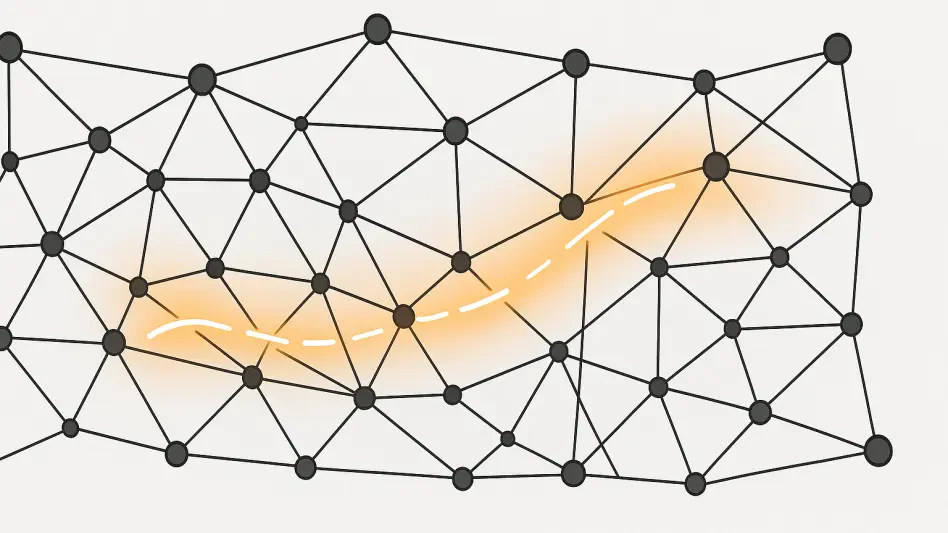
When an attacker successfully navigates the authentication bypass, the resulting compromise extends far beyond a single server or management console. In the context of Cisco Catalyst SD-WAN, a single manager instance often acts as the central brain for a fabric comprising up to 6,000 connected devices, including routers and edge nodes. By gaining administrative control over this central hub, an unauthorized party can push malicious configurations, redirect traffic flows, or completely disable network segments across an entire global enterprise. The centralization of management, which is a primary selling point for software-defined networking, inherently creates a massive single point of failure that can be weaponized with devastating efficiency. This centralized authority means that a single successful request using the “%6a” bypass can lead to the total subversion of an organization’s internal and external communications infrastructure within seconds.
Systemic Security Trends: Challenges and Mitigation
Recurring Patterns in Infrastructure Vulnerabilities
The discovery of CVE-2026-76504 marks the fifth major SD-WAN zero-day vulnerability identified during the first few months of 2026, highlighting a persistent trend of insecurity in network management platforms. Since 2021, over 90 Cisco-specific vulnerabilities have been actively exploited in the wild, many of which served as initial access points for large-scale ransomware campaigns. This pattern suggests a deeper, systemic issue within the design philosophy of network infrastructure, where management interfaces are often built with implicit trust assumptions that are easily shattered by modern exploitation techniques. The concept of “trust-through-defaults” continues to plague the industry, as developers prioritize ease of deployment and centralized visibility over rigorous, zero-trust security architectures. As long as management APIs remain vulnerable to simple bypasses, the shift toward software-defined everything will continue to introduce significant risks to critical digital assets.
Immediate Remediation: Beyond Simple Patching
Given the absence of viable workarounds for this vulnerability, the primary recommendation for security teams is the immediate application of fixed software releases provided by the manufacturer. The Cybersecurity and Infrastructure Security Agency has recognized the gravity of the situation by adding the flaw to its catalog of known exploited vulnerabilities, mandating that federal agencies secure their systems within a very narrow 24-hour window. Beyond patching, organizations should conduct thorough audits of their system logs, focusing specifically on the serviceproxy-access and vmanage-server files to identify any historical evidence of the “%6a” string appearing in authentication paths. Monitoring for unrecognized IP addresses attempting to access these sensitive management endpoints is essential for determining if a compromise has already occurred. This incident serves as a critical reminder that reactive patching is only one part of a comprehensive strategy required to defend complex, modern networks.
Strengthening the Management Plane: A Path Forward
The remediation process underscored the necessity of moving toward more automated and rigorous security testing for all management APIs within the software-defined networking stack. Organizations recognized that the current model of waiting for vendor patches was no longer sufficient to protect against the rapid exploitation cycles observed throughout the early months of 2026. Security leaders shifted their focus toward implementing multi-factor authentication for all API access and deploying web application firewalls specifically tuned to detect and block URI encoding anomalies at the edge. Furthermore, the industry began advocating for a “secure-by-design” approach that included the mandatory normalization of all inputs before they reached any authentication logic. These steps transformed the way enterprises managed their SD-WAN fabrics, moving away from a reliance on single points of failure toward a more resilient, distributed security posture that prioritized the integrity of the management plane.