
Evaluating detectors at a common 5 percent false-positive rate provides a more honest assessment of their operational utility in a factory setting. As industrial networks evolve into highly interconnected digital nervous systems through the Industrial Internet of Things, the security stakes have escalated beyond mere data loss to potential physical catastrophe. Modern power plants and water treatment facilities rely on these complex architectures, yet their primary defense mechanisms often suffer from an over-reliance on misleading laboratory benchmarks. While many machine learning intrusion detection systems report near-perfect accuracy, these results usually stem from a closed-world assumption where the models are tested on threat families they have already encountered during training. This creates a significant vulnerability known as a zero-day blind spot, where a brand-new attack methodology can pass through undetected because the system lacks a predefined category for it. Addressing this gap requires a move toward generalization, ensuring that security layers can identify malicious intent rather than just memorizing known signatures.
Simulating Unknown Threats: The Leave-One-Out Protocol
The transition to more robust security begins with a departure from standard evaluation metrics that tend to favor static environments. By implementing the leave-one-attack-category-out protocol, researchers were able to simulate the exact conditions of a zero-day breach within a controlled framework. This methodology effectively forces an artificial intelligence model to demonstrate its understanding of general malicious behavior rather than its ability to recall specific signatures from a training database. The results from the X-IIoTID dataset revealed that most existing detectors rely heavily on these memorized patterns, which renders them largely ineffective when faced with truly novel threats. To counter this, the adoption of diverse testing protocols ensures that a defense system is battle-tested against the unpredictable nature of modern cyber warfare. This shift in testing philosophy represents a move toward operational realism, where the focus is on how a system handles the unknown, rather than how it classifies the familiar.
A core component of this analysis involved comparing two distinct philosophical approaches to network defense: closed-world classifiers and open-set detectors. Closed-world models are highly efficient at sorting traffic into predefined buckets such as DDoS or brute force, but they essentially guess or fail silently when a new threat does not fit those specific labels. In contrast, open-set detectors like Isolation Forest or One-Class Support Vector Machines take an entirely different route by mapping the boundaries of normal behavior. Anything falling outside this envelope is flagged as an anomaly, providing a potential safety net for unprecedented breaches that have never been categorized. However, the study found that these models also have limitations, as they can sometimes flag benign but unusual traffic as malicious, leading to operational delays. The challenge lies in finding a balance between the precision of classification and the broad coverage of anomaly detection to create a comprehensive shield for critical industrial assets.
Adaptive Fusion: Strengthening Industrial Security
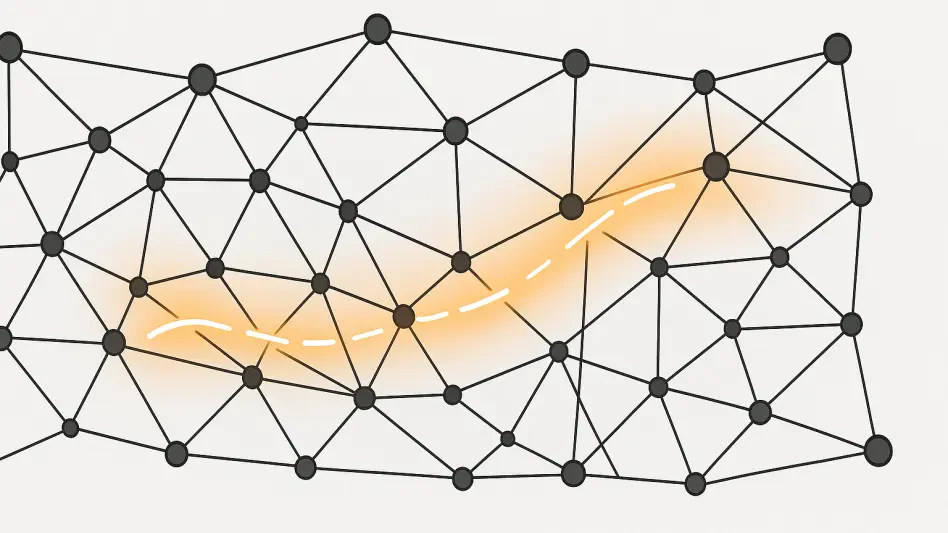
A significant discovery in recent security research is that the perceived strengths of different detector types are often an artifact of inconsistent tuning. When both closed-world and open-set systems were adjusted to a common 5 percent false-positive rate, many of the supposed benefits of using one over the other began to vanish. This realization led to the development of a lightweight learned fusion policy that acts as an intelligent decision-making layer. Instead of simply averaging the scores from different models, this fusion policy adaptively combines them in real-time, deciding which detector to trust more based on the specific characteristics of the incoming traffic. This approach allows the system to capitalize on the strengths of multiple architectures while mitigating their individual weaknesses. The resulting fused system emerged as a superior performer in a majority of evaluated attack categories, proving that an integrated defense is significantly more resilient than a siloed one in a modern factory setting.
Practical application remains a primary concern for industrial environments where hardware resources are often limited. The entire pipeline of this adaptive fusion system, including the AI models and the decision layer, is designed to be remarkably efficient, occupying less than 2 megabytes of memory. This small footprint ensures that the system can be deployed on edge-gateway clusters, which are the distributed computing units sitting at the boundary of factory networks. Furthermore, the processing speeds reach sub-millisecond levels on server-class hardware, which is essential for preventing bottlenecks in high-speed manufacturing lines. This efficiency demonstrates that advanced security does not have to come at the cost of operational performance. By prioritizing low-latency and low-resource consumption, these systems can provide high-level protection for a wide range of industrial equipment without requiring expensive infrastructure overhauls or significant energy consumption increases.
Transferability Challenges: The Universal Model Myth
Despite the promise of adaptive fusion, the difficulty of transferring knowledge between different datasets remains a humbling hurdle for the AI security community. When a system was trained on the ToN-IoT dataset and then tested on the X-IIoTID dataset without any retraining, the performance plummeted to near-chance levels. This outcome suggests that there is currently no such thing as a universal industrial intrusion detector that can be moved from one factory to another with guaranteed success. AI models become highly tuned to the specific statistical patterns and background noise of the network where they were originally trained. While some attack types showed a degree of heterogeneity and transferred better than others, the overall lack of portability highlights a critical reality for cybersecurity teams. AI should be viewed as a site-specific enhancement rather than a plug-and-play product, requiring local data and careful calibration to ensure it remains effective in a new environment.
The necessity for local training and site-specific calibration is further emphasized by the varying nature of industrial traffic across different sectors. A manufacturing plant produces vastly different network signatures than a water treatment facility or an energy grid. Consequently, a model that is an expert at identifying threats in one context may be completely blind in another. This finding reinforces the consensus that for maximum effectiveness, intrusion detection systems must be retrained locally on the specific traffic patterns of the network they are intended to protect. This local adjustment allows the model to differentiate between benign operational anomalies and genuine malicious activity with much higher precision. While this adds a layer of complexity to the deployment process, it is a mandatory step for achieving the level of reliability required for critical infrastructure. The focus must shift from creating a one-size-fits-all solution to developing flexible frameworks that can adapt to unique local conditions.
Strategic Evolution: Shifting Evaluation Standards
The move toward more honest reporting in cybersecurity research is a vital step in protecting global infrastructure. By being transparent about the limitations of AI systems and their failure to transfer across different datasets, researchers are setting a new standard for the industry. Inflated benchmarks on closed-world data are no longer sufficient when the stakes involve the physical safety of thousands of people. The adoption of the leave-one-attack-category-out protocol and matched false-positive rates provides a much more useful template for assessing how a system will perform when a facility is actually under fire from a novel threat. This shift in evaluation standards encourages developers to focus on resilience and generalization rather than just maximizing laboratory accuracy. It also provides industrial operators with a clearer understanding of what to expect from their security investments, allowing for more informed decision-making regarding risk management.
The analysis of adaptive fusion policies demonstrated that the most effective path forward for industrial security involved a hybrid architecture that integrated disparate detection philosophies. Stakeholders in critical infrastructure should have prioritized local training protocols and site-specific calibration rather than relying on generic, off-the-shelf detection products. By deploying lightweight fusion layers with a memory footprint under two megabytes, factory administrators successfully mitigated the risks associated with novel zero-day exploits without compromising network performance. Future security frameworks necessitated a move away from static, closed-world benchmarks, favoring dynamic evaluation methods like the leave-one-out protocol. These strategic findings provided a clear roadmap for developing resilient digital defenses capable of withstanding the complexities of an evolving threat landscape. The study effectively shifted the industry focus toward practical operational readiness by emphasizing the necessity of local adaptation for all AI-driven defense mechanisms.