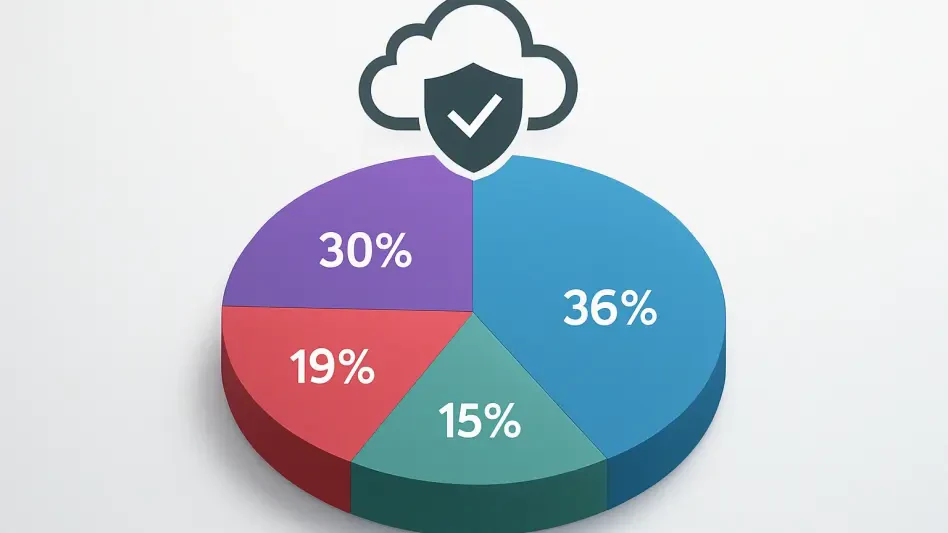
Microsoft Defender for Cloud leverages Azure Arc to provide a unified secure score across AWS and GCP environments for organizations heavily invested in the Microsoft ecosystem. This capability highlights a significant shift in the 2026 cybersecurity landscape, where Cloud Security Posture Management (CSPM) has transitioned from a specialized tool into a foundational requirement for any enterprise operating in a decentralized digital environment. As cloud architectures have become more intricate, the primary mission of CSPM—the identification and automated remediation of misconfigurations—has evolved into a sophisticated defense mechanism. Organizations no longer view these tools as mere compliance checklists but as essential platforms for mitigating the risks associated with public storage buckets, overly permissive Identity and Access Management (IAM) roles, and exposed databases. The market dynamics this year are further defined by massive corporate shifts, most notably the landmark $32 billion acquisition of Wiz by Google. This deal has forced a reevaluation of multicloud neutrality, as buyers balance the benefits of deep platform integration against the potential for vendor lock-in within the major hyperscale ecosystems.
Evolution of Market Trends and Strategic Convergence
Integrated Frameworks: The Rise of Contextual Intelligence
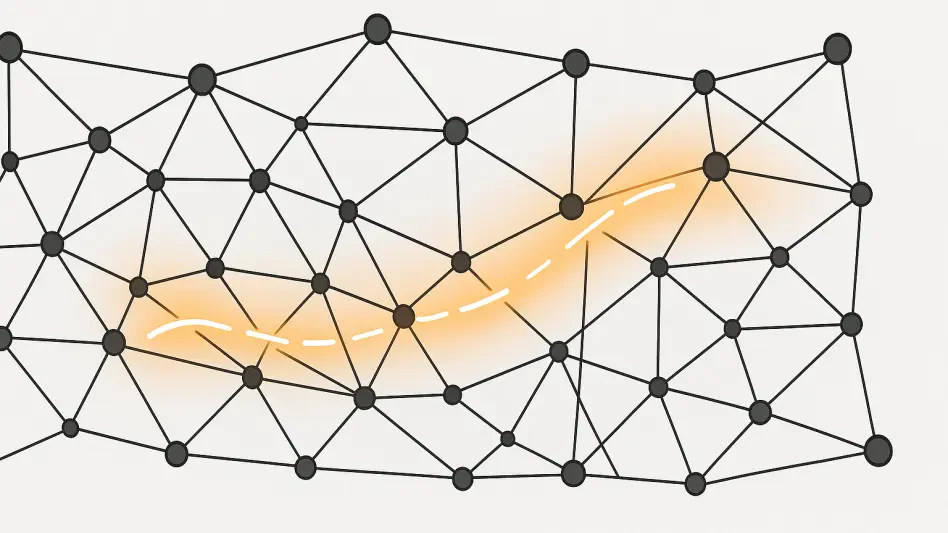
By 2026, the industry has reached a firm consensus that standalone CSPM solutions are no longer sufficient for the scale of modern threats. Instead, these tools have been absorbed into the broader Cloud-Native Application Protection Platform (CNAPP) framework. This integration allows organizations to correlate configuration data with workload protection, identity management, and data security in a single pane of glass. The most significant advancement in this area is the widespread adoption of graph-based attack-path analysis. Rather than overwhelming security teams with thousands of disconnected alerts, modern platforms use mathematical models to visualize how a minor misconfiguration could serve as an entry point for a lateral movement toward critical assets. This contextual approach prioritizes remediation efforts based on the actual risk to the business, ensuring that security analysts spend their time fixing vulnerabilities that pose a genuine threat rather than chasing false positives or low-priority issues that exist in isolation.
Furthermore, the convergence of security disciplines has led to a more unified approach to data protection. In the current 2026 market, CSPM is frequently paired with Data Security Posture Management (DSPM) to provide a clearer picture of where sensitive information resides and how it is protected. This means a security platform can now tell an administrator not just that a storage bucket is public, but exactly what kind of personally identifiable information is inside that bucket and which users have the permissions to access it. This level of visibility is crucial for meeting the stringent regulatory requirements of the mid-2020s. The shift toward contextual intelligence represents a maturation of the industry, moving away from simple reactive monitoring and toward a proactive, risk-aware posture that accounts for the complex interdependencies inherent in modern, containerized, and serverless cloud environments.
Developer Integration: Security Within the Pipeline
The “shift-left” mandate has moved from a theoretical best practice to a standard operational reality in 2026. Most organizations now integrate CSPM directly into their development pipelines, utilizing Infrastructure as Code (IaC) scanning to detect misconfigurations before they ever reach a production environment. By analyzing Terraform, CloudFormation, or Bicep templates during the CI/CD process, developers can fix errors in the code itself, which is significantly more efficient than attempting to remediate live assets after deployment. This integration has fostered a more collaborative relationship between security teams and DevOps, as security requirements are now expressed as code that can be automatically validated. The result is a more resilient infrastructure that is “secure by design,” reducing the overall attack surface and minimizing the window of opportunity for malicious actors to exploit common configuration mistakes that previously plagued rapid deployment cycles.
Identity has also emerged as the primary security perimeter in 2026, necessitating deep integration between CSPM and Cloud Infrastructure Entitlement Management (CIEM). Modern tools are now capable of analyzing complex, nested permissions across thousands of human and machine identities to identify “shadow” privileges. These are permissions that were either granted by mistake or left over from previous projects, providing attackers with a pathway to escalate their access within a cloud environment. By focusing on the principle of least privilege, organizations can use their CSPM tools to automatically prune unnecessary entitlements, thereby limiting the potential impact of a compromised credential. This identity-centric approach recognizes that in a world of borderless networking, the most effective way to secure a cloud environment is to strictly control who—and what—can interact with specific resources and data sets.
Comprehensive Review of Leading Market Solutions
Dominance of Integrated Ecosystems: Microsoft and Wiz
The 2026 market for CSPM is characterized by a fierce competition between platform-native solutions and independent specialists that have been absorbed by major tech conglomerates. Despite its acquisition by Google, Wiz remains the industry’s reference platform for high-fidelity visibility and ease of use. Its “Security Graph” technology continues to set the benchmark for how security teams visualize risk across multicloud estates. The platform’s ability to provide agentless scanning that can be deployed across a massive enterprise footprint in minutes makes it a favorite for organizations that prioritize speed and developer experience. However, the Google acquisition has introduced a layer of strategic complexity, prompting many buyers to include specific language in their contracts to ensure that the platform remains cloud-agnostic and that the development roadmap continues to support competitors like AWS and Azure with the same level of depth.
In contrast, Microsoft Defender for Cloud has solidified its position as the go-to solution for enterprises that are deeply embedded in the Azure ecosystem. By offering a “Secure Score” that simplifies the vast complexity of cloud security into a manageable metric, Microsoft has made security more accessible to IT generalists and executive leadership alike. The expansion of the platform through Azure Arc has been a game-changer, allowing it to act as a centralized management plane for resources regardless of where they reside. This level of integration provides an economic advantage that is difficult for standalone vendors to match, as organizations can leverage their existing Microsoft Entra ID and Defender XDR investments to create a unified security fabric. For many, the choice between Wiz and Microsoft comes down to a balance between the cutting-edge innovation of a specialist tool and the seamless, cost-effective integration of a major platform provider.
Specialized Capabilities: Innovation in Detection and Exposure
Palo Alto Networks’ Prisma Cloud continues to dominate the high end of the market for organizations seeking a comprehensive “code-to-cloud” security platform. Its massive suite of modules covers everything from API security to secrets management, making it the ideal choice for mature enterprises that want to consolidate their entire security stack under a single vendor. While the complexity of Prisma Cloud requires a disciplined adoption strategy and a dedicated team of experts to manage, its breadth of coverage remains unmatched. On the other side of the innovation spectrum, Orca Security maintains its competitive edge through its pioneering “Side-scanning” technology. By providing deep visibility into cloud workloads without the need for agents, Orca reduces the operational overhead of security monitoring while providing high-fidelity data that includes the actual content of the files and databases being protected, a feature that has become essential for modern data-centric security strategies.
Meanwhile, other major players like CrowdStrike and Tenable have carved out significant niches by connecting CSPM to their core strengths. CrowdStrike integrates cloud posture directly into its Falcon platform, appealing to organizations that want to unify their endpoint detection and response (EDR) with their cloud security. This adversary-centric approach prioritizes threats based on real-world exploitation likelihood, ensuring that teams focus on the most dangerous vulnerabilities first. Tenable, following its acquisition of Ermetic, has successfully integrated sophisticated identity risk analysis into its exposure management platform. This allows Chief Information Security Officers (CISOs) to view cloud-based risks alongside traditional IT and operational technology (OT) vulnerabilities, providing a holistic view of the organization’s total risk posture. These specialized approaches demonstrate that while the market is consolidating, there is still significant value in tools that offer deep expertise in specific domains of the security landscape.
Strategic Framework for Procurement and Implementation
Evaluation CriteriPrioritizing Quality and Integration
When navigating the 2026 CSPM market, procurement teams must look beyond simple feature checklists and focus on the quality of the insights provided by the tool. The primary challenge in modern cloud security is not a lack of data, but an overwhelming volume of alerts that can lead to security team burnout. An effective CSPM solution must demonstrate a high degree of accuracy in its attack-path analysis, showing a clear understanding of how different configurations and vulnerabilities interact. Buyers should prioritize tools that offer seamless integration with existing operational workflows, such as automatically generating tickets in Jira or opening pull requests in GitHub. This ensures that security findings are not just identified but are actually routed to the appropriate teams for remediation, turning the security platform into an active participant in the development lifecycle rather than a passive observer.
Operational alignment also requires a careful look at the total cost of ownership, which can be obscured by complex, resource-based pricing models. In the 2026 environment, where cloud footprints can expand or contract rapidly, organizations need pricing transparency to avoid “renewal shock.” It is essential to model projected growth and understand how the addition of new services, such as serverless functions or AI-driven workloads, will impact the overall cost of the security platform. Additionally, while “auto-remediation” is a highly touted feature, it must be implemented with rigorous guardrails. Organizations should evaluate the granularity of a tool’s remediation capabilities, ensuring that automated actions can be tested in non-production environments before being allowed to modify live infrastructure. The goal is to find a balance between the speed of automation and the stability of the production environment, ensuring that security measures do not inadvertently cause service disruptions.
Adaptive Governance: Navigating the Next Security Frontier
The transition of CSPM into a mature, foundational technology has provided organizations with the tools necessary to manage the inherent risks of a cloud-first world. In previous years, the focus was often on the sheer novelty of cloud adoption, but the 2026 market reflected a more disciplined and integrated approach to digital governance. Organizations that succeeded in this environment were those that moved beyond a reactive mindset, instead opting for platforms that provided deep contextual visibility and integrated seamlessly with the broader IT stack. The acquisition of Wiz by Google stood as a testament to the critical importance of cloud security, signaling that the ability to secure multicloud environments had become a strategic asset of the highest order. Lessons learned from this period highlighted that while technology was essential, the true measure of success was the ability to foster a culture of shared responsibility between security and engineering teams.
For organizations looking to refine their strategy, the next logical step involves moving toward a more autonomous security posture. This includes the deeper use of machine learning to detect behavioral anomalies that static rules might miss and the expansion of security coverage into the burgeoning field of AI infrastructure. As companies continue to deploy increasingly complex models and data pipelines, the definition of “posture” will inevitably expand to include the integrity of AI training data and the security of model weights. Professionals who prioritized flexible, API-driven CSPM solutions during this era found themselves better positioned to adapt to these new challenges. Ultimately, the best path forward was not to find a single perfect tool, but to build a resilient, identity-aware framework that could evolve alongside the technology it was designed to protect, ensuring that security remained an enabler of innovation rather than a barrier to progress.