
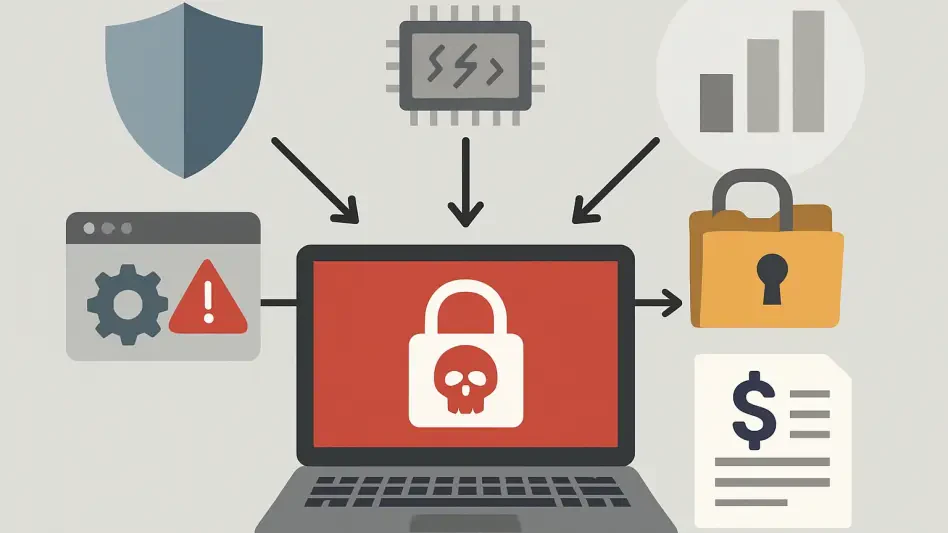
The discovery of a script recording zero detections across dozens of antivirus engines highlights the limitations of relying solely on code-based observation. In the current landscape of 2026, cybercriminals have refined their ability to obfuscate malicious payloads, ensuring that static signatures and traditional heuristic scanners remain blind to their true intentions. By the time a file is flagged by conventional means, the damage to an enterprise network has often already occurred. This persistent gap in defensive capabilities necessitated a fundamental shift toward verifying the actual behavioral impact of a file during its execution. Rather than just asking what a file looks like or what instructions it contains, modern analysis platforms now prioritize observing what the file actually does to a standardized set of user documents within a controlled environment. This approach allows security researchers to identify destructive patterns that are otherwise invisible to engines focusing exclusively on code signatures or minor API call anomalies, creating a more robust defense against modern threats.
Shifting the Paradigm: From Code to Behavioral Impact
Moving toward behavioral impact means focusing on the end state of a system rather than the journey the code takes to get there. Many modern ransomware strains employ “living off the land” techniques, utilizing legitimate system tools and scripts that do not immediately trigger alarms. By executing these files within a sandbox and monitoring the health of pre-placed decoy documents, investigators can confirm malicious intent through physical changes on the virtual disk. If a script suddenly begins rewriting Word documents or Excel spreadsheets with high-entropy data, it provides an undeniable signal of ransomware activity, regardless of how “clean” the script appears to static scanners. This shift effectively bypasses the cat-and-mouse game of code obfuscation by focusing on the one thing a ransomware author cannot hide: the destruction of data. Such verification ensures that detection is based on the verifiable consequence of the code execution rather than a theoretical risk score generated by older, signature-based models.
A compelling example of this methodology involves a Python-based locker that recently surfaced, which managed to evade detection from over seventy-five distinct antivirus engines simultaneously. To the standard scanner, the file appeared to be a harmless administrative script, lacking the common markers associated with known malware families. However, once the file was processed through behavioral verification, the system observed it systematically identifying documents on the desktop and appending the “.k404” extension to them. This specific observation of document manipulation allowed the platform to flag the file as ransomware despite its lack of a known signature. This scenario proves that behavioral impact serves as a critical safety net, catching sophisticated threats that are specifically engineered to remain dormant or appear benign during initial scanning phases. By prioritizing the results of file interactions over the syntax of the code, security platforms can provide a much more reliable assessment of the actual threat level posed to an organization.
Technical Verification: Advanced Sandboxing and Entropy Metrics
To achieve this level of high-fidelity detection, the infrastructure relies on a diverse range of sandbox environments, including CAPE, Zenbox, and the specialized macOS Mirage designed for Apple Silicon. These environments are populated with realistic user files that act as “canaries” in a coal mine. As a suspicious sample runs, the system performs a deep dive into the structural integrity of these documents. It checks for broken document headers, unusual byte patterns, and significant shifts in the internal architecture of the file. If a standard PDF suddenly loses its predictable structure and is replaced by a chaotic sequence of bytes, the behavioral engine marks this as a clear indicator of malicious encryption. This level of granular detail allows the system to distinguish between a legitimate file compression utility and a ransomware attack. While a zip utility might change a file, it does so in a predictable, reversible way, whereas ransomware leaves a trail of unreadable and randomized data in its wake.
Looking back at the evolution of these defensive strategies, it became clear that the transition to impact-based verification was the only sustainable path forward. Organizations that adopted these behavioral insights were able to move beyond reactive patching and toward a more proactive stance of threat hunting. To maintain this advantage, security teams prioritized the integration of high-fidelity behavioral data into their automated response playbooks to minimize dwell time. It was observed that a lack of an encryption tag did not mean a file was entirely safe, as some malware waited for specific conditions. Therefore, a multi-layered approach that combined behavioral impact with real-time endpoint monitoring became the most effective defense. Analysts utilized these tools to bridge the gap between initial discovery and containment. By focusing on tangible outcomes, the industry built a resilient shield against ransomware in a complex digital world, ensuring that data protection remained the primary metric of success.