The invisible scaffolding of the American economy is no longer made of steel and concrete but consists of distributed server networks and complex code that remains vulnerable to sophisticated digital adversaries. Representative Rich McCormick recently proposed the Common-Sense Cloud Security Act to address the reality that critical sectors like healthcare, finance, and defense are now linked to the cloud. This legislation signals a fundamental departure from the traditional cybersecurity philosophy of solely guarding the perimeter. Instead, it acknowledges that in an environment where breaches are inevitable, the focus must shift toward containing damage and ensuring national resilience. By modernizing defensive strategies to match the adoption of cloud computing and artificial intelligence, the United States aims to fortify its infrastructure against systemic failure. This proactive policy seeks to align technological advancement with national security, ensuring that innovation does not come at the cost of safety.
Reimagining Security: The Concept of the Blast Radius
Traditional cybersecurity models have long prioritized the “lock on the door” approach, which focuses heavily on passwords and identity checks to prevent unauthorized entry into a network. However, this strategy is increasingly insufficient in 2026 because once sophisticated intruders manage to bypass these initial defenses, they often find themselves with unfettered access to the entire system. Representative McCormick argues that the sheer complexity of modern cloud architecture makes a perfect perimeter defense an impossible goal. To address this, the proposed legislation introduces the concept of the “blast radius” as a primary metric for security evaluation. This term describes the total extent of damage a hacker can inflict after gaining a foothold. By shifting the focus to what happens after a breach, the act encourages organizations to build internal barriers that prevent a single compromised account from granting access to every “room” or critical system within the larger digital environment.
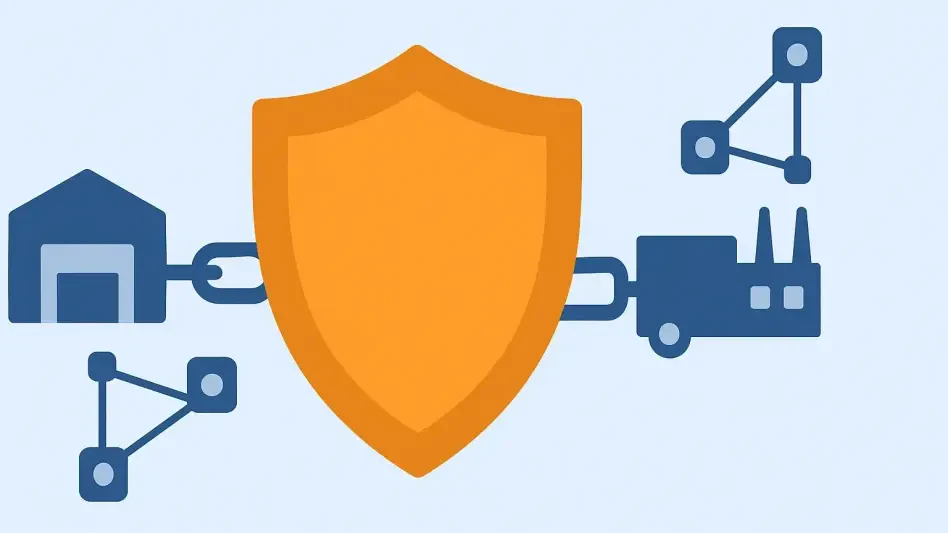
Visualizing a digital network as a physical building helps clarify why internal security is just as vital as a strong front gate. If a building lacks internal locks, a single stolen key grants an intruder access to the vault, the records room, and the utility controls simultaneously. The Common-Sense Cloud Security Act emphasizes that internal architecture must be robust enough to ensure that a localized breach does not lead to the total collapse of the infrastructure. This involves implementing zero-trust principles where every movement within the cloud is verified and restricted based on the principle of least privilege. By reducing the blast radius, a cyberattack on a municipal water system or a regional hospital network can be isolated to a non-essential department, rather than allowing it to paralyze life-saving services. This structural change is designed to transform the internet from a house of cards into a series of interconnected, self-contained vaults that can withstand localized pressure.
Strengthening Standards: AI Risks and Actionable Resilience
To provide a unified framework for this new defensive philosophy, the legislation directs the National Institute of Standards and Technology to establish updated, risk-based guidelines for cloud environments. These standards prioritize sophisticated identity management and the continuous oversight of third-party connections to ensure that any suspicious activity is detected and neutralized in real-time. The goal is to move the industry beyond simply measuring the likelihood of an attack toward a model that prioritizes reducing the potential impact of such an event. By establishing clear metrics for containment, the act ensures that government agencies and private contractors are held to a standard that values resilience over the illusion of invulnerability. These updated guidelines also address the risks associated with modern software supply chains, where a vulnerability in a minor third-party application can provide a “backdoor” into a high-security environment if not properly monitored and limited.
The integration of artificial intelligence into government and private sector databases adds a significant layer of complexity to the contemporary security landscape. Because AI systems often require expansive levels of data access to function effectively, they can inadvertently expand the damage caused by a security breach if AI credentials are hijacked. McCormick’s legislative framework seeks to establish clear boundaries for what some call AI “super-intelligence” by creating voluntary certification programs and strict access controls. This ensures that as these computational tools become more powerful, the safeguards protecting them advance at a matching pace, preventing advanced software from becoming a liability. By limiting the authority of individual applications, the act ensures that even an AI-driven breach remains contained. This balanced approach allows for the continued development of machine learning capabilities while providing a safety net that protects the underlying data and systems.
Ensuring Resilience: A Future-Focused Security Framework
Ultimately, the shift toward a containment-focused strategy was intended to foster American innovation rather than stifle it through burdensome or excessive regulation. By providing a flexible and pragmatic framework for resilience, the Common-Sense Cloud Security Act allowed businesses to recover from digital interference with minimal operational disruption. This approach recognized that in an interconnected world, the total absence of breaches was an unrealistic and perhaps unachievable goal for any major organization. Instead, the true measure of security in 2026 was the strength and speed of the response once an anomaly was identified. By building infrastructure designed to withstand and bounce back from interference, the United States maintained its global technological edge. The legislation aimed to empower organizations to take calculated risks and deploy new technologies, knowing that their core architecture was shielded by a resilient design that prevented a single point of failure.
In summary, the transition toward a more resilient digital architecture served as a critical turning point for national security. It was vital for the government to mandate that the National Institute of Standards and Technology provide clear, risk-based guidance that prioritized the containment of threats over simple prevention. By implementing the Common-Sense Cloud Security Act, the United States successfully created a framework where artificial intelligence and cloud services could thrive without becoming systemic vulnerabilities. Organizations were encouraged to adopt voluntary certification programs, which allowed them to demonstrate compliance with modern standards while maintaining the flexibility needed for innovation. This legislative push established that the measure of true security was not the absence of attacks, but the speed and effectiveness of the response. Ultimately, the focus on reducing the blast radius of cyber incidents ensured that the nation’s infrastructure remained robust.