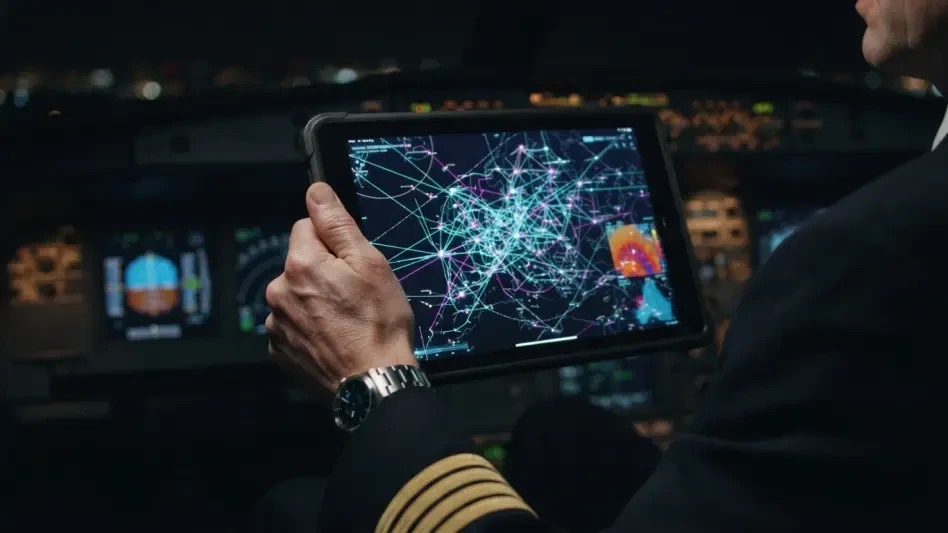

The threat landscape has evolved from external hijackings to a more complex scenario where the cockpit itself becomes the primary site of a potential terror attack. This unsettling transition was epitomized by the terrifying events aboard Flydubai Flight FZ1073, where the sanctity of the flight deck was breached not from the outside, but from within. During a flight traversing the corridor between Dubai and Tel Aviv, an Omani first officer reportedly launched a violent knife attack against the captain, Smit Machchhar, resulting in a sudden, dangerous loss of altitude that necessitated the scrambling of Israeli fighter jets. The incident forced the aviation community to confront a grim reality: the most sophisticated security gates and biometric scanners are useless when the attacker is the one holding the keys to the cockpit. The traditional doctrine of perimeter defense, which focuses on keeping weapons and unauthorized persons off the aircraft, has proven insufficient in an era where ideological radicalization can turn a vetted professional into a high-altitude threat. This case serves as a catalyst for a fundamental shift in regional security strategies, highlighting the urgent need to move toward a behavior-based insider threat detection system that can account for the rapid, often invisible process of radicalization that circumvents established vetting protocols.
The Critical Failure: Vulnerabilities in Conventional Vetting
Standardized aviation security measures have historically focused on the hard perimeter—physical checkpoints where passengers and crew are screened for metallic objects, liquids, and explosive residues. While these measures are highly effective at preventing the smuggling of traditional weaponry, they offer almost no protection against a radicalized pilot who is authorized to bypass these hurdles. The insider threat is particularly insidious because the individual has already earned the trust of the institution, passed rigorous background checks, and demonstrated professional competency over years of service. In 2026, it is evident that a clean record from a few years ago provides no guarantee of current psychological or ideological stability. Radicalization often occurs in a compressed timeframe, fueled by digital echo chambers and global political tensions, turning a previously stable employee into a violent actor before the next scheduled re-vetting process occurs. This gap between the static nature of official background checks and the fluid nature of human belief systems represents the most significant vulnerability in modern civil aviation. By the time a security clearance expires, the window for a catastrophic event may have already opened and closed, necessitating a more dynamic and continuous form of assessment that goes beyond simple criminal records.
Building on this foundation, the convergence of operational capability and extremist ideology represents a unique existential threat to the industry. The events of October 7 served as a horrific blueprint for how ideological shifts can lead to the weaponization of access, but the flight deck incident took this concept to a new level by moving the breach from a physical border to a professional one. When a first officer, trained to manage complex flight systems and entrusted with the lives of hundreds, decides to strike, the aircraft itself becomes the weapon. This level of access negates the sterile area concept that has governed airport design for decades. Analysts now argue that the professional perimeter is currently the most vulnerable point in the security chain because it relies on a presumption of shared values and rational behavior. However, violent Islamist ideology often operates by overriding these professional norms with a perceived higher religious or political duty, recasting civilians and colleagues as legitimate targets in a broader struggle. To mitigate this, security protocols must move away from the assumption that professional status serves as an inherent barrier to radicalization, acknowledging instead that those with the most access are often the most targeted for ideological exploitation by decentralized extremist networks.
Beyond Identity: The Shift Toward Behavioral Monitoring
The shift toward more effective security requires a clear distinction between identity profiling and behavioral monitoring. Profiling based on nationality, religion, or ethnic background is not only ethically problematic but also operationally flawed, as it creates blind spots and fosters resentment that can lead to further radicalization. Instead, modern security doctrines in 2026 must focus on observable behavioral indicators that signal a shift toward extremist violence. These indicators include explicit expressions of support for designated terror groups, sudden and unexplained hostility toward specific civilian populations, or a dramatic withdrawal from professional social norms. By training ground staff, cabin crew, and fellow pilots to recognize these specific red flags rather than relying on broad demographic assumptions, the aviation industry can build a more precise and defensible security apparatus. This approach ensures that the focus remains on the threat of violence rather than the person’s identity, preserving the professional integrity of the workforce while simultaneously making it much harder for an individual with violent intent to remain undetected within the system. Moreover, this behavioral focus allows for the detection of clean skins—individuals with no prior history of radicalization who may have been recently influenced by extremist narratives.
The decentralized nature of modern radicalization complicates this task, as the lone actor phenomenon has replaced the traditional model of organized terror cells. In the past, intelligence agencies could often disrupt plots by monitoring communications between known members of a group; however, today’s extremist is often an isolated individual who consumes propaganda privately and develops violent intent without ever making physical contact with a larger organization. This digital isolation means that traditional surveillance of known extremist networks is no longer enough to catch the insider threat. The aviation industry must therefore engage with digital forensics and sentiment analysis to understand the broader trends of radicalization that might affect its personnel. When radicalization is decentralized, the defense must also be decentralized, relying on a broad network of observers rather than just a few centralized intelligence hubs. This trend toward self-radicalization means that the moment of transition from a law-abiding citizen to a potential attacker can happen anywhere, at any time, making continuous behavioral oversight an essential component of the security lifecycle. As these narratives become more pervasive globally, the challenge lies in identifying the tipping point where a person moves from ideological curiosity to operational planning and violent action.
Collective Defense: Strengthening Reporting and Regional Ties
Establishing effective internal reporting mechanisms is the next logical step in fortifying the aviation sector against insider threats. Because colleagues spend hundreds of hours in close proximity to one another, they are often the first to notice the subtle psychological changes that precede a violent act. However, the aviation culture has historically prioritized camaraderie and professional loyalty, which can inadvertently create a wall of silence that protects a radicalizing peer. To overcome this, airlines must implement confidential, non-punitive reporting channels where pilots and crew members can voice concerns about a colleague’s mental or ideological state without the fear of immediate termination or social ostracization. These systems should be designed to trigger a professional mental health or security review rather than an immediate criminal investigation, providing a safety net that can catch an individual before they reach the point of no return. Building this culture of mutual protection requires a significant shift in management philosophy, emphasizing that reporting a concern is an act of professional responsibility that protects the lives of the crew just as much as the passengers. When these channels are perceived as objective and fair, they become the most powerful tool in the arsenal against the internal adversary.
Regional cooperation and the fusion of intelligence across national borders are equally vital, as demonstrated by the diversion of the Flydubai flight to Tabuk, Saudi Arabia. In that instance, the seamless coordination between Israeli, Emirati, and Saudi authorities ensured that the aircraft landed safely and the suspect was apprehended without further violence. This event highlighted that an aviation threat is rarely confined to a single jurisdiction; it is a mobile problem that requires a unified regional response. By the year 2026, the necessity for an integrated information fusion center in the Middle East has become undeniable, allowing countries to share data on suspicious behaviors and security incidents in real-time. Such a system would prevent a pilot who has been flagged for concerning behavior in one country from simply moving to an airline in a neighboring state with less stringent oversight. Moreover, this cross-border collaboration fosters a shared security architecture that transcends political differences, focusing on the common goal of protecting regional transport corridors. Strengthening these ties ensures that bureaucratic boundaries do not serve as a shield for those intending to commit acts of terror, creating a comprehensive safety net that covers the entire regional airspace and provides a coordinated response to cockpit emergencies.
Predictive Security: The Evolution of Institutional Safeguards
The evolution from reactive to predictive intelligence is the final pillar of a modern aviation security strategy. For too long, the industry has relied on the human barrier—the heroic intervention of passengers and crew—as a fail-safe mechanism, but this is essentially an admission of institutional failure. A truly robust system identifies the threat long before a weapon is drawn in the cockpit. Predictive intelligence involves the integration of various data streams, including digital footprints, behavioral assessments, and traditional background checks, to create a dynamic risk profile for individuals with high-level access. By using sophisticated algorithms to detect patterns of radicalization or extreme psychological distress, security services can intervene early, perhaps by temporarily suspending a flight clearance or requiring additional psychological screening. This is not about building a dystopian surveillance state, but about creating a sophisticated filtering system that identifies high-variance behavior that deviates significantly from professional norms. The goal is to make the environment so hard for a potential attacker that the path from radical intent to successful execution becomes practically impossible, shifting the burden of security from the moment of the crisis to the period of ideological preparation.
In the final analysis, the aviation sector recognized that the internal threat posed by violent Islamist ideology required a profound departure from the security doctrines of the past. The industry moved toward a holistic model that balanced the necessity of vigilant oversight with the maintenance of professional trust and human rights. Authorities determined that the only way to safeguard the shared skies was through a combination of behavioral science, regional intelligence fusion, and the empowerment of frontline personnel. These findings suggested that while physical barriers remained necessary, the primary battlefield was the psychological landscape of those entrusted with operational power. The implementation of confidential reporting channels and cross-border data sharing agreements proved to be instrumental in identifying and neutralizing threats before they could manifest in the cockpit. Ultimately, the transition to a predictive security posture allowed the industry to stay ahead of the evolving tactics of decentralized radicalization. By focusing on observable actions rather than static identities, security agencies successfully mitigated the risk of the insider while preserving the collaborative spirit of international aviation. These actionable steps provided a roadmap for a more resilient and secure transport infrastructure in an increasingly complex ideological era.