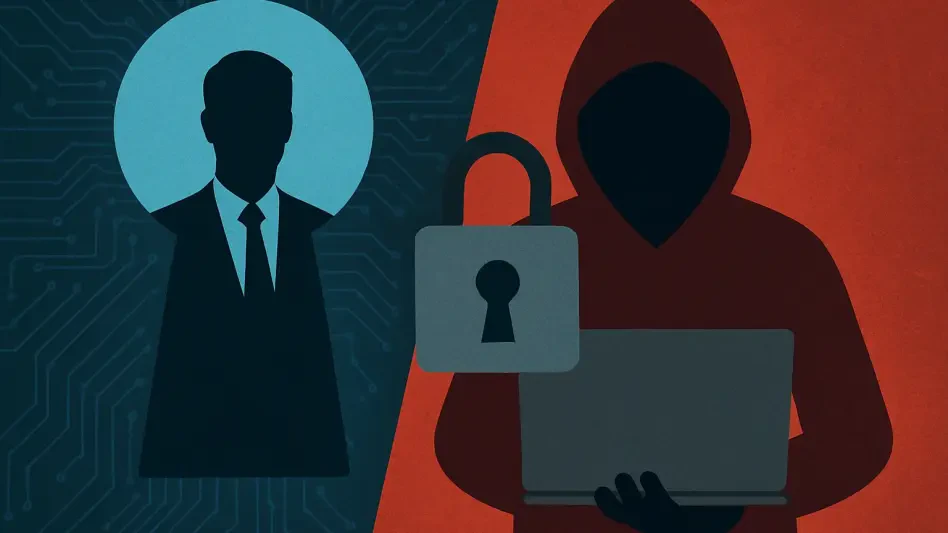

Traditional security architectures often fail because they are designed to keep the world out, yet the most damaging breaches frequently originate from those who already hold the keys to the kingdom. Organizations face a daunting task when managing insider threats because these actors possess legitimate credentials and deep knowledge of the internal network environment. Whether the risk arises from a disgruntled employee, a careless contractor, or a compromised account, standard firewalls and perimeter defenses are often bypassed before an alarm is ever raised. To combat this vulnerability, many forward-thinking security teams are now integrating Microsoft Sentinel’s User and Entity Behavior Analytics (UEBA) with Microsoft Purview’s Insider Risk Management (IRM). This powerful convergence enables a context-aware defense posture that identifies subtle patterns of misuse which would otherwise go unnoticed. This is why a unified view is essential.
Prioritizing Threats Through Strategic Classification
The persistent challenge of alert fatigue remains one of the most significant barriers to effective security operations, as analysts are often buried under a mountain of notifications that lack immediate context. To effectively manage this influx, organizations must adopt a rigorous classification system that distinguishes between simple behavioral anomalies and clear policy violations. Microsoft Sentinel UEBA functions as a probabilistic engine, identifying deviations from the norm, such as a user accessing a server at an unusual time or from a new geographic location. These events are not inherently malicious but indicate a change in pattern that warrants attention. In contrast, Microsoft Purview IRM triggers based on specific, data-centric policy breaches, such as the unauthorized labeling or bulk downloading of sensitive files. Understanding this fundamental distinction allows security teams to categorize risks based on their potential impact rather than just their novelty.
Implementing a centralized risk-scoring system is the next logical step in refining the response to these disparate signals within the modern enterprise. By prioritizing alerts where a behavioral anomaly detected by Sentinel overlaps with a high-impact data event flagged by Purview, investigators can focus their efforts on high-confidence threats. This methodology ensures that limited human resources are not wasted on benign deviations, but are instead concentrated on scenarios where an employee’s unusual behavior directly endangers the organization’s most valuable intellectual property. This strategic alignment creates a filter that screens out the noise of daily operations, allowing the Security Operations Center to act with greater precision. Furthermore, it provides a clearer picture of the risk landscape by highlighting the intersection of suspicious activity and data vulnerability, which is where the most critical threats typically reside for most companies.
Merging Behavioral Insights with Data Sensitivity
Accurately detecting a sophisticated insider threat requires a dual-pronged approach that answers the critical questions of who is acting out of character and what specific assets are being targeted. Microsoft Sentinel UEBA excels at providing the “who” by establishing comprehensive baselines for individual users and their respective peer groups across the network. This capability makes it possible to spot lateral movement, unusual spikes in administrative privileges, or sudden changes in application usage that deviate from established historical norms. By analyzing these behavioral footprints, the system identifies the actor as a potential risk before they even touch a sensitive file. This early warning system is vital because it shifts the focus from simple file-level monitoring to a broader understanding of the human element involved in the threat. The ability to track an identity across multiple platforms provides a level of visibility that is otherwise impossible.
While Sentinel identifies the suspicious actor, Microsoft Purview IRM provides the essential “what” and “how” by focusing on the data itself and the policies governing its movement. This integration identifies the sensitivity levels of the documents involved, such as whether they are marked as internal, confidential, or highly restricted according to corporate governance standards. When these two streams of intelligence are correlated, the Security Operations Center gains a multidimensional view that clarifies the intent behind the observed actions. For instance, if Sentinel flags a user for accessing a SharePoint site they have never visited before, and Purview simultaneously reports that this user is attempting to exfiltrate files to a personal cloud storage provider, the threat level escalates significantly. This synthesis of behavioral analytics and data sensitivity transforms raw telemetry into actionable intelligence, allowing for a more nuanced and effective response to potential data breaches.
Developing a Defensible Investigative Workflow
An investigation into employee behavior must be handled with extreme care to ensure that the process is both structured and repeatable, thereby avoiding legal complications or accusations of bias. The workflow should always begin with a thorough validation phase designed to rule out false positives, which are common in dynamic work environments where roles and responsibilities shift. It is possible that a sudden spike in data usage is the result of a legitimate project deadline or a pre-approved change in administrative duties. By verifying the context of the activity before launching a full-scale inquiry, the security team maintains professional credibility and avoids creating a culture of unnecessary suspicion. This initial triage is essential for maintaining operational efficiency, as it prevents the investigative team from becoming bogged down in harmless activities that mimic the signatures of a malicious insider threat.
Once a threat is deemed credible, the transition to evidence collection must be exhaustive and include a comprehensive timeline of all relevant activities gathered from multiple sources. This involves pulling authentication logs and device telemetry from Sentinel while simultaneously extracting specific file-access artifacts and sensitivity label modifications from Purview. By constructing a unified timeline, investigators can see the full progression of events, from the initial reconnaissance phase to the final attempt at data removal. This level of detail is necessary not only for internal decision-making but also for potential legal proceedings or external audits that may follow a major security incident. Documenting the volume and recurrence of the suspicious activity provides the factual basis needed to support administrative actions. This evidence-driven approach ensures that every step taken by the organization is backed by hard data, which is critical for compliance.
Strengthening Governance and Program Evolution
Effective insider threat management extends far beyond the technical capabilities of the Security Operations Center and requires a robust governance framework involving multiple departments. Because these investigations involve the monitoring of employees, it is essential that Human Resources and Legal teams are integrated into the decision-making process from the very beginning. While the security team provides the technical detection and evidence, the HR and Legal departments are responsible for assessing the intent behind the actions and determining the appropriate administrative response. This collaborative effort ensures that the investigation respects employee privacy rights and adheres to regional labor laws, protecting the organization from potential litigation. By fostering a cross-disciplinary approach, companies can handle sensitive internal matters with the necessary discretion and fairness while still prioritizing the protection of their most critical assets.
To remain effective in an ever-changing threat landscape, an insider risk program must be treated as a living system that undergoes continuous refinement and optimization. This evolution involves regularly tuning UEBA models to ensure that peer group definitions remain accurate and that automated service accounts are properly excluded from behavioral baselines. Furthermore, the organization must track specific performance metrics, such as the mean time to investigate alerts and the conversion rate of alerts into confirmed security incidents. These data points provide the insight needed to fine-tune Purview IRM policies so they remain aligned with the current business environment and data usage patterns. By learning from the outcomes of past investigations, the security team can improve the precision of their detection logic over time. This proactive stance ensures that the program does not become stagnant but instead grows more resilient as the organization matures.
Advancing Security Through Strategic Integration
The successful integration of Microsoft Sentinel and Microsoft Purview established a new benchmark for how modern organizations protected their internal ecosystems from evolving threats. It was found that focusing on the intersection of behavioral anomalies and data sensitivity provided the most reliable indicators of actual risk, allowing teams to move away from reactive firefighting. Security leaders recognized that technical tools were only one part of the solution; the real success came from building structured workflows that prioritized human-centric governance. By the time these strategies were fully implemented, companies observed a significant reduction in the time required to detect and remediate insider incidents. This maturity allowed for the implementation of just-in-time training for negligent users while reserving full forensic investigations for truly malicious actors. The final takeaway was that a unified defense posture was the only way to maintain trust.