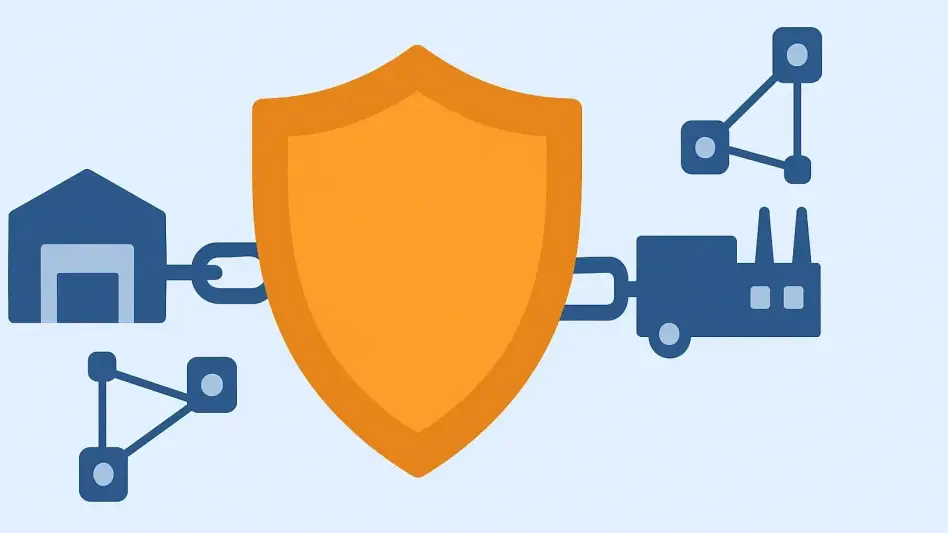

The silent explosion of machine-to-machine interactions has fundamentally reconfigured the digital landscape, leaving traditional human-centric security perimeters struggling to contain a sprawl of invisible actors that outnumber human employees by nearly fifty to one. This transition represents a shift from static login credentials to a dynamic ecosystem where software components communicate autonomously through a complex web of permissions. Non-Human Identity Management (NHIM) has emerged not merely as a sub-discipline of cybersecurity but as the primary defense mechanism for modern enterprises. As organizations migrate toward fully automated workflows, the focus has pivoted toward managing the lifecycles of these machine entities to ensure that every automated action is both authorized and auditable.
Historically, identity security focused on verifying the person behind the screen, yet the current reality is that machines now drive the vast majority of network traffic and data exchange. The emergence of this technology is a direct response to the vulnerabilities created by hardcoded API keys and unmanaged service accounts. In a world where cloud-native infrastructure and automated pipelines define the pace of business, securing these non-human identities is the only way to maintain control over a perimeter that no longer has a physical or human boundary.
The Shift Toward Machine-Centric Security Architectures
The historical reliance on Multi-Factor Authentication (MFA) and biometric scans for human users has proven insufficient in an environment where the most critical transactions occur between microservices. Unlike a human employee who logs in once or twice a day, a machine identity may request access thousands of times per second across geographically dispersed data centers. This scale necessitates a security architecture that prioritizes machine-to-machine (M2M) integrity over simple user verification. By treating every software bot, container, and API as a distinct identity, NHIM provides the granularity required to monitor and control high-velocity digital operations without introducing latency.
Moreover, the transition to machine-centric security reflects a broader architectural evolution from centralized monoliths to distributed microservices. In this landscape, the identity of the service itself becomes the primary security token. This shift matters because it allows security teams to apply the principle of “least privilege” at a programmatic level, ensuring that a specific piece of code can only perform the exact task it was designed for. By decoupling identity from the human user, organizations can build more resilient systems that are capable of self-healing and scaling without manual intervention, provided the underlying identity framework is robust enough to handle the complexity.
Core Elements of the Non-Human Identity Framework
Secrets Management and Credential Orchestration
At the heart of any NHI strategy lies the robust management of “secrets”—the digital keys, tokens, and certificates that allow one system to recognize another. Traditional password managers were never designed to handle the sheer volume or the rapid rotation requirements of modern API keys. Modern orchestration platforms solve this by providing a centralized, encrypted repository that dynamically issues credentials only when a service requires them. This “just-in-time” access model minimizes the lifespan of a credential, significantly reducing the window of opportunity for an attacker to exploit a stolen key.
Furthermore, credential orchestration ensures that sensitive information is never hardcoded into application source code, a common practice that has led to countless data breaches. By automating the rotation and distribution of these secrets, the system removes the human element from the process, which is often the weakest link in the security chain. This implementation is unique because it moves beyond mere storage; it actively manages the relationship between services, ensuring that even if a secret is compromised, its utility is limited by time and context.
Automated Lifecycle and Governance Engines
The lifecycle of a machine identity is often far shorter than that of a human employee, yet its management is frequently more neglected. Automated governance engines are now tasked with the entire journey of a service account, from its initial provisioning in a DevOps pipeline to its eventual decommissioning once a project concludes. Without this automated oversight, “orphan” identities—privileged accounts left behind by retired applications—become ticking time bombs. These engines utilize behavioral analytics to detect anomalies, such as an identity suddenly requesting access to a data repository outside its normal operational scope, allowing for immediate revocation of access.
These governance engines provide a level of oversight that is impossible to achieve manually. By integrating directly with development tools, they can automatically assign permissions based on the specific needs of a deployment. This ensures that security is baked into the development process rather than being added as an afterthought. The ability to monitor the “health” of an identity—checking for over-privilege or inactivity—allows organizations to maintain a clean and secure identity environment even as their cloud footprint expands exponentially.
Market Dynamics and the Influence of Agentic AI
The current landscape has witnessed the maturity of agentic AI, where autonomous systems do more than process data; they execute complex business decisions. These agents operate by spawning their own sub-identities and interacting with external third-party services, creating a “nested” identity problem that traditional governance models cannot resolve. Consequently, the cybersecurity market has seen a massive influx of capital, with recent high-profile acquisitions totaling billions of dollars as industry leaders race to integrate NHI capabilities into their primary platforms. This consolidation reflects a growing realization that AI-driven productivity is unsustainable without a corresponding leap in automated identity governance.
The unique challenge posed by agentic AI is its degree of autonomy. Unlike a traditional script, an AI agent may determine its own path to a goal, requiring different permissions at different stages of its mission. This has forced the market to shift toward more flexible, intent-based identity models. Investors are betting heavily on startups that can provide real-time visibility into these autonomous interactions, as the risk of an AI agent “going rogue” or being manipulated through its machine identity is a top priority for Chief Information Security Officers.
Industrial Deployment and Practical Use Cases
In the high-stakes world of cloud-native DevOps, NHIM has become the cornerstone of secure delivery pipelines. For instance, large-scale SaaS providers utilize these frameworks to ensure that automated deployment scripts can only interact with specific production environments under strictly defined conditions. This prevents a configuration error from inadvertently exposing sensitive customer data to the public internet. By enforcing identity-based boundaries between different segments of a cloud ecosystem, organizations can maintain a “zero trust” posture even in environments where no humans are present to verify transactions.
Beyond DevOps, the technology is finding critical applications in protecting massive data lakes and sensitive repositories. In these scenarios, unauthorized machine access is often more dangerous than human intrusion because a compromised bot can exfiltrate data at speeds humans cannot match. NHIM tools provide the “machine-speed” defense necessary to counter these threats, using real-time monitoring to shut down suspicious API calls before they can result in a significant data loss event. This level of protection is essential for industries like finance and healthcare, where regulatory compliance hinges on the ability to prove exactly who—or what—accessed sensitive data.
Obstacles to Comprehensive Identity Oversight
Despite these advancements, many enterprises still struggle with the phenomenon of “shadow identities”—machine accounts created by developers or third-party applications without the knowledge of the central IT security team. These invisible identities often lack basic security controls and are frequently over-privileged, providing a low-resistance path for lateral movement during a cyberattack. Furthermore, the fragmented nature of modern IT architectures, which often span multiple cloud providers and on-premises legacy systems, makes it difficult to achieve a single, unified view of all machine permissions.
The integration of Identity and Access Management (IAM) with Privileged Access Management (PAM) remains a significant technical hurdle. While human IAM is mature, the protocols governing machine PAM are still evolving, leading to gaps where specialized machine accounts fall through the cracks of corporate policy. Ongoing development efforts are focusing on creating “cross-platform” identity standards that allow different security tools to share context about a machine’s intent and risk profile. Bridging these gaps is essential for preventing threat actors from hopping between poorly monitored machine accounts to reach high-value targets.
The Path Toward Integrated Identity Fabrics
Looking ahead, the evolution of NHIM is trending toward the concept of “integrated identity fabrics”—a seamless layer of security that wraps around all entities, regardless of their nature. The focus is shifting toward the management of ephemeral identities, which may only exist for a few seconds to perform a specific task before being permanently deleted. This degree of transience requires a radical rethink of governance, moving away from static checklists toward real-time, AI-driven risk assessment that can make sub-second decisions about whether a requested interaction should be permitted.
The long-term impact of these integrated fabrics will be a fundamental shift in how digital trust is established. As regulatory environments become more stringent, the ability to provide a complete, automated audit trail for every machine action will become a prerequisite for doing business. Breakthroughs in AI-driven governance will likely allow these systems to not only detect risks but to predict and neutralize them before they can be exploited, moving the entire cybersecurity field from a reactive to a predictive posture.
Summary of the Non-Human Identity Landscape
The shift from human-centric to machine-centric security required a total reimagining of what it meant to protect a digital enterprise. As the ratio of machine identities to human users crossed the threshold of fifty to one, the industry recognized that manual oversight was a relic of a slower era. Organizations that moved quickly to adopt integrated identity fabrics found themselves better equipped to handle the complexities of agentic AI and cloud-native automation. The technological landscape moved beyond simple credential storage toward a holistic governance model that prioritized visibility and automated response.
Moving forward, the focus turned to the rigorous enforcement of least-privilege principles across all automated systems to ensure that no single bot or API could serve as a gateway for systemic failure. Security leaders began treating NHIM as a core business enabler rather than a technical hurdle, allowing for faster innovation without compromising digital trust. This proactive stance on machine identity management ensured that the rapid advancements in AI and automation remained grounded in a secure, verifiable framework. Ultimately, the successful deployment of these technologies proved that maintaining the integrity of the digital enterprise depended on the ability to govern the invisible actors that powered it.