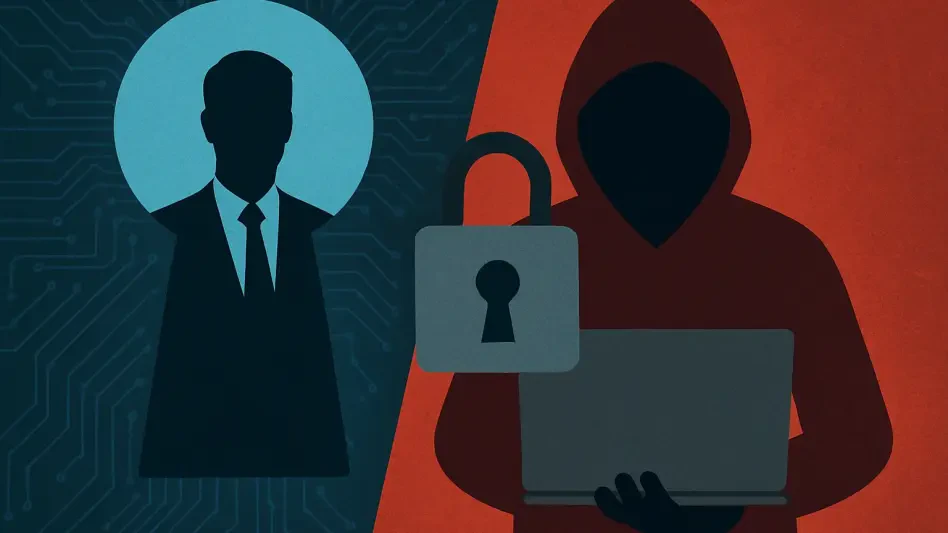

The modern digital battlefield has shifted from overt displays of technological power toward a sophisticated masquerade where intelligence agencies cloak their footprints in the rags of common street criminals. Within the volatile geopolitical climate of the Middle East, the traditional boundaries between state-sanctioned intelligence gathering and financially motivated cybercrime are dissolving. Security professionals now face a reality where a ransomware demand might not be an attempt to extort currency, but rather a diversionary tactic designed to mask the extraction of sensitive national security data. This convergence creates a fog of war that benefits the aggressor while leaving the defender struggling to prioritize remediation efforts effectively.
The strategic importance of accurate attribution has never been higher, yet it has become significantly more difficult to achieve with high confidence. The Iranian Ministry of Intelligence and Security has demonstrated a remarkable ability to leverage these hybrid operations to achieve regional objectives while maintaining a degree of plausible deniability. By adopting the personas of independent criminal entities, these state actors can bypass the immediate diplomatic repercussions that usually follow a government-linked intrusion. This shift reflects a maturing doctrine where the psychological impact of a ransomware threat is used as a secondary weapon to complement the primary goal of quiet, long-term espionage.
Technological influences play a pivotal role in this concealment strategy, as “false flag” operations increasingly rely on legitimate administrative tools and shared criminal infrastructure. By using the same command-and-control frameworks as disorganized crime syndicates, state actors ensure that their traffic blends in with the background noise of the internet. This method complicates the response process, as security teams might treat an incident as a localized malware infection rather than a targeted operation by a foreign intelligence service. The use of legitimate remote management software further obscures intent, as these tools are common in every corporate environment.
The current threat landscape is defined by the emergence of specific actors like MuddyWater, also known as Seedworm, and their tactical pivot toward the Chaos Ransomware-as-a-Service platform. Chaos represents a new breed of criminal branding that prioritizes high-profile targets and aggressive extortion tactics. When a state-sponsored group like MuddyWater adopts such a brand, they gain access to a pre-built reputation of chaos and financial greed. This relationship allows the state actor to hide their sophisticated mission behind the noisy, disruptive behavior of a ransomware gang, forcing defenders to focus on the wrong side of the attack.
International sanctions and evolving cybersecurity frameworks are also shaping how organizations report and respond to these state-linked intrusions. As legal requirements for transparency increase, companies find themselves in a precarious position when an attack is linked to a sanctioned entity like the Iranian government. Reporting an incident involving MuddyWater carries different legal and insurance implications than reporting a generic criminal breach. Organizations must now navigate a complex web of compliance standards while managing the technical reality of a compromised network, making the initial identification of the threat actor a critical business decision.
Trends and Projections in Hybrid Threat Activity
Emerging Tactics in Identity Concealment and Social Engineering
The traditional reliance on email-based phishing has largely given way to a more intimate and effective approach within “trusted” collaboration environments like Microsoft Teams and Slack. Threat actors have recognized that employees are conditioned to be wary of suspicious external emails, but they often lower their guard when receiving a direct message on a corporate communication platform. By infiltrating these spaces or creating spoofed accounts that mimic internal IT support, actors can initiate a dialogue that feels legitimate and urgent. This migration toward collaboration platforms allows attackers to bypass many traditional security filters that focus primarily on SMTP traffic.
Social engineering has evolved into a human-centric discipline that combines voice phishing with the abuse of legitimate screen-sharing tools like Microsoft Quick Assist. In these scenarios, the attacker assumes the role of a helpful technician, guiding the victim through a series of steps that ultimately compromise the system. This “vishing” technique adds a layer of authenticity that is difficult for automated systems to detect. Once a user grants access via a legitimate tool, the attacker can navigate the environment with the same privileges as a local admin, all while the victim believes they are receiving necessary technical assistance.
This weaponization of employee trust in corporate IT support represents a fundamental shift in how state actors approach initial access. Instead of searching for complex zero-day vulnerabilities, they exploit the basic human desire to be cooperative and follow instructions from authority figures. As corporate cultures emphasize rapid communication and integrated support, the opportunities for sophisticated social engineering increase. This trend suggests that the human element will remain the most significant vulnerability in the security chain, regardless of how advanced defensive technology becomes in the coming years.
Despite these advanced concealment efforts, historical artifacts remain essential for unmasking the true identity of the intruder. Code-signing certificates and reused command-and-control infrastructure provide a breadcrumb trail that technical analysts can follow back to specific state-sponsored origins. For example, the repeated use of specific certificates associated with Iranian operations serves as a persistent link that transcends the temporary branding of a ransomware group. These digital fingerprints are the key to seeing through the false flag, providing the evidence necessary to link a “criminal” attack back to its state-sponsored roots.
Market Data and the Financial Impact of State-Sponsored Ransomware
The growth of Ransomware-as-a-Service platforms is fueled by a continuous cycle of disruption and reorganization among prominent threat groups. When a major operation is dismantled by law enforcement, its members often splinter and form new entities like Chaos, bringing their expertise and infrastructure with them. This “big-game hunting” model focuses on organizations with the most to lose, ensuring that the pressure to pay remains high. The reorganization of groups like BlackSuit into new brands ensures that the RaaS ecosystem remains resilient and constantly evolving, providing a steady supply of cover for state actors.
The effectiveness of the “quadruple extortion” model—comprising encryption, data leakage, DDoS attacks, and direct harassment—has set a new standard for modern campaigns. By threatening to leak sensitive data or harass an organization’s clients, attackers can exert immense pressure even without successful encryption. This model is particularly attractive to state actors, as the data leakage phase aligns perfectly with their espionage goals. They can steal the data for intelligence purposes while publicly claiming they are only interested in a ransom, thereby fulfilling two objectives with a single intrusion.
Forward-looking forecasts suggest that the frequency of state actors adopting criminal branding will increase as they seek to bypass diplomatic and legal repercussions. By 2027, it is projected that a significant portion of what appears to be high-end criminal ransomware will actually be state-sponsored activity in disguise. This tactic allows governments to conduct aggressive cyber operations while avoiding the standard escalations of international conflict. As the branding becomes more polished and the criminal personas more believable, the task of distinguishing between a profit-seeking hacker and a government agent will require deeper technical and geopolitical analysis.
Complexities of Attribution and False Flag Operations
The challenge of maintaining plausible deniability rests on the ability of the attacker to create a convincing narrative that conflicts with their strategic objectives. When a security team identifies ransomware on their servers, their immediate assumption is a financial motive; however, if the stolen data has high intelligence value but low resale value, the narrative begins to crumble. This tension between technical indicators and strategic outcomes is the primary hurdle for state actors. They must balance the need to look like a criminal with the mission to act like an intelligence officer, often leaving small but significant clues in the process.
Forensic investigations often reveal “smoking guns” in the form of inconsistencies within the intrusion lifecycle, such as the conspicuous absence of actual encryption. In several cases linked to MuddyWater, the attackers followed the standard ransomware playbook up until the point of locking the files, at which point they simply stopped. This procedural anomaly suggests that the ransomware artifacts were merely decorative, intended to trigger a specific response from the victim while the real work of data exfiltration was already complete. When the “criminal” forgets to actually extort the victim, the mask of the state actor begins to slip.
Overcoming this misdirection requires incident responders to look beyond the overt markers of a ransomware attack to identify deeper patterns of persistence and exfiltration. Instead of focusing solely on the ransom note, defenders must analyze the tools used for lateral movement and the specific repositories targeted during the breach. If the attacker spends an unusual amount of time in sensitive engineering or policy directories, it indicates an interest that goes beyond financial gain. By shifting the focus toward behavioral analysis and long-term persistence, security teams can unmask the true nature of the threat.
Navigating the Regulatory and Compliance Environment
The legal complexities of dealing with ransomware become significantly more difficult when the activity is tied to state-sponsored actors like MuddyWater. Organizations must consider the impact of international sanctions, as paying a ransom to an entity linked to the Iranian MOIS could result in severe legal penalties. This creates a double-bind for victims: they are pressured to pay to protect their data, yet they are legally prohibited from doing so if the actor is sanctioned. This environment necessitates a high level of due diligence and forensic certainty before any negotiation or payment is even considered.
Security standards and reporting frameworks are beginning to adapt to this crossover between criminal and state tactics. The MITRE ATT&CK framework, for instance, is increasingly used to catalog the specific techniques used by groups that blur these lines. By mapping the behavior of a “ransomware” group against the known tactics of a state actor, organizations can more quickly identify when they are being targeted by a sophisticated adversary. This standardized approach to tracking threat activity helps build a collective defense where insights from one breach can protect others from similar false flag operations.
The necessity of heightened identity protection and multi-factor authentication auditing has become a central pillar of modern regulatory demands. Because state actors like MuddyWater rely so heavily on compromised credentials and the manipulation of MFA settings, compliance now requires more than just having these systems in place. Organizations must actively audit their authentication logs for signs of tampering or unauthorized enrollment of new devices. Under current regulations, proving that an identity management system was robust and properly monitored is often as important as the technical defense itself.
Future Directions for Global Cyber Defense
The future of collaboration security depends on the implementation of advanced monitoring and restricted external access on enterprise communication platforms. As these environments become the primary vector for social engineering, they must be treated with the same level of scrutiny as external web traffic. Organizations will likely move toward “closed-loop” systems where external communication is blocked by default, and only verified partners are allowed to interact with employees. This shift will require a new generation of security tools designed specifically to parse the context and intent of messages within Teams and Slack.
Innovation in behavioral analysis will play a critical role in identifying the procedural inconsistencies that distinguish state actors from common criminals. By leveraging AI and machine learning, security platforms can detect when a supposed ransomware actor is spending too much time on reconnaissance or targeting data that has no financial value. These systems can flag an incident as a potential false flag based on the subtle differences in how a state operative moves through a network compared to a criminal. This level of automated intelligence will be necessary to keep pace with the increasing sophistication of state-sponsored concealment.
Global economic and political factors will continue to drive Iranian cyber strategy, as regional tensions and Western sanctions push the state toward more aggressive and deniable operations. The use of cyber power provides a cost-effective way for a sanctioned nation to exert influence and gather intelligence without risking a direct military confrontation. As long as these geopolitical pressures exist, the incentive to utilize hybrid threat models will remain high. Defenders must therefore view cyber defense not as a static technical challenge, but as a dynamic component of a much larger international power struggle.
Law enforcement operations like the disruption of the BlackSuit infrastructure demonstrate that global cooperation can temporarily destabilize the RaaS ecosystem. However, these successes often lead to a “whack-a-mole” scenario where the most skilled operators simply migrate to new platforms. Future defense strategies must focus on breaking the economic and technical incentives that make these platforms attractive to state actors. By making it more difficult and expensive to maintain a convincing criminal front, the international community can reduce the effectiveness of the false flag as a tool of statecraft.
Strategic Outlook and Defensive Recommendations
The technical evidence gathered from recent intrusions suggests that MuddyWater is actively utilizing the Chaos ransomware brand as a tactical veil for intelligence gathering. This hybrid approach allows the Iranian state to conduct extensive data exfiltration while hiding behind the disruptive and noisy reputation of a criminal group. The absence of encryption in these cases is not a failure of the attacker, but a calculated choice to maintain the illusion of a ransom-motivated breach while the true objectives remain hidden. Recognizing this pattern is essential for any organization operating in sectors of strategic interest to the Iranian government.
Actionable defensive steps must include the rigorous monitoring of remote management and monitoring tools, which serve as the primary persistence mechanism for these actors. AnyDesk, Quick Assist, and DWAgent should be strictly controlled and audited to ensure they are only used for authorized business purposes. Furthermore, organizations should implement session auditing for the Remote Desktop Protocol to detect unauthorized lateral movement. Specialized user awareness training is also required to teach employees how to identify sophisticated social engineering attempts within collaboration platforms, emphasizing that a message on Teams is not inherently more trustworthy than an email.
In conclusion, the convergence of statecraft and cybercrime was a defining shift in the threat landscape that matured through 2026. The ability of actors like MuddyWater to adopt the branding of a group like Chaos proves that the identity of a threat is often a carefully constructed fiction. Protecting against these hybrid threats required a transition from reactive security toward an integrated intelligence-led approach. Organizations that succeeded in this environment were those that looked past the ransom note and focused on the deep forensic markers that revealed the true hand of the state.