
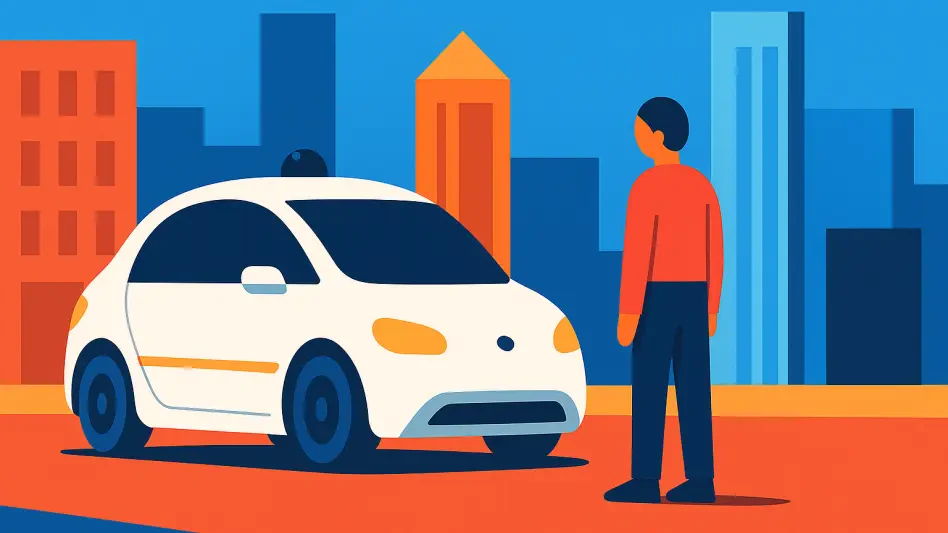
Recent incidents in Texas highlight a strategic vulnerability where a single person can paralyze a high-tech transport system simply by standing in the road. This phenomenon, labeled a people-powered denial-of-service attack, emerged during field tests in Austin when a pedestrian repeatedly stepped in front of a Tesla Cybercab. Because the vehicle was engineered without a steering wheel or pedals, there was no human driver present to provide the social signaling or manual overrides necessary to resolve the standoff. Each time the pedestrian entered the vehicle’s path, the computer executed its core safety protocol: it braked aggressively and activated hazard lights. While the system functioned as designed by prioritizing safety, the interaction demonstrated a fundamental weakness. A single person, acting without technical knowledge, neutralized a sophisticated piece of machinery by exploiting its commitment to avoiding collisions.
The Core Vulnerability: Paradox of Safety-First Programming
The current design of the Tesla Cybercab relies on a binary interpretation of road safety that leaves little room for interpreting human intent. In a traditional driving scenario, a human operator might discern that a person standing in the road is a prankster and could slowly creep forward or utilize a horn to negotiate the space. In contrast, the autonomous system interprets any human presence in its path as a critical risk that necessitates a full stop. This creates a strategic gap where the vehicle’s most virtuous trait—its refusal to cause harm—becomes its primary operational liability. Engineering teams at Tesla are now grappling with the reality that an overly passive system can be easily bullied by bad actors. If this behavior is scaled up, coordinated groups could potentially block entire intersections, effectively shutting down urban transport networks. The challenge lies in introducing assertiveness that maintains safety without making the fleet an easy target for disruptions.
This vulnerability extends beyond individual pranks and touches on broader social tensions surrounding the integration of autonomous fleets into metropolitan areas. Data indicates that robotaxis frequently act as lightning rods for public frustration or curiosity. Similar challenges were observed in Los Angeles, where competitors faced physical interference and service suspensions due to targeted disruptions. Unlike heavy machinery that commands natural caution, autonomous vehicles are often viewed as harmless toys or political statements. This psychological shift encourages pedestrians to test the limits of the vehicle’s programming, knowing there is no human inside to hold them accountable. As the number of Cybercabs on the road increases from 2026 to 2028, the frequency of these interactions is expected to rise. Without a way to distinguish between a safety hazard and a deliberate act of obstruction, the fleet remains susceptible to a form of low-tech sabotage that bypasses advanced cybersecurity.
The Path Forward: Regulatory Challenges and Solutions
Federal regulators have already taken notice of these operational frictions, as the National Highway Traffic Safety Administration recently initiated inquiries into several incidents involving autonomous deployments in Texas. The core of the legal debate centers on whether a vehicle can be considered safe if it is incapable of resolving common social stalemates. Tesla’s existing safety documentation operates under the assumption that other road users will generally adhere to traffic laws, yet it offers few solutions for sustained, intentional interference. If the manufacturer increases the vehicle’s assertiveness to discourage loitering, they risk a catastrophic public relations disaster and severe legal penalties in the event of an injury. This puts the company in a position where software patches alone cannot solve a human behavior problem. City planners are realizing that the transition to a driverless society requires a total overhaul of how urban spaces are policed.
The resolution of this dilemma ultimately shifted away from purely technical updates toward a more integrated legal and social framework. To address the threat of paralyzed fleets, city officials and Tesla engineers collaborated on a new set of digital enforcement tools that linked vehicle sensors directly to local law enforcement. This allowed for the immediate identification and ticketing of individuals who were found to be intentionally obstructing autonomous traffic. Furthermore, the industry moved toward implementing standardized social signaling cues, such as external displays that communicated intent to the surrounding public. These measures were supplemented by public awareness campaigns that reclassified the intentional blocking of a robotaxi as a serious traffic violation. By establishing clear consequences for interference and refining the car’s ability to signal its path, the industry sought to balance safety with the operational requirements of a functioning transit network.