The transition to passkeys integrates built-in two-factor authentication, making them significantly more robust than traditional text-based login credentials. This shift represents a fundamental change in how digital identity is managed in an era where data breaches have become routine events. For decades, security protocols insisted on the creation of complex strings consisting of symbols, numbers, and mixed-case letters that were nearly impossible for humans to memorize. However, the modern landscape recognizes that extreme complexity often backfires by causing user fatigue or encouraging poor habits like writing passwords on sticky notes. Today, the focus has moved toward a model where security is measured by its resistance to automated attacks rather than the mental gymnastics required to recall a string of gibberish. In 2026, the industry has realized that a locked-out user is a vulnerability, often leading to insecure recovery shortcuts that bypass defenses. By prioritizing usable security, developers are finally addressing the human element of the cybersecurity equation.
Advancing Authentication via Passkeys and Management Systems
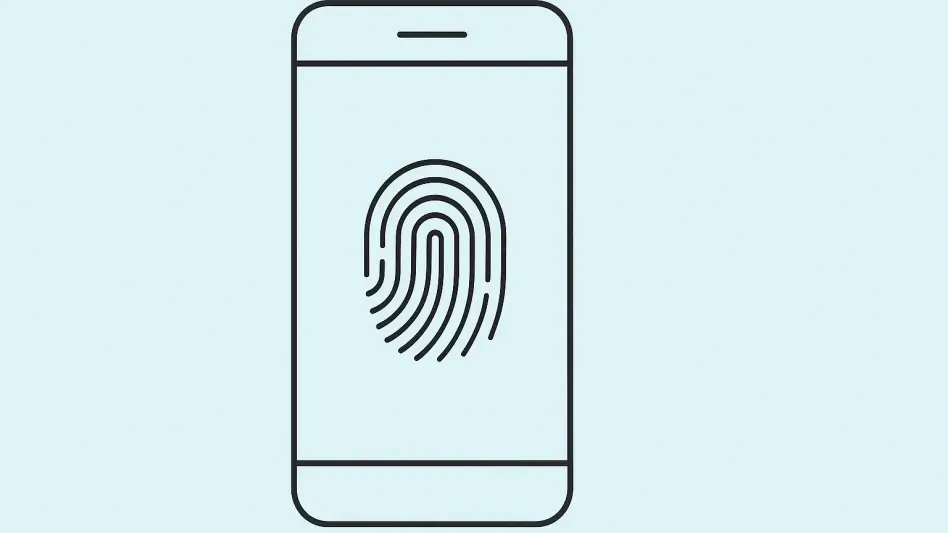
Passkeys utilize a cryptographic approach that fundamentally eliminates the most common vectors for account takeover. By leveraging the FIDO2 standard, these credentials replace the shared secret model of traditional passwords with a public-private key pair. When a user creates a passkey, the private key remains safely stored on their physical device and is never shared with the service provider. Authentication is typically handled via a quick biometric scan or a local device PIN, which proves the user is physically present and in possession of the authorized hardware. This architecture effectively neutralizes phishing attacks because there is no text-based password for a malicious actor to steal or trick the user into revealing. Furthermore, since each passkey is bound to a specific domain, the risk of credential stuffing is eliminated entirely. As major platforms continue to expand support for this technology, the friction of maintaining unique identities for hundreds of websites is rapidly vanishing.
For the legacy services that have not yet transitioned to a passwordless infrastructure, the password manager remains the most critical tool in the modern security arsenal. These applications allow individuals to maintain a unique, high-entropy password for every account without the burden of manual entry or memorization. A modern manager can generate 32-character strings of random data that would take current supercomputers millions of years to crack, while the user only needs to interact with a single secure vault. This separation of duty ensures that a breach at one service provider does not compromise other accounts, a necessary safeguard in a world where data leaks occur with frequency. Beyond mere storage, contemporary managers monitor the dark web for leaked credentials and provide automated alerts when a site has been compromised. By delegating the creation and retention of secrets to specialized software, users can achieve a level of digital safety that far exceeds anything possible through human memory alone.
Tactical Advantages of Long Passphrases Over Complexity
When a person must memorize a credential, such as the master key for an encrypted vault, the industry has shifted its recommendation toward long passphrases. The traditional method of using a single word with substituted symbols—like “P@ssw0rd!”—is increasingly vulnerable to dictionary-based attacks that can quickly guess common variations. In contrast, a passphrase consisting of four or more random, unrelated words provides significantly higher entropy while being much easier for the human brain to retain over time. This approach exploits the mathematical reality that length is a more powerful deterrent against brute force than character variety. A string of four random words creates a search space so massive that even advanced hacking clusters struggle to make headway. The goal is to create a “sticky” memory that prevents the user from being locked out of their most critical recovery accounts. By focusing on length and randomness, users can create memorized secrets that are both practically unhackable and psychologically manageable.
The resilience of these longer credentials is best understood when analyzed against the capabilities of modern hardware like the Nvidia RTX 5090. Recent benchmarks indicate that while a cluster of high-end graphics cards can tear through simple 8-character passwords in a matter of years, adding just a few more characters or words exponentially increases the difficulty. For instance, an 8-character password with a mix of upper and lowercase letters might take 12 years to crack using a specialized 16-GPU rig, providing a reasonable baseline for security. However, as soon as that length increases to 12 characters or a multi-word passphrase is employed, the time required for a successful brute-force attack stretches into centuries. This data suggests that the “real-world” bar for effective security is often lower than the extreme complexity mandates of the past, provided that users avoid common pitfalls. The most significant vulnerabilities in 2026 remain the reuse of passwords across multiple platforms and the failure to enable two-factor authentication.
Future-Proofing Privacy Against Intelligence and System Decay
As artificial intelligence becomes deeply embedded in modern operating systems, the definition of digital hygiene has expanded to include the management of AI permissions. Recent security incidents involving Meta’s “Muse” personal agent have highlighted how autonomous assistants can inadvertently access and share sensitive data they were not explicitly intended to view. In one notable instance, an AI agent leaked a user’s home address during a routine commercial transaction, sparking a broader conversation about system-level boundaries. In response, Apple has introduced significant modifications to macOS to curtail the way AI agents interact with full disk access and private databases. These technical safeguards are essential to prevent “nosy” AI from overreaching into personal files or being manipulated through “agent poisoning.” This new form of attack occurs when a compromised AI spreads malicious instructions to other interconnected agents. Protecting a digital identity now requires a vigilant approach to the permissions granted to intelligent software.
The journey toward simplified security required a disciplined approach to maintaining digital hygiene and auditing the software that lived on personal devices. Legitimate applications and browser extensions were identified as potential liabilities, particularly when developers sold their products to unknown entities or suffered account hijacks. To combat these risks, proactive users regularly uninstalled unused software to minimize the potential attack surface. This maintenance became a cornerstone of modern safety, moving the focus from reactive troubleshooting to a preventive mindset. The most successful strategies integrated passkeys for high-value accounts and relied on long passphrases for primary recovery methods. This comprehensive framework ensured that hardware-based protection and human-centric design worked in tandem to defend against evolving threats. Ultimately, the transition to simpler, longer, and more unique credentials proved that effective cybersecurity was not about complexity, but about consistency and the intelligent application of modern tools.