The recent exposure of internal communications within the Luna Moth organization has shattered the long-standing illusion that cybercrime is purely a technical challenge requiring only digital solutions. This October 2026 document leak showed how the group, also known as the Silent Ransom Group, bypassed perimeters by exploiting human trust. The files depicted a world where extortion was not a chaotic act but a meticulously documented corporate workflow.
The Professionalization of Cyber-Extortion
The leaked logs revealed an organization operating like a tech startup, complete with performance metrics and standardized scripts. While traditional gangs focused on developing malware, Luna Moth prioritized administrative efficiency and psychological leverage. Their structure allowed roles to be clearly defined, treating each hack as a managed project with specific milestones and communication goals.
This professionalized business model ensured that every interaction was optimized for profit. Instead of relying on random chance, the group used data-driven methods to identify high-value targets and refine their social engineering scripts. The internal documentation highlighted a culture of continuous improvement, where failed attempts were analyzed to improve the success rate of future operations.
Why the Luna Moth Leak Redefines the Threat Landscape
These files proved that technical firewalls were no longer the primary obstacle for modern extortionists. Luna Moth moved the battlefield to the employee’s desk, rendering expensive security suites useless through simple dialogue and social engineering. This highlighted the “human element” as the most significant vulnerability in modern corporate environments, necessitating a shift in defense strategies.
Furthermore, the leak demonstrated that traditional defense-in-depth strategies often overlooked the psychological aspects of security. By focusing on the manipulation of trust, the group bypassed multi-factor authentication and other technical safeguards that were designed to stop automated attacks. This revelation forced a broader conversation about the necessity of securing human interactions as rigorously as network ports.
Anatomy of the Duo-Operative Attack Model
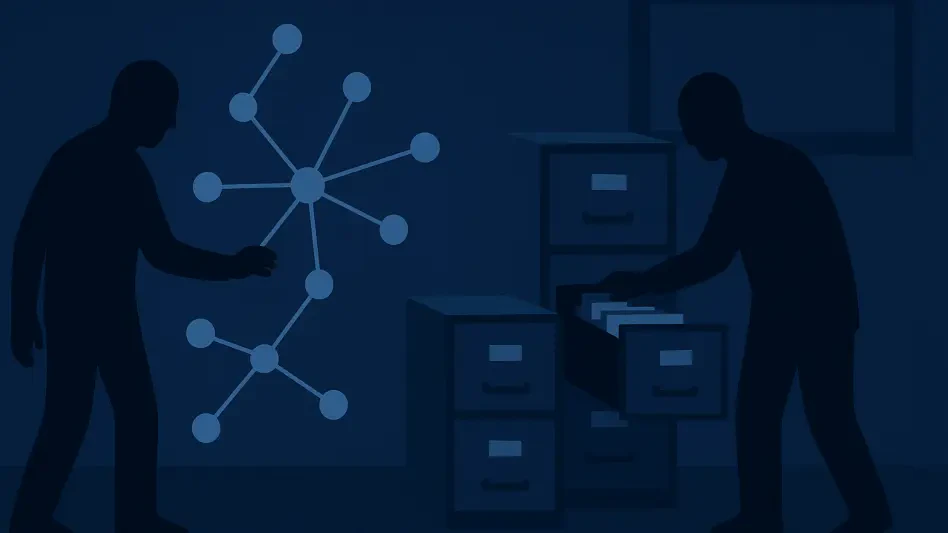
Attackers used a “callback” technique, posing as IT support to gain entry to sensitive systems. One operative managed the victim’s emotions via phone while a second attacker exfiltrated data in the background. Scripted manuals provided specific rebuttals for hesitant victims, ensuring a professionalized deception that was difficult to detect even by experienced staff.
They prioritized quiet data theft over loud, disruptive encryption. By stealing files for blackmail, they avoided the immediate paralysis that usually alerts law enforcement and security teams. This shift focused on maintaining long-term leverage over the victim rather than demanding a one-time payment for a decryption key, allowing the group to extract multiple payments over time.
Expert Analysis of the Silent Ransom Group Infrastructure
Researchers found a level of coordination that mirrored legitimate corporate support teams. Operatives used private messaging platforms to synchronize their verbal instructions with real-time technical actions. This businesslike approach allowed the group to scale their operations across numerous corporations simultaneously, making them a persistent threat that operated with industrial efficiency.
The technical infrastructure supporting these operations was equally robust, featuring dedicated servers for data storage and anonymized communication channels. Analysis of the leaked server logs showed that the group maintained high uptime and reliable access to their stolen assets. This level of investment in infrastructure indicated that Luna Moth viewed their criminal activities as a long-term commercial enterprise.
Strategic Defenses Against Social Engineering Extortion
Defending against this required a shift toward zero-trust human policies. Mandatory multi-channel verification and the strict restriction of remote access tools were implemented to break the group’s tactical cycle. Training shifted toward recognizing psychological pressure and verifying every inbound request for system access through independent, internal communication channels.
Organizations updated their training to include scenario-based learning rather than simple compliance checklists. This approach taught staff to handle the specific urgency tactics and rebuttals used by attackers. The leaked files eventually provided the necessary insights for security professionals to harden the human layer of corporate defense, ensuring that employees remained the strongest link in the security chain.