The persistence of easily guessable strings like “123456” continues to provide a gateway for AI-powered hacking tools to exploit billions of digital accounts. In the current landscape, the sheer velocity of automated attacks means that traditional defense mechanisms have become largely obsolete for the average user. Sophisticated algorithms now perform mass-scale credential stuffing with such precision that any static credential acts as a liability rather than a safeguard. As the industry moves forward, the focus has shifted toward a holistic understanding of digital presence, where an individual’s identity is no longer defined by what they know, but by what they possess and how they behave. This shift necessitated the widespread adoption of zero-trust frameworks, ensuring that no request for data is trusted implicitly, regardless of the source. By examining the current trajectory of cyber threats, it became clear that securing a digital footprint requires a multi-layered approach that integrates advanced hardware with decentralized verification protocols.
Passwordless Authentication: The End of Credential Theft
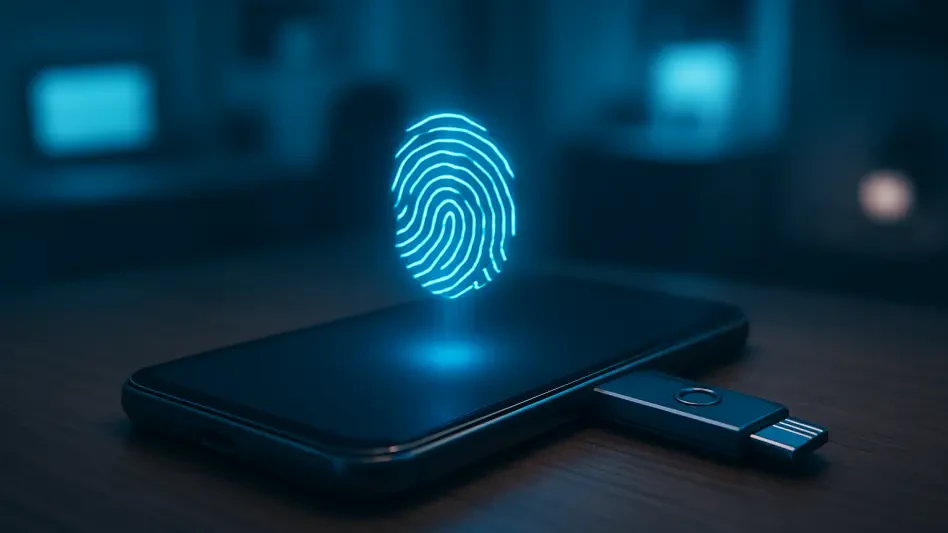
The move toward a passwordless ecosystem gained significant momentum as major technology providers successfully integrated passkeys into the core of every modern operating system. These cryptographic entities replaced the need for human-readable strings, effectively neutralizing the threat of phishing and social engineering. When a user registers for a service, a unique public-private key pair is generated, with the private portion never leaving the secure enclave of the physical device. This architectural change means that even if a service provider suffers a massive data breach, the information stolen is useless to attackers because they lack the physical hardware or biometric authorization required to unlock the corresponding key. Furthermore, the FIDO2 standard ensured cross-platform compatibility, allowing individuals to maintain a seamless security posture across various devices without the friction of remembering or storing complex sequences of characters.
Beyond simple key pairs, modern security now incorporates behavioral biometrics to provide an additional layer of continuous authentication. This technology analyzes subtle patterns such as typing rhythm, touchscreen pressure, and even the specific angle at which a smartphone is held to confirm the identity of the operator in real-time. If a device is stolen while in an unlocked state, the sudden change in behavioral signals triggers an immediate lockdown, requesting a secondary verification factor before access is restored. This proactive stance addresses the vulnerability of physical theft, which was a significant oversight in earlier security models. Moreover, risk-based signals—such as geographical location, network reputation, and time of day—are processed through local machine learning models to determine the legitimacy of an access attempt. This context-aware approach ensures that security is both robust and invisible, only intervening when an anomaly is detected.
Decentralized Identity: Taking Control of Personal Data
A fundamental shift in identity management occurred with the rise of decentralized identity, often referred to as self-sovereign identity. This model moved away from the traditional reliance on centralized authorities like social media platforms or government databases as the primary gatekeepers of personal information. Instead, individuals now utilize digital identity wallets to store verifiable credentials that they control directly. When a user needs to prove their identity to a third party, they present a cryptographically signed attestation from a trusted issuer without revealing the underlying data. This approach significantly reduced the volume of personal identifiable information stored in vulnerable central servers, which had long served as high-value targets for global hacking syndicates. By distributing the responsibility for data storage and verification, the ecosystem became far more resilient, as there was no longer a single point of failure that could compromise millions of identities at once.
Securing a digital identity required a decisive shift toward advanced cryptographic standards and decentralized control mechanisms. Organizations and individuals alike moved away from obsolete reliance on passwords and SMS-based multi-factor authentication, favoring hardware-bound passkeys instead. This transition effectively neutralized the most common vectors for unauthorized access and fraud. The adoption of self-sovereign identity models allowed for the minimization of personal data footprints, significantly lowering the risks associated with large-scale data breaches. Users proactively utilized artificial intelligence to monitor their digital presence, ensuring that any anomalies were identified and addressed with speed. By prioritizing the use of zero-knowledge proofs and localized biometric verification, the standard for digital privacy was substantially elevated. These actions created a robust defense architecture that stood resilient against the evolving landscape of automated cyber threats, establishing a safer environment for digital interactions.