
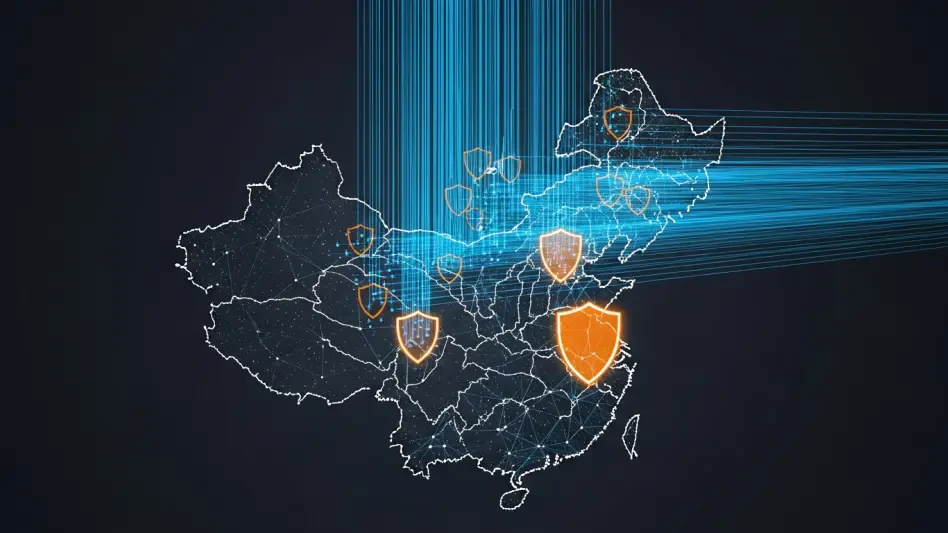
Global cybersecurity infrastructures are currently witnessing a seismic shift in the geographical distribution of malicious network traffic as China officially surpasses the United States as the primary destination for large-scale distributed denial-of-service campaigns. This transition marks a significant turning point in the digital landscape, reflecting a broader geopolitical realignment and the increasing sophistication of botnet operators who are now focusing their disruptive efforts on Asian telecommunications hubs and state-owned financial institutions. In the opening months of 2026, data centers across major Chinese provinces reported a staggering increase in volumetric attacks, which effectively strained the defensive capabilities of regional internet service providers. This surge represents a strategic pivot where attackers utilize complex application-layer assaults to bypass traditional firewalls. Consequently, the international security community is closely monitoring how this reallocation of digital hostility will influence future bilateral relations.
Evolution of the Global Threat Landscape
For several consecutive years, the United States maintained the unenviable position of being the most attacked nation in cyberspace, primarily due to its high concentration of cloud service providers and digital corporate headquarters. However, recent telemetry indicates that the landscape has fundamentally changed as threat actors leverage increasingly autonomous botnets that prioritize targets with high visibility and high economic impact. The migration of focus toward China suggests that adversaries are no longer content with targeting North American consumer markets but are instead seeking to disrupt the core industrial and logistical networks that underpin the global economy. This shift is characterized by a move away from simple flood-based attacks toward more sophisticated, multi-vector strategies that combine network-layer saturation with subtle probes into specific API endpoints. Organizations operating within the region are now forced to adopt advanced behavioral analytics to identify and mitigate these threats in real-time.
Technological advancements in the region have inadvertently created a broader attack surface for malicious actors to exploit during these massive DDoS campaigns. The rapid deployment of 5G infrastructure and the proliferation of insecure Internet of Things devices throughout industrial sectors in Asia have provided botnet herders with an unprecedented amount of bandwidth and processing power. These vulnerable devices are frequently hijacked and integrated into massive zombie networks that can be directed against Chinese critical infrastructure with devastating precision. Unlike previous years when attacks were often sporadic and lacked clear objectives, the current surge demonstrates a level of coordination and persistence that suggests the involvement of well-funded groups using automated orchestration tools. Furthermore, the increasing reliance on centralized cloud platforms in China has created high-value targets where a single successful disruption can ripple through thousands of downstream businesses across the world.
Resilience Strategies for High-Volume Environments
Defending against this new scale of digital aggression requires a fundamental rethink of how network traffic is routed and filtered across international borders. Many Chinese enterprises are now moving toward highly distributed Anycast networks that spread the burden of incoming traffic across multiple global scrubbing centers, preventing any single point of failure from causing a total blackout. This architectural shift is being complemented by the integration of machine learning models that can distinguish between legitimate spikes in user activity and the subtle patterns of a sophisticated botnet within milliseconds. By analyzing packet metadata and behavioral signatures at the edge of the network, these systems can implement surgical rate-limiting and challenge-response protocols without impacting the experience of genuine users. Moreover, there is a growing emphasis on collaborative defense where service providers share real-time threat intelligence to block malicious IP ranges before they can reach their intended targets.
The implications of China becoming the top target for DDoS attacks extend far beyond its domestic borders, affecting every international corporation that maintains a digital presence or operational footprint in the country. Businesses are discovering that standard service level agreements with local hosting providers may no longer be sufficient to withstand the sheer magnitude of contemporary volumetric assaults. As a result, there is a significant push toward hybrid cloud strategies and multi-vendor redundancy to ensure that critical applications remain accessible even when primary regional gateways are under heavy fire. This trend is driving a surge in demand for specialized cybersecurity consulting and managed detection services that focus specifically on the nuances of the Chinese regulatory and technical environment. Furthermore, the volatility caused by frequent network disruptions is prompting many organizations to reconsider their disaster recovery plans, incorporating more robust offline capabilities to mitigate downtime.
Strategic Imperatives for Future Resilience
In light of these unprecedented challenges, stakeholders across the technology sector identified a series of critical actions that proved necessary for maintaining stability in a redirected threat landscape. Security teams prioritized the implementation of deep packet inspection and rigorous traffic scrubbing to neutralize the most aggressive volumetric surges. It became clear that relying solely on legacy hardware was no longer a viable strategy, leading to a widespread adoption of cloud-native protection services that offered elastic scaling during peak attack periods. Moving forward, organizations were encouraged to conduct frequent red-teaming exercises and stress tests to identify potential bottlenecks in their response protocols. The integration of automated incident response playbooks ensured that technical teams could react with speed and precision, minimizing the duration of any successful service disruptions. Additionally, closer collaboration with government bodies provided a broader perspective on emerging botnets and shared network vulnerabilities.