Granting seasonal employees the same data access rights as general managers violates the fundamental security principle of least privilege. In the high-velocity environment of the modern hospitality industry, the continuous exchange of sensitive guest information creates a complex digital ecosystem that requires rigorous oversight. From the moment a traveler initiates a reservation through an online booking engine to the final settlement at a point-of-sale terminal, a massive digital footprint is generated. This data includes highly sensitive details such as passport numbers, residential addresses, specific travel itineraries, and encrypted credit card information. Because these transactions are processed through an intricate web of interconnected technologies, including Property Management Systems and various third-party channel managers, the surface area for potential exploitation is vast. The industry operates on a twenty-four-hour basis with frequent staff turnover, which often complicates the consistent application of security protocols. Consequently, the greatest threat to this ecosystem typically stems from the vulnerability of user credentials rather than sophisticated software exploits. Stolen or weak passwords provide a direct, low-resistance path for unauthorized actors to access internal networks, making credential management the cornerstone of any contemporary data protection strategy.
Understanding Common Digital Threats and Attack Vectors
The current threat landscape for hotels and resorts is characterized by persistent, automated attempts to breach the perimeter of guest-facing systems. Identity-based attacks have become the primary method of intrusion, with sophisticated monitoring systems now detecting thousands of automated password attempts every second across global hospitality networks. Empirical data suggests that a vast majority of North American hotels have faced successful cyber intrusions during peak travel seasons, a period when operational pressure is highest and staff vigilance may be stretched thin. These attacks frequently target guest Wi-Fi and payment processing systems, where a single lapse in security can lead to widespread data exfiltration. With the global average cost of a data breach now reaching millions of dollars, the financial and reputational toll of these incidents has elevated cybersecurity from a technical necessity to a critical business priority. By analyzing the methods used by attackers, organizations can better understand the urgent need for a layered defense strategy that addresses both technical vulnerabilities and human behavior.
The Mechanics: Modern Password Exploitation
Automated botnets have revolutionized the way attackers approach hospitality targets, moving far beyond the era of simple manual guessing. Credential stuffing has emerged as a particularly effective technique, where attackers utilize expansive lists of usernames and passwords leaked from historical breaches across other industries. This method exploits the common human tendency to reuse passwords across multiple platforms, meaning a compromised personal email account can provide a gateway into a hotel’s internal management system. Because these automated scripts can test thousands of login combinations in a matter of minutes, traditional security barriers often fail to provide adequate protection. Furthermore, attackers often leverage password spraying, a strategy where a few highly common passwords are tried against a large volume of different usernames. This specific approach is designed to bypass standard account lockout policies that are typically triggered only after multiple failed attempts on a single account.
In addition to external credential attacks, the hospitality sector must defend against specialized infostealer malware designed to harvest saved logins directly from staff browsers. When a front desk or back-office computer is compromised through a malicious attachment or a compromised website, this software silently extracts every saved password for the Property Management System and other corporate portals. This creates a significant challenge for an industry characterized by high staff turnover and twenty-four-hour operations, where maintaining consistent device hygiene is difficult. These high-speed, automated techniques highlight the reality that simple, static passwords are no longer a viable defense for protecting sensitive guest information. Without moving toward more resilient authentication methods, hospitality businesses remain vulnerable to these sophisticated harvesting techniques that can compromise an entire network within seconds of the initial infection.
Seasonal Vulnerabilities: Payment Systems and Data Theft
Peak travel seasons represent a strategic window for cybercriminals, as the surge in guest volume creates a target-rich environment with a high frequency of financial transactions. Research indicates that the majority of successful cyberattacks in the hospitality sector occur during these busy periods, specifically targeting the payment infrastructure and guest-facing Wi-Fi networks. Attackers recognize that during these times, administrative staff are often overwhelmed, and technical support may be prioritized toward maintaining uptime rather than rigorous security monitoring. This seasonal vulnerability is exacerbated by the influx of temporary staff who may not have received comprehensive security training, making them more susceptible to social engineering or procedural errors. The focus on high-speed check-ins and seamless guest experiences can sometimes lead to shortcuts in data handling, providing an opening for attackers to intercept payment information at the point of sale.
The financial and reputational consequences of a breach during these high-volume periods are particularly devastating given the current average cost of data remediation. Beyond the immediate financial loss associated with forensic investigations and legal fees, hotels face long-term damage to guest trust and brand equity. When payment systems are compromised, the resulting identity theft can affect thousands of travelers, leading to complex litigation and regulatory fines that far exceed the initial cost of implementing robust security measures. Furthermore, guest Wi-Fi networks often serve as a secondary entry point, allowing attackers to move laterally from a guest’s device to the hotel’s internal servers if the networks are not properly isolated. This highlights the necessity for hospitality organizations to view cybersecurity as a year-round operational standard rather than a seasonal check-list, ensuring that defenses remain robust even when the property is operating at full capacity.
Implementing Modern Credential Defenses
Defending against the modern threat landscape requires a shift away from outdated password policies toward a model grounded in national security standards. While the industry has historically relied on simple password complexity requirements, these have proven insufficient in an era of automated brute-force attacks and sophisticated phishing. Modernized credential defense focuses on reducing the burden on the user while simultaneously increasing the technical difficulty for an attacker. This involves the adoption of phishing-resistant authentication methods and the implementation of tools that monitor for compromised credentials in real time. By prioritizing length and systemic resistance over frequent rotation and complexity, hospitality organizations can create a more secure environment that also improves the daily workflow for employees. Strengthening the authentication layer is the most impactful step a property can take to secure the digital stay of its guests and protect the integrity of its operational data.
Upgrading Authentication: Phishing-Resistant Protocols
The move toward phishing-resistant multi-factor authentication represents a fundamental shift in how hospitality businesses verify identity. While standard multi-factor authentication using text-message codes was once considered sufficient, these methods are now vulnerable to interception through SIM-swapping and specialized social engineering. The current gold standard involves the use of physical hardware keys or managed authenticator apps that utilize cryptographic signatures to verify the user. These protocols, such as those based on the FIDO2 standard, ensure that even if an attacker manages to steal a staff member’s password, they cannot gain access to the system without the physical presence of the secondary factor. Implementing these robust protocols for all staff who access the Property Management System or corporate financial portals is essential for mitigating the risk of credential-based intrusions and unauthorized data access.
Parallel to upgrading authentication factors, hotels must modernize their internal password logic by prioritizing length and the use of passphrases. Traditional policies that mandate symbols and numbers often lead to the creation of weak, predictable variations that are easily cracked by automated software. Instead, security experts recommend the use of long passphrases consisting of fifteen characters or more, which provide significantly higher entropy and are easier for staff to remember. Organizations should also eliminate forced password rotation policies, which have been shown to cause password fatigue and encourage the reuse of similar strings. Resetting credentials should only occur when there is a legitimate sign of compromise or a change in staff status. By providing enterprise-grade password managers, hospitality managers can empower their employees to use unique, complex passwords for every application without the need for memorization, effectively breaking the cycle of password reuse.
Technical Rate Limiting and Monitoring: Active Defense
Beyond the login screen, technical controls such as rate limiting and account lockouts serve as a critical second line of defense against automated bot attacks. By limiting the number of login attempts that can be made from a single IP address within a specific timeframe, systems can effectively neutralize the speed advantage that automated scripts possess. Implementing account lockouts after a small number of failed attempts prevents attackers from performing exhaustive searches for the correct password. These controls should be paired with intelligent monitoring that can distinguish between a staff member who has simply forgotten their password and a coordinated attack originating from a known malicious server. This proactive approach to access management ensures that the system remains available to legitimate users while remaining hostile to unauthorized automated probes.
In addition to active rate limiting, dark web monitoring has become an essential tool for early threat detection in the hospitality sector. These monitoring services scan known data breach repositories and underground forums for any mention of corporate email addresses or compromised staff credentials. If a front desk clerk’s email and password appear in a new leak from an external service, the IT department can be notified immediately to force a credential reset before the information is used to target the hotel’s network. This type of early warning system allows hospitality organizations to move from a reactive posture to a proactive one, addressing vulnerabilities before they are exploited. Combining these technical monitors with automated blocklisting of common or compromised passwords ensures that the defense remains dynamic and capable of adapting to new threats as they emerge in the broader digital landscape.
Building Resilient Architectural Controls
Securing the authentication process is only half of the equation; the internal architecture of the hotel network must be designed to limit the impact of a potential breach. A resilient network assumes that an intrusion is eventually possible and focuses on containing the damage through isolation and encryption. This involves the rigorous separation of guest-facing services from back-of-house operations to ensure that a compromise in one area does not grant access to the entire database. By implementing tokenization and the principles of Zero Trust, hospitality organizations can protect sensitive guest information even if an unauthorized actor manages to penetrate the outer perimeter. This structural approach to data privacy ensures that the most sensitive information remains encrypted and inaccessible to anyone without specific, verified authorization.
Network Segmentation and Data Protection: Structural Integrity
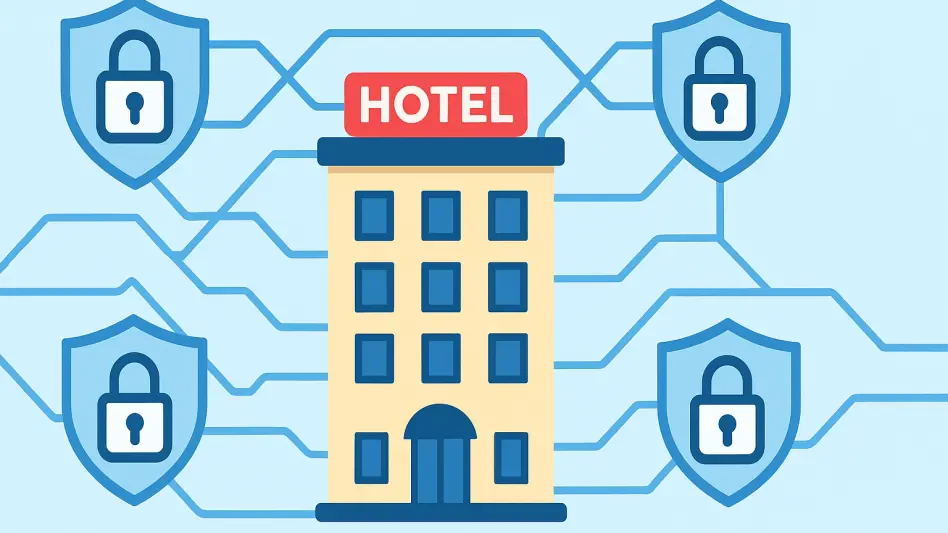
One of the most frequent structural errors in hospitality environments is the failure to properly isolate guest Wi-Fi from the internal operations network. True network segmentation involves creating distinct, logical barriers that prevent a device in a guest room from communicating with the servers that manage guest profiles, financial records, or the front desk terminals. This isolation ensures that if a guest’s device is infected with malware or if an attacker gains access to the public Wi-Fi, they have no direct path to the hotel’s sensitive data. Network segmentation also extends to third-party vendors, such as HVAC or entertainment systems, which should be kept on their own isolated subnets to prevent them from becoming lateral entry points into the main Property Management System. Maintaining these boundaries is critical for preventing a minor security lapse from escalating into a full-scale corporate catastrophe.
To complement network segmentation, the use of tokenization and encryption at rest is vital for protecting financial information. Tokenization replaces sensitive credit card numbers with non-sensitive tokens that carry no intrinsic value to an attacker. If a database is stolen, the unauthorized actor finds only a list of tokens that cannot be used for fraudulent transactions. This practice is a cornerstone of PCI DSS compliance and should be rigorously applied across all booking channels and payment points. Furthermore, adopting a Zero Trust philosophy ensures that no user or device is trusted by default, regardless of whether they are connected to the internal network or an external portal. This approach requires continuous verification of identity and grants access only to the minimum amount of data required for a specific job function. By implementing these architectural controls, hospitality organizations create a defense-in-depth strategy that significantly reduces the potential for wide-scale data exfiltration.
Establishing a Proactive Standard for Guest Data Security
In concluding the review of hospitality security protocols, the industry successfully transitioned toward a model that integrated cybersecurity into the core of the service experience. Organizations realized that technical defenses were only as effective as the human protocols supporting them, leading to the establishment of strict identity verification for all helpdesk requests. By requiring a second factor, such as a government ID or a pre-registered device code, before resetting any credentials, hotels effectively neutralized many social engineering tactics that previously plagued busy front desks. This shift in operational culture empowered staff to prioritize security even during high-pressure periods, treating data protection as a fundamental hospitality promise.
The implementation of continuous security training during the onboarding process also proved to be a decisive factor in reducing successful breaches. Rather than treating security as a one-time event, properties integrated it into daily service standards, ensuring that even temporary and seasonal staff understood their role in protecting guest privacy. This holistic approach to security—combining phishing-resistant authentication, network segmentation, and rigorous staff training—was adopted as the new industry benchmark. As these strategies were formalized, hotels found that maintaining clean, secure data not only protected their reputation but also improved operational efficiency by reducing the fallout from data errors and unauthorized system changes. Ultimately, the industry moved from a reactive stance to a proactive defense, securing the digital stay as diligently as the physical environment.