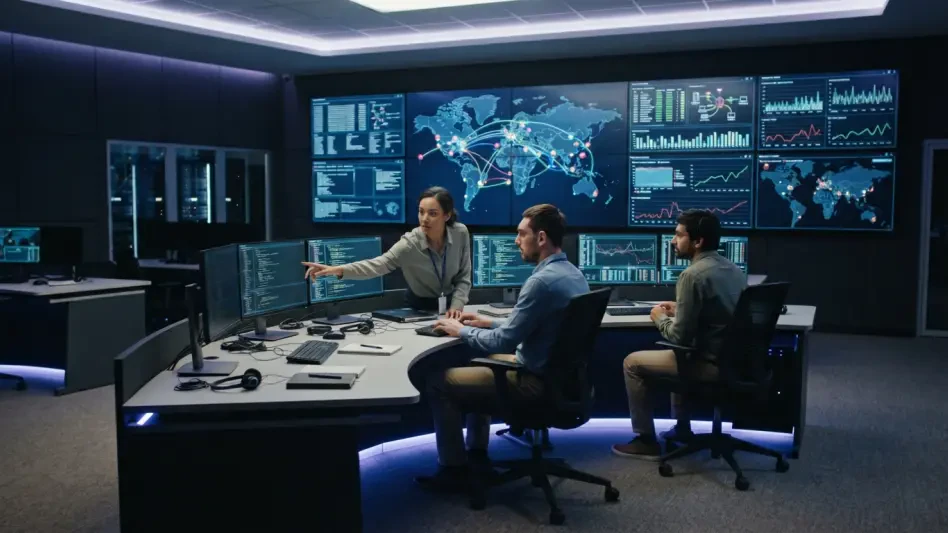
Forensic limbo describes the period when a lack of an extortion demand leaves investigators uncertain if an intrusion was for data gathering or ransomware. This phenomenon was on full display on November 16, 2026, when Coles Group Limited, a massive pillar of the Australian retail landscape, issued a high-stakes disclosure to the Australian Securities Exchange. The announcement regarding a developing cybersecurity incident sent immediate ripples through the financial markets and the consumer sector, signaling that even the most robust organizations remain vulnerable to sophisticated digital anomalies. By coming forward during the early stages of the investigation, Coles signaled a preference for transparency over silence, acknowledging that a potential threat had been detected within its vast IT infrastructure. The crux of the company’s initial message was the assertion that there was “zero evidence” of data compromise at that specific moment. This phrasing, while comforting to the general public, carries a highly technical weight in the realm of digital forensics, representing a calculated balance between maintaining corporate reputation and fulfilling legal disclosure obligations. It reflects a modern reality where the speed of communication is just as vital as the speed of technical remediation.
Understanding the Nuances of Forensic Language
The term “to date” serves as a critical temporal boundary in cybersecurity reporting, acting as a safeguard for organizations navigating the complexities of an active breach investigation. It informs stakeholders that while current scans, telemetry, and system logs show no signs of foul play, the situation remains fluid and subject to the discovery of deeper, more hidden forensic artifacts. For a corporation of the scale of Coles, which processes millions of transactions and manages petabytes of sensitive information, parsing through every layer of network activity takes weeks or even months. Using this qualifier ensures that the organization remains compliant with the continuous disclosure rules of the ASX, protecting it from potential litigation if less favorable information surfaces later. This linguistic precision is not about obfuscation but about scientific accuracy; it acknowledges that in a digital environment, the absence of evidence is not necessarily evidence of absence until a comprehensive “deep dive” into the system’s memory and log history has been completed by certified experts.
Beyond temporal qualifiers, the distinction between data being “compromised” and data being “removed” is a fundamental concept that determines the legal and psychological impact of a security event. In the technical sense, compromise suggests that an unauthorized party may have merely viewed or accessed a segment of the network, whereas removal—or exfiltration—implies the actual theft of sensitive files for the purposes of extortion or sale on the dark web. By stating that no evidence suggested data had been removed, Coles targeted the primary anxiety of its millions of customers and thousands of employees: the fear of identity theft and financial fraud. The professional use of the word “investigating” rather than more alarmist synonyms like “breached” or “hacked” allows a company to control the narrative during the initial period of uncertainty. This strategic choice of terminology reflects a high level of institutional maturity in incident response, preventing unnecessary consumer panic and market volatility while the technical teams work behind the scenes to verify the integrity of the data stores.
Maintaining Operational Continuity During a Crisis
One of the most remarkable outcomes of the Coles incident was the total lack of disruption to its physical and digital storefronts, a feat that is increasingly rare in high-profile cyber events. In many contemporary attacks, particularly those involving aggressive ransomware strains, IT departments are often forced to take systems offline manually to “cauterize” the infection and prevent malware from spreading laterally across the enterprise. The fact that Coles was able to maintain “business as usual” suggests that its containment strategy was exceptionally effective at isolating the threat within a non-critical portion of the network. This operational resilience is a direct result of modern architectural planning, where the “corporate” side of the house—handling emails, administrative tasks, and back-office functions—is strictly separated from the “operational” side that manages point-of-sale systems, e-commerce engines, and inventory logistics. This division ensures that even if an intruder compromises an office-based server, the core revenue-generating infrastructure remains shielded and functional, protecting the company’s bottom line.
For a retail giant like Coles, the financial implications of downtime are staggering, with losses often measured in millions of dollars per hour during peak shopping periods. The decision to keep stores open and online platforms running indicates a high level of confidence in the isolation of the affected environment and the reliability of their backup protocols. This serves as a critical lesson for other retailers in 2026: the ability to “stay in business” during a security investigation is the ultimate benchmark of technical maturity. Building a “fail-safe” architecture requires significant investment in network segmentation and real-time monitoring tools that can detect and quarantine suspicious traffic before it reaches the critical path of customer service. This approach not only preserves immediate revenue but also maintains the long-term trust of a public that increasingly relies on the availability of essential services like food and medicine. By prioritizing availability alongside confidentiality and integrity, the organization demonstrated that its resilience strategy was built to withstand the pressures of a live digital confrontation.
Collaborative Response and External Expertise
Coles did not attempt to navigate the technical and regulatory challenges of the incident in a vacuum, opting instead for a highly collaborative approach that included both government and private sector specialists. The company confirmed the immediate involvement of the Australian Cybersecurity Center, the nation’s primary authority for cyber threat intelligence and defensive guidance. This partnership is vital for “threat sharing,” as it allows government agencies to take the technical indicators of compromise found in Coles’ systems and cross-reference them with other retail or infrastructure entities to determine if a broader, industry-wide campaign is underway. In an era where attackers often target multiple organizations within the same sector simultaneously, this type of public-private synergy is the most effective way to build collective immunity. It also provides Coles with access to national-level intelligence that can help identify the specific motives and historical tactics of the threat actors involved, leading to a faster and more thorough resolution.
In addition to state-level support, Coles engaged global cybersecurity experts from the private sector to provide specialized forensic services and “threat hunting” capabilities. These third-party firms bring highly sophisticated tools and a depth of experience that is often beyond the scope of internal IT departments, which are primarily focused on maintaining day-to-day operations. These external experts are trained to find the “invisible” footprints left by modern attackers who use “living off the land” techniques—utilizing a system’s own administrative tools to hide their activities. Furthermore, the involvement of world-class forensic investigators serves a significant reputational purpose, signaling to regulators, investors, and the public that the company is following the most rigorous international standards for incident response. This transparency and willingness to submit to external scrutiny helps satisfy the requirements of global privacy frameworks and reassures stakeholders that the remediation process is being conducted with a high degree of objectivity and technical precision.
Evaluating Stakeholder Impact and Risk
The explicit mention of “suppliers” in the official disclosure highlights a growing recognition of the risks inherent in modern supply chain ecosystems. In the retail sector, thousands of smaller producers and logistics partners are digitally interconnected with the primary retailer, often through shared portals for invoicing and inventory management. These suppliers can represent a “soft underbelly” for security, as smaller firms may lack the multi-layered defenses of a multibillion-dollar entity like Coles. If supplier data, such as contract terms or banking details, is accessed during an incident, those partners become prime targets for secondary fraud, such as business email compromise scams. In these scenarios, fraudsters pose as the retailer to request changes in payment instructions, potentially diverting millions of dollars to fraudulent accounts. This incident serves as a reminder that a breach is rarely a self-contained event; it is a ripple that can affect every node in the logistics chain, requiring finance teams at all levels to be hyper-vigilant.
For the millions of customers who shop at Coles, the immediate technical risk may be low, but the psychological impact of a security announcement can be profound, potentially leading to a gradual erosion of brand loyalty. Coles addressed this by naming customers as a protected group, yet the broader lesson remains that consumer trust is fragile in the digital age. Security professionals recommend that such incidents be used as a catalyst for “credential hygiene” among the public, encouraging shoppers to adopt unique passwords and enable multi-factor authentication on all sensitive accounts. Simultaneously, the protection of employee data is equally critical, as staff members are frequently the targets of opportunistic phishing attempts following the news of a corporate incident. Scammers often leverage the public visibility of a “hack” to send fraudulent security alerts designed to steal login credentials. By keeping both employees and customers informed through verified channels, Coles minimized the risk of human error that could have led to a secondary, more damaging breach through social engineering.
Lessons for the Broader Retail Industry
The handling of the Coles incident provides a comprehensive blueprint for how large organizations should navigate the “golden hour” of a cyber event—the critical period immediately following the detection of an anomaly. One of the most important takeaways is the necessity of having a pre-defined and tested communication plan that includes prepared holding statements for regulatory bodies like the ASX. Silence or delayed responses are often interpreted by the market as a sign of chaos or a lack of control, whereas a prompt, nuanced statement allows the organization to anchor the narrative around its current verified findings. This proactive posture shifts the burden of proof onto the attackers, making it much harder for them to successfully blackmail the company using fabricated claims of data theft. Organizations that communicate early and often are generally viewed more favorably by both the public and regulators, as transparency is increasingly seen as a marker of good corporate governance.
Another fundamental lesson involves the vital role of robust logging and monitoring as a prerequisite for any claims of data safety. A company cannot truthfully assert that there is “no evidence” of a data breach unless it has the comprehensive, high-fidelity logs required to prove that every packet of data leaving the network was authorized. Retailers must invest in deep visibility across their digital infrastructure, ensuring they can map the “blast radius” of any intrusion with absolute certainty. Without this technical foundation, any public statement regarding data integrity is merely guesswork, which can lead to disastrous reputational consequences if evidence of theft emerges later. The Coles scenario demonstrates that cybersecurity is no longer just a technical back-office function; it is a core business competency that requires investment in people, processes, and tools. As the retail landscape becomes more integrated with artificial intelligence and automated logistics, the ability to verify the integrity of the underlying data will become the defining characteristic of a trustworthy and resilient brand.
FAQ: Why Does Cybersecurity Transparency Matter?
The first question many stakeholders ask is how Coles communicated the incident to the public and why the method mattered. Coles issued a formal disclosure to the Australian Securities Exchange, utilizing a regulatory channel that ensures the information is distributed simultaneously to all investors and market participants. This prevents the spread of rumors and ensures that the company’s official stance—that they were investigating an anomaly but had found no evidence of data loss—remained the primary narrative. Another common inquiry concerns whether Coles stores were forced to close during the forensic process. Unlike many organizations that suffer total paralysis during a cyber event, Coles reported that its physical supermarkets and digital shopping platforms remained fully operational throughout the investigation. This indicates that their internal defenses were capable of isolating the affected systems without compromising the point-of-sale or e-commerce infrastructure, a success that highlights the value of network segmentation in preventing a total operational collapse.
People also frequently ask who assisted Coles in managing the technical aspects of the incident. The company collaborated with the Australian Cybersecurity Center and engaged a team of global forensic experts to lead the containment and investigation efforts. This collaborative model is a standard best practice in 2026, as it combines national threat intelligence with specialized “threat hunting” tools to ensure no hidden backdoors are left in the system. When it comes to the safety of stakeholders, customers and suppliers often wonder what steps they should take in response to such news. While Coles confirmed no data loss to date, the incident serves as a reminder for everyone to maintain high standards of security hygiene, such as rotating passwords and being alert for phishing messages. Finally, the use of the specific phrase “no evidence to date” is often questioned; this is a precise forensic term which acknowledges that the investigation is a work in progress. It means that while current data supports a positive outlook, the company is still performing the deep technical analysis required to be 100% certain of the system’s integrity.
Strategic Directions for Retail Security Governance
Moving forward from the events of late 2026, the retail industry must shift its focus from reactive defense to a model of continuous verification and proactive resilience. The Coles incident demonstrated that catching an intrusion early is only half the battle; the ability to communicate the situation accurately and maintain operations is what truly separates successful organizations from those that falter. Organizations should prioritize the implementation of “zero-trust” architectures, where every user and device is continuously authenticated, regardless of their location on the network. This approach significantly reduces the risk of lateral movement by an attacker, ensuring that a compromise in one department does not lead to a total system failure. Additionally, companies must move beyond once-a-year security audits and instead adopt a posture of “continuous monitoring,” where AI-driven tools analyze network behavior in real-time to spot anomalies before they can escalate into full-scale breaches.
The final lesson from this period is the undeniable value of human capital in the cybersecurity equation. While automated tools are essential, the ability to navigate a complex incident requires experienced leaders who can bridge the gap between technical forensics and corporate communication. Boards of directors must treat cyber risk not as an IT problem but as a strategic business risk that requires the same level of oversight as financial or operational performance. In the coming years, we can expect to see an increased emphasis on “resilience benchmarks,” where retailers are judged not just on their ability to prevent attacks, but on how quickly they can detect, contain, and recover from them. By learning from the nuanced and disciplined response seen in the Coles incident, the broader business community can better prepare for a future where digital threats are a constant reality. The path to security is found in the combination of technical excellence, transparent communication, and a culture of constant vigilance that permeates every level of the organization.