Cybersecurity landscapes in 2026 continue to witness the relentless transformation of legacy remote management tools into high-utility instruments of state-sponsored and criminal espionage. The Remcos Remote Access Trojan, which once served as a legitimate utility for system administrators, has recently undergone a significant technical overhaul that prioritize deep persistence and undetectable surveillance. Researchers at the Lat61 Threat Intelligence team recently uncovered a variant that marks a definitive departure from traditional malware behavior patterns. This specific update focuses on maintaining a nearly invisible footprint on Windows systems by abandoning the local storage of stolen data in favor of immediate, real-time exfiltration. This strategy significantly complicates forensic investigations, as there is often no physical file left on the drive for security software to scan or recover. By evolving into a live-interaction platform, the malware creates a direct bridge between the victim and the attacker, turning every infected workstation into a permanent and high-definition observation post for sensitive corporate information.
Modular Architecture: The Shift to Live Data Exfiltration
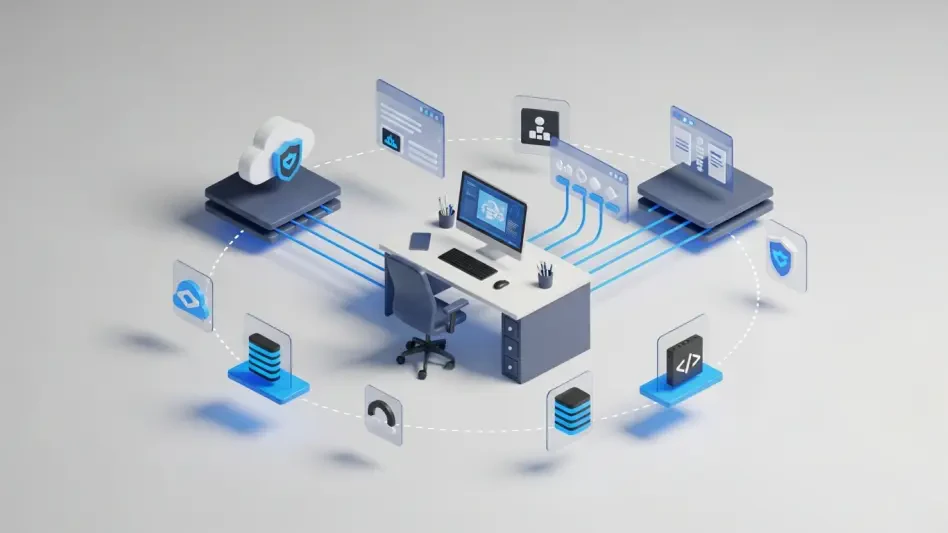
The most striking advancement in this version of the malware is its adoption of a strictly modular architecture designed to minimize the initial infection size. Instead of shipping a bulky executable that contains every possible malicious feature, the primary loader now functions as a streamlined delivery vehicle that communicates with command-and-control servers to download specific DLL modules on demand. These specialized modules are injected directly into the system memory, allowing the attacker to activate features like live webcam streaming or instantaneous microphone recording only when they are specifically required. This on-the-fly capability prevents security analysts from capturing the full range of the malware’s functionality through simple static file analysis. Furthermore, the modular nature allows the developers of the Trojan to push updates to specific components without needing to replace the entire infection, making the software incredibly resilient against signature-based detection mechanisms that rely on identifying specific file hashes.
Traditional remote access tools typically relied on a store-and-forward methodology where keystrokes and screenshots were saved to a hidden folder before being uploaded in bulk at scheduled intervals. However, this new variant utilizes a stream-oriented approach where captured data is encrypted into small, manageable chunks and transmitted to the operator immediately as the events occur. This live keylogging and screen capturing mechanism ensures that the attacker receives information in real time, reducing the risk that a sudden system shutdown or security scan will interrupt the data harvest. Because the information is never actually written to the physical disk, endpoint detection and response platforms that monitor file creation events are effectively bypassed. The encryption protocols used for these data bursts are increasingly sophisticated, often utilizing custom algorithms that mask the nature of the traffic, making it appear as standard encrypted web traffic to casual network monitoring tools while ensuring the integrity of the stolen intelligence throughout the transmission process.
Advanced Evasion: Stealth Mechanisms and System Sanitization
To maintain its presence within a target network, the malware employs several layers of sophisticated obfuscation and technical evasion strategies. It avoids standard Windows API calls that are frequently monitored by security software, instead opting for dynamic API resolution at runtime to hide its true intentions from automated sandboxes. The configuration details, including the critical command-and-control server addresses, remain encrypted within the system memory and are only decrypted for a fraction of a second when a connection needs to be established. This ephemeral existence in memory ensures that even if a memory dump is performed, the most sensitive parts of the malware’s configuration are rarely exposed in plain text. Additionally, the software uses a specific named mutex, designated as Rmc-GSEGIF, to ensure that only one instance of the Trojan is running at any given time, preventing the kind of system instability or resource spikes that often alert users to an ongoing infection. This level of operational security demonstrates a professional development cycle aimed at long-term, high-value targets.
The final lifecycle of the infection was characterized by an aggressive sanitization routine that left behind almost no evidence of the attacker’s presence. Once the surveillance goals were accomplished, the RAT executed a series of commands to purge browser histories, event logs, and any temporary screenshots that might have touched the disk during high-intensity operations. It then deployed a specialized Visual Basic script that ran in a temporary directory to overwrite and delete the original executable file, effectively performing a digital self-destruction. To defend against these evolving threats, security professionals focused on monitoring unauthorized registry modifications and auditing the creation of unusual mutexes. Organizations improved their posture by implementing strict egress filtering to identify the distinctive encrypted heartbeats of the command-and-control communication. Future defensive strategies required a shift toward behavior-based memory inspection, as the lack of a traditional file-based footprint rendered many legacy antivirus solutions obsolete in the face of such modular and volatile digital threats.