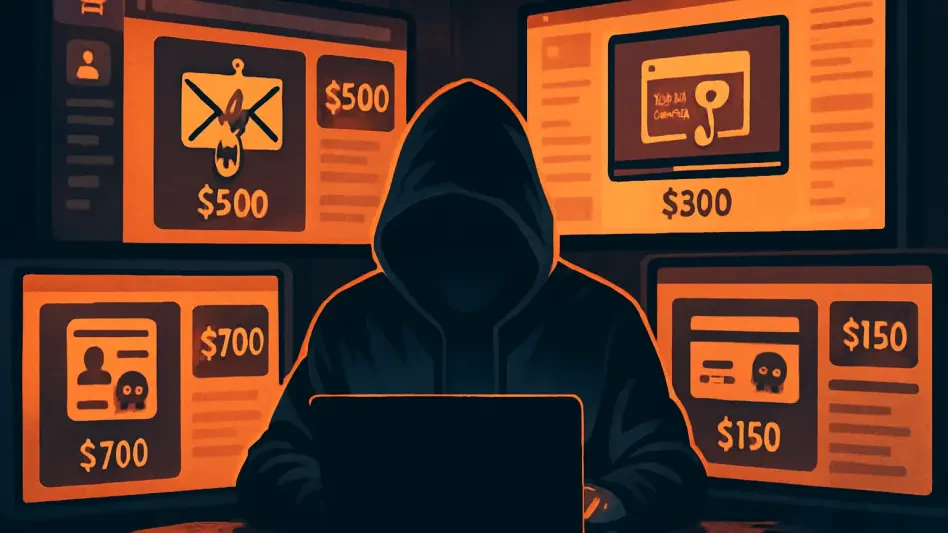
The modern face of organized crime has shifted from physical street corners to sophisticated digital storefronts where professional-grade fraud tools are sold with the same ease as common household goods. While most people think of cybercrime as the work of isolated geniuses in dark rooms, the W3LL empire operated more like a Fortune 500 company, complete with a storefront, customer support, and a $20 million revenue stream. This criminal syndicate didn’t just steal data; they democratized fraud by selling sophisticated phishing kits for as little as $500. By the time federal investigators closed in, this “cybercrime-as-a-service” model had already compromised tens of thousands of Microsoft 365 accounts, proving that the most dangerous threats today are often the ones available for purchase by anyone with a digital wallet.
From Simple Spam to a Global Business Email Compromise Powerhouse
The W3LL operation was not an overnight success but a calculated evolution that began years ago with rudimentary email spam tools. Over time, it morphed into the “W3LL Store,” a private, members-only marketplace that became a cornerstone of the underground economy. This transition reflects a broader, more alarming trend in cybersecurity: the industrialization of Business Email Compromise (BEC).
By focusing on Microsoft 365 environments, W3LL tapped into the lifeline of modern corporate communication. They turned routine login pages into traps that even savvy employees could fall for. This strategic shift allowed the group to move from low-level annoyance to a major threat to global commerce, facilitating complex financial theft on an unprecedented scale.
Inside the W3LL Store: Automating the Cyberattack Kill Chain
What made W3LL particularly devastating was its ability to provide a “one-stop shop” for attackers, regardless of their technical skill level. The store facilitated the sale of over 25,000 compromised accounts and offered a custom suite of tools designed to manage every stage of a breach, from initial lures to final data extraction. These kits allowed criminals to bypass multi-factor authentication and impersonate legitimate portals with terrifying accuracy.
Even after the physical storefront was shuttered, the network’s resilience was on full display as it migrated to encrypted messaging apps. This secondary phase continued to target an estimated 17,000 additional victims worldwide, showing that these digital ecosystems are incredibly difficult to uproot once they take hold in the underground market.
International Cooperation: Unmasking the Lead Developer
The dismantling of this empire was the result of a high-stakes collaboration between the FBI and Indonesian law enforcement, spurred by initial research from specialized security firms. The investigation successfully mapped the malicious infrastructure back to its source, leading to the seizure of the organization’s primary domain. This effort eventually unmasked the alleged lead developer, known in the digital underground as “G.L.”
This takedown highlighted a shift in law enforcement strategy—moving away from catching individual “script kiddies” and instead decapitating the leadership of the platforms that enable automated cybercrime on a global scale. By removing the architects of the technology, authorities dealt a massive blow to the entire supply chain of digital fraud.
Hardening Your Defenses Against Sophisticated Phishing Kits
The fall of W3LL served as a stark reminder that standard security measures were no longer a silver bullet against professional-grade phishing kits. To protect organizational integrity, IT leaders had to move beyond basic passwords and implement FIDO2-compliant hardware security keys. These devices remained resistant to the “man-in-the-middle” tactics used by W3LL tools, ensuring that harvested credentials became useless to attackers.
Furthermore, implementing strict conditional access policies proved essential for neutralizing compromised accounts. By restricting logins to known corporate devices and specific geographic locations, organizations created a secondary layer of defense. Constant monitoring for unusual mailbox rules or “impossible travel” alerts remained the final line of defense in detecting a BEC attempt before financial damage occurred.