
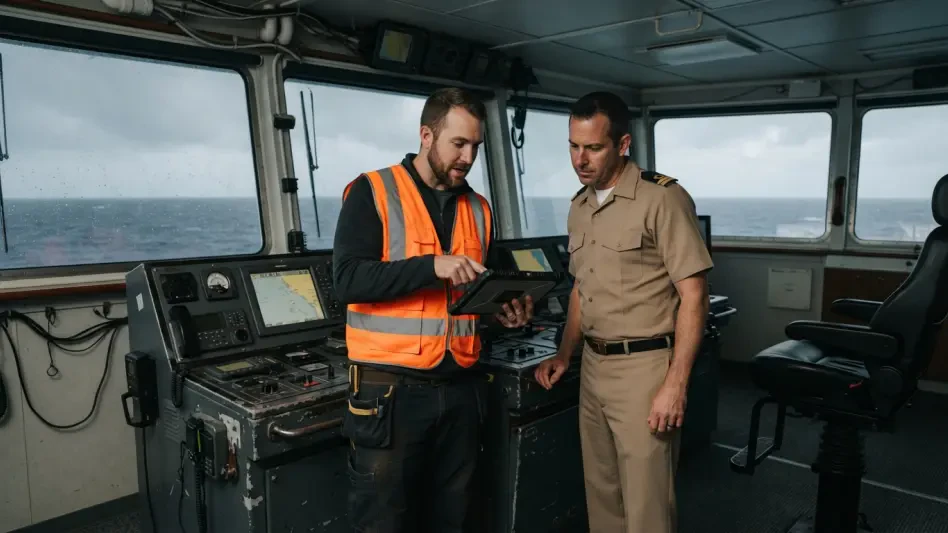
In late 2026, U.S. Coast Guard Cyber Command issued urgent alerts after detecting nation-state actors exploiting FortiGate devices in the Gulf of Mexico. This specific technological breach signaled a dramatic escalation in the vulnerability of international shipping, forcing federal investigators to scrutinize a wider pattern of digital intrusions. Authorities are currently examining a series of coordinated cyberattacks that have compromised approximately 50 commercial vessels globally, ranging from crude oil tankers to ships carrying liquefied petroleum gas. These incidents are no longer viewed as isolated criminal acts but as a deliberate shift into “gray zone” warfare, where state-sponsored entities employ digital disruptions to exert geopolitical pressure without the immediate risk of a kinetic military response. By targeting the backbone of international trade, these anonymous actors seek to destabilize energy markets and undermine the maritime security framework maintained by the U.S. and its strategic allies.
Strategic Vulnerabilities in Global Shipping
Risks to the Maritime Supply Chain
The strategic selection of targets in this ongoing campaign underscores a sophisticated understanding of global logistics, as attacks have surfaced in diverse geographic regions ranging from the Gulf of Mexico to the Strait of Gibraltar. Adversaries are not merely probing for general weaknesses but are identifying vessels that carry essential cargoes for industrial production and energy distribution. By focusing on tankers and chemical carriers, these digital actors ensure that any operational pause or communication blackout creates a disproportionate ripple effect throughout the global economy. This methodology allows hostile states to test the resilience of the Western supply chain, proving that a well-timed digital exploit can be just as disruptive as a physical naval blockade. The resulting uncertainty travels rapidly from the high seas to local consumer markets, where the threat of fuel shortages or industrial delays can be used as a powerful lever in high-stakes diplomatic negotiations.
Hardware and Operational Technology
Technical investigations into these maritime breaches frequently center on specific networking hardware, most notably Fortinet routers that serve as the primary gateway between a ship’s operational technology and its external communication systems. These devices facilitate modern logistics through real-time data sharing, yet they have become the “weak links” that allow sophisticated hackers to gain a persistent foothold within a vessel’s private network. Once an intrusion is successful, attackers can monitor ship movements with precision, intercept sensitive manifest data, or disrupt the ship-to-shore transfers that are vital for port entry. This level of access demonstrates a high degree of technical maturity, as state-linked units are clearly mapping the digital architecture of modern fleets to identify effective points of entry. By exploiting these common hardware vulnerabilities, adversaries can cast a wide net across the industry, impacting dozens of vessels simultaneously without needing to deploy physical boarding teams.
Psychological Tactics and Economic Consequences
Methods of Digital Intimidation
The current campaign of maritime cyber warfare extends beyond technical manipulation into the psychological realm of political intimidation. Crew members aboard several targeted vessels have reported receiving alarming messages delivered through compromised communication systems, including bomb threats and explicit demands for ransom written in Farsi. These transmissions often carry heavy political weight, accusing shipowners of supporting American strategic interests and warning them against transporting Western-aligned cargoes. Such tactics are specifically designed to create a pervasive climate of fear among the civilian mariners who man these vital trade routes, making the profession increasingly hazardous even in theoretically safe waters. This psychological pressure functions as a form of shadow blockade, where the threat of a cyber-induced catastrophe or a sudden ransom demand forces shipping companies to reconsider their routes to avoid becoming the next high-profile target of a state-sponsored digital operation.
Operational and Financial Disruptions
While maritime security experts generally dismiss the possibility of hackers remotely steering massive tankers into bridges, the “soft” disruptions being utilized are proving to be devastatingly effective. Voyage delays, sudden communication blackouts, and the loss of critical navigational data create significant operational friction that can throw an entire fleet’s schedule into disarray. These disruptions introduce severe safety risks, particularly when vessels are navigating crowded waterways where real-time coordination is essential. Beyond the immediate physical risks, the long-term economic damage is mounting as the global shipping industry faces skyrocketing insurance premiums driven by the increased risk of cyber interference. Furthermore, the massive costs associated with cybersecurity forensics and emergency network repairs are becoming a permanent line item for major firms. These financial burdens act as a hidden tax on global trade, levied by adversaries to drain the resources of rivals through constant digital skirmishes.
Investigative Findings and Geopolitical Tensions
Intelligence Operations and State Involvement
Federal agencies, led by the FBI and the U.S. Coast Guard, have taken a proactive stance by deploying specialized cyber-protection teams to investigate breaches on high-value vessels like the VL Prosperity. A telling pattern emerged during the investigation of this tanker, where Iranian state-linked media outlets began publicizing the ship’s communication blackout long before Western investigators had finalized their initial boarding assessments. This type of preemptive publicity is a classic hallmark of a coordinated information operation, intended to broadcast the reach and effectiveness of state-sponsored cyber units to a worldwide audience. By claiming responsibility through media proxies, the actors behind these attacks ensure that their message of technological dominance is received by policymakers and industry leaders. These findings suggest that the digital intrusions are not merely about intelligence gathering but are intended to serve as a public demonstration of a state’s ability to touch the vital organs of international commerce.
Strategic Implications for Regional Hubs
The suspicion directed toward Iran and Russia is grounded in their strategic interest in disrupting Western-aligned trade routes as a way to retaliate against international economic sanctions. For major regional logistics hubs like the United Arab Emirates, situated at the heart of these digital crossfires, the stakes are high. As a premier oil-export center, the UAE relies on the predictable flow of traffic through the Strait of Hormuz, a primary choke point through which a fifth of the world’s petroleum consumption passes daily. Any cyber-induced delay in these narrow waters could lead to immediate and volatile spikes in global oil prices, potentially triggering an energy crisis that would affect every major industrial nation. The current situation proves that digital tools are now just as potent as traditional physical naval power in their ability to manipulate the global market. As a result, Gulf states are being forced to increase their cybersecurity investments to protect the vital infrastructure that sustains their economies.
Future Outlook for Maritime Security
Path Forward for Global Trade
The rapid digital integration of the global shipping industry has outpaced the development of its security protocols, leaving a massive attack surface for nation-state actors to exploit. As the convergence of advanced navigation systems, automated engine rooms, and satellite communication networks continues, the maritime sector must prepare for even more complex threats. The international community is monitoring whether formal attribution will lead to a new round of targeted sanctions or if hackers will escalate their tactics further by attacking sensitive systems, such as Global Positioning Systems or the Automatic Identification System. These essential technologies are vulnerable to spoofing, which could lead to mass confusion and physical danger in busy shipping lanes. This shift in the landscape of maritime conflict suggests that the era of secure seas is being replaced by a period of constant digital vigilance, where every vessel must be viewed as a potential entry point for a state-sponsored offensive.
Strengthening the Digital Fleet
The maritime sector recognized that it had arrived at a pivotal moment where cybersecurity had to be treated with the same urgency as physical hull integrity. The cumulative effect of these 50 targeted incidents suggested a systemic campaign that threatened the fundamental stability of global commerce, prompting an overhaul of how digital infrastructure was managed at sea. Leading logistics companies shifted their focus toward actionable solutions, such as implementing zero-trust network architectures and deploying real-time threat detection systems across their fleets. International regulatory bodies introduced new mandates that required rigorous cyber drills for crews, ensuring that manual overrides remained functional. Governments collaborated to establish a unified maritime cyber-defense framework, which helped to bridge the gap between intelligence agencies and private shipowners. These collective efforts proved essential in securing the digital arteries of the global economy, showing that resilience required both technological innovation and cooperation.