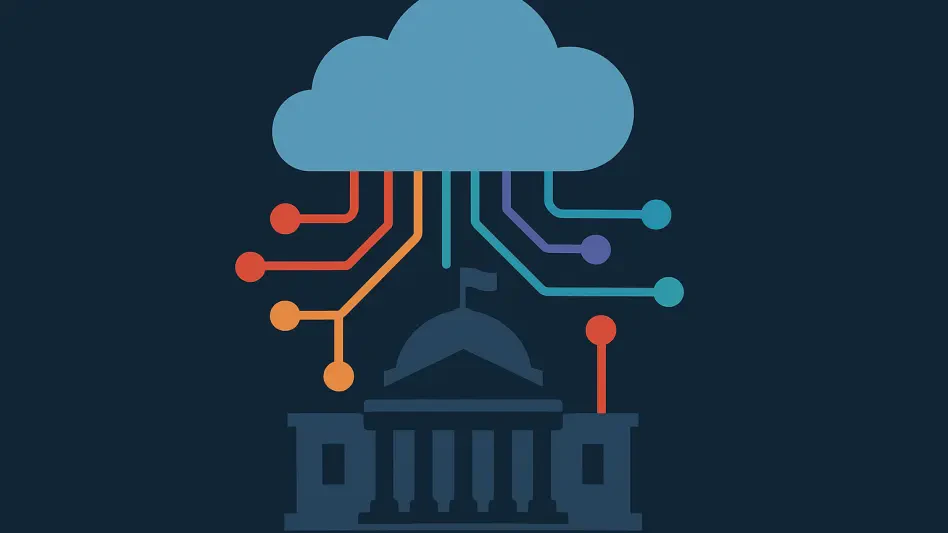

The rapid integration of generative artificial intelligence into the digital black market has fundamentally altered the threat landscape, moving from clumsy scripts to highly sophisticated, autonomous attack vectors that can bypass traditional security protocols with ease. In the current climate of 2026, the barrier to entry for high-level cyberattacks has effectively vanished, as criminal syndicates monetize specialized large language models and automated coding assistants. These advancements allow even novice actors to launch complex operations that previously required teams of skilled developers. The underground economy is no longer just a place for trading stolen credentials; it has evolved into a high-tech incubator for customized malicious tools. This shift represents a transition from manual labor to an industrial-scale operation where speed and scale are the primary drivers of profit. As these technologies become more accessible, the speed at which vulnerabilities are exploited continues to outpace defenses.
Sophisticated Automation in Digital Assaults
Social Engineering: Large Language Models and Phishing
Cybercriminals have pivoted away from the poorly worded emails of the past, leveraging fine-tuned language models to create hyper-personalized lures that are virtually indistinguishable from legitimate corporate communications. By feeding these models data scraped from professional social networks and leaked databases, attackers can automate the creation of thousands of unique messages that reflect the specific tone and context of a target organization. This level of customization was once impossible at scale, but the current generation of illicit AI tools allows for the mass production of spear-phishing campaigns in dozens of languages simultaneously. Furthermore, these models are being used to maintain ongoing conversations with victims, providing realistic responses to inquiries and building a false sense of trust before deploying a final payload. The result is a success rate that has seen a dramatic increase since 2026, as the psychological triggers used are refined through feedback.
Detection Evasion: Adaptive Code and Malware
Beyond communication, the underground is seeing a surge in AI-driven malware development environments that can rewrite their own source code to evade detection by signature-based antivirus software and behavior-centric endpoint detection systems. These polymorphic engines use neural networks to identify which parts of their logic are being flagged by security researchers, subsequently generating new iterations that perform the same malicious functions while appearing entirely different to scanners. This cat-and-mouse game has reached a state of near-constant mutation, where a single piece of ransomware can have thousands of unique signatures within minutes of its initial deployment. Security teams are finding that traditional sandboxing techniques are increasingly ineffective against these aware programs, which can detect they are in a virtual environment and alter their behavior accordingly. This shift from static to dynamic malicious software represents one of the most significant challenges for modern defense.
Commercialization of Malicious Intelligence
Platform Proliferation: The Rise of Illicit Services
The monetization of specialized artificial intelligence has led to the emergence of Dark AI subscription services, where criminal developers provide access to jailbroken models specifically trained for illicit activities. These platforms offer a user-friendly interface that allows subscribers to generate exploit code, find vulnerabilities in popular web applications, and create convincing deepfake assets without any prior technical expertise. By removing the ethical safeguards found in public AI products, these illicit versions provide a direct pipeline for creating ransomware and conducting corporate espionage. The business model has shifted toward a recurring revenue structure, similar to legitimate software-as-a-service providers, ensuring that the developers have constant funding to improve their models against the latest security patches. This professionalization of the underground market means that the tools available to attackers are as sophisticated as those used by the defensive community.
Identity Fraud: Deepfake Technology and Manipulation
The maturity of generative video and audio synthesis has introduced a new era of business email compromise, where attackers can now impersonate high-level executives in real-time video calls or through convincing voice messages. This technology is being used to bypass multi-factor authentication systems that rely on voice biometrics, as well as to trick employees into authorizing large financial transactions under the guise of urgent corporate directives. The level of fidelity achieved by these deepfakes in 2026 makes it nearly impossible for the untrained eye or ear to detect any anomalies, especially during high-stress situations where speed is prioritized over verification. Criminal forums are now flooded with services that offer live deepfake injection into standard conferencing software, allowing an attacker to wear a digital mask that mimics a trusted colleague. This evolution in social engineering targets the human element of security, which remains a primary vulnerability today.
Proactive Resilience: Strategies for Machine-Driven Threats
Security professionals recognized that static defenses were no longer sufficient and moved toward an integrated strategy of AI-driven threat hunting and automated response protocols. By 2026, the priority shifted from simple perimeter defense to the implementation of internal continuous monitoring that utilized the same machine learning principles used by the attackers to identify deviations from normal behavioral baselines. Organizations adopted rigorous human-in-the-loop verification for all sensitive operations, ensuring that technological convenience did not override fundamental security checks. The focus turned toward hardening the data supply chain and ensuring that the models used for defense were themselves protected from adversarial manipulation and data poisoning. Investment in employee training became more specific, focusing on the nuances of AI-generated deception rather than generic security awareness. These proactive measures created a more resilient infrastructure that absorbed and neutralized attacks.