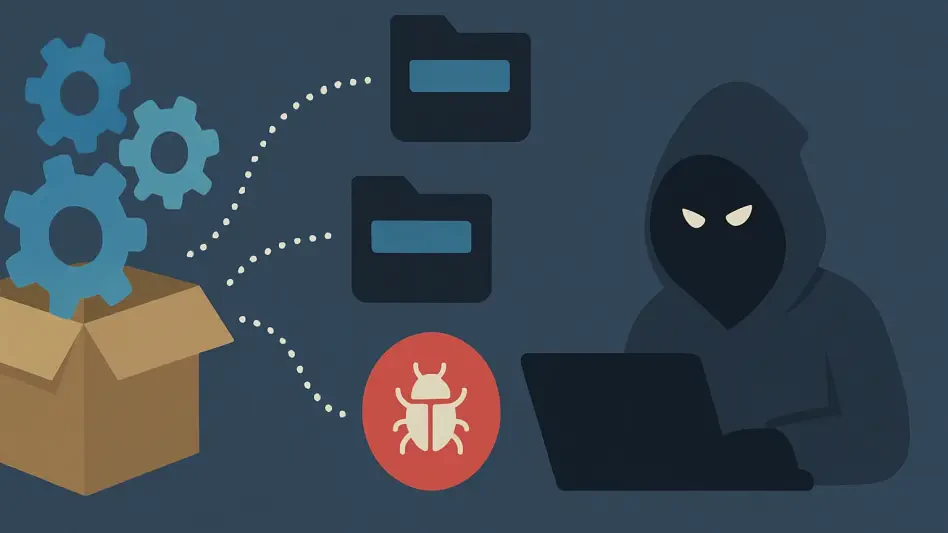

By injecting harvested cookies directly into a parallel browser instance, Shadow hVNC allows threat actors to step into active sessions for high-value targets like email accounts and SSO systems. This method represents a significant shift away from traditional keylogging, as it targets the established trust between a user and a web service rather than just the credentials used to initiate it. The Shadow hVNC platform functions primarily as a Malware-as-a-Service, offering sophisticated remote access tools to various attackers who wish to exploit Windows systems covertly and efficiently. By creating an invisible environment within the operating system, the malware operates beneath the radar of many traditional detection tools that focus on the primary user interface. This technical sophistication allows for the silent theft of session data, ensuring that attackers can impersonate victims without ever needing to prompt for a password. As the threat landscape continues to evolve throughout 2026, these stealthy remote access toolkits have forced a significant reappraisal of what it means to secure a modern enterprise endpoint against persistent threats.
Architectural Foundations: The Mechanics of Hidden Desktops
The architectural core of this malware involves the creation of a hidden desktop environment that runs concurrently with the user’s visible session. Using specific Windows API calls such as CreateDesktop, the malware initializes a secondary workspace that remains completely inaccessible to the victim’s physical inputs or visual field. This parallel desktop allows the attacker to launch applications and execute commands in a space that lacks a visual window on the actual monitor. Because the malware does not rely on screen-scraping the primary desktop, there are no flickering icons or unexpected mouse movements to alert the user to a breach. Instead, the malware maintains a strictly background presence, serving as a staging ground for deeper exploitation of the host system. This level of isolation is critical for the operator, as it provides a stable workstation from which they can analyze local files or download additional malicious payloads while the victim continues their daily activities entirely unaware of the secondary actor working in the shadows.
Communication between the infected host and the command-and-control server is handled through a sophisticated streaming protocol that provides the attacker with a real-time view of the hidden desktop. The Shadow hVNC toolkit utilizes optimized compression techniques to transmit screen updates without consuming excessive bandwidth, which helps the malware avoid detection by network monitoring tools. This remote connection allows the operator to interact with the hidden desktop just as they would with a legitimate VNC session, giving them full control over background applications. This includes the ability to open command prompts, edit registry keys, and run administrative tools that would otherwise be blocked or noticed if performed on the main desktop. By decoupling the attacker actions from the victim visual interface, the malware ensures that even highly invasive operations remain covert. This interaction model is particularly effective for reconnaissance, as the attacker can spend hours exploring the local network environment or searching for sensitive data without triggering any visual red flags.
Browser Session Interception: Bypassing Advanced Security
The primary weapon in the Shadow hVNC arsenal is its unique Backstage Mode, which facilitates the hijacking of active web browser sessions by manipulating internal developer tools. Unlike simpler infostealers that merely export a list of stored cookies to a file, this malware actively injects those cookies into a hidden instance of Chrome or Edge running on the invisible desktop. By doing so, the attacker can inherit the exact session state of the victim, including all active logins for sensitive web applications. This process involves the programmatic use of the Chrome DevTools Protocol to automate the browser and navigate to target URLs while the session is still valid. Once the cookies are successfully placed, the attacker has a fully authenticated browser window that mirrors the victim identity. This allows for the immediate access of webmail, internal corporate dashboards, and cloud storage providers without the need for login credentials. This technique turns the browser into a conduit for unauthorized access, making it difficult for services to distinguish the attacker.
Session hijacking through this method is particularly dangerous because it effectively bypasses multi-factor authentication requirements that have already been satisfied by the victim. Since the attacker is stepping into a session that the user already unlocked with a secondary token, the server-side security measures do not trigger additional prompts. This vulnerability highlights a critical flaw in session management strategies that rely solely on persistent cookies for identity verification. In an enterprise environment, this can lead to the total compromise of single sign-on systems, giving the attacker a bridge into multiple connected platforms. The ability to maintain these sessions for extended periods means that an operator can wait for the most opportune moment to exfiltrate data. Furthermore, the malware can periodically refresh these cookies to maintain persistence even if the user closes their primary browser. This persistent access makes it difficult to secure an account without a complete session revocation and a forced logout across every connected device.
Strategic Persistence: Evasion and Defensive Responses
To ensure long-term viability on a compromised system, Shadow hVNC incorporates advanced evasion tactics that disguise its processes as legitimate Windows services. It often masks its executable files behind names that mimic essential system drivers or background update tasks, making it difficult for an administrator to spot them in a process list. Persistence is further maintained through the creation of scheduled tasks or registry modifications that relaunch the malware if it is ever terminated. Additionally, the toolkit includes geofencing capabilities that check the geographical location of the infected machine before initiating its full suite of malicious features. This allows the developers to prevent the malware from running in specific regions, thereby avoiding the scrutiny of certain international law enforcement agencies. By avoiding high-profile targets or regions with strict cybersecurity task forces, the operators can maintain their infrastructure for longer durations. This tactical restraint makes Shadow hVNC a remarkably resilient piece of malware in the current threat landscape.
Security professionals determined that the most effective way to counter Shadow hVNC was through a rigorous focus on behavioral indicators rather than just static signatures. It was found that organizations which implemented detailed logging for the creation of desktop objects and unusual browser process parenting were significantly more successful at identifying infections. The industry recognized that monitoring for unauthorized use of the Chrome DevTools Protocol provided a critical early warning sign of session hijacking attempts. Analysts also concluded that hardware-based authentication methods remained the most resilient defense, as they restricted the portability of session tokens. Furthermore, regular audits of the Windows Registry for unusual persistence mechanisms proved to be a vital part of the recovery process after a detection event. These strategies helped security teams build a more robust defense-in-depth architecture that accounted for the stealth capabilities of hidden remote access tools. The community ultimately improved its ability to detect these hidden environments through better visibility.