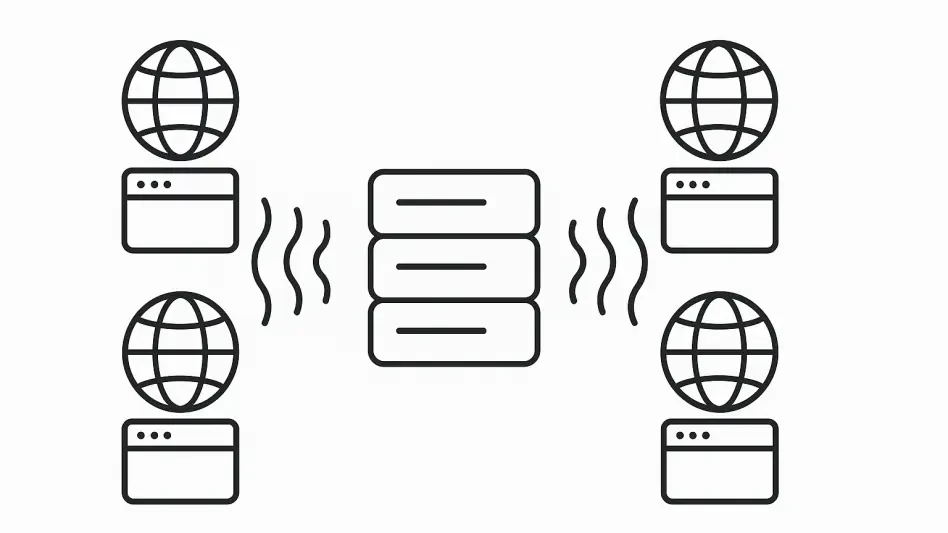

The sudden and complete disappearance of functional social media feeds for tens of millions of active users serves as a stark reminder of how fragile the modern internet architecture remains despite decades of supposed security advancements. Late in the evening on April 15, the burgeoning social media platform Bluesky experienced a total system failure that effectively severed the connection between its infrastructure and a global user base of over 43 million people. Unlike minor glitches or temporary latency issues, this specific outage disabled the most fundamental aspects of the service, including the ability to refresh feeds, execute search queries, and receive real-time notifications. The technical root of the disruption was a concentrated wave of malicious traffic directed specifically at the Application Programming Interface (API). By flooding these critical gateways with junk data, attackers successfully jammed the digital communication lines, preventing legitimate user requests from reaching the internal servers.
The Architecture of Geopolitical Hacktivism
Primary responsibility for this digital blockade was claimed by the 313 Team, a group alternatively known as the Islamic Cyber Resistance in Iraq, which maintains documented ties to state interests. This collective does not typically operate with the goal of financial gain or sophisticated espionage; rather, it pursues a strategy of high-visibility hacktivism designed to send political messages through widespread service interruption. The group has a history of targeting entities perceived as being ideologically aligned with American or Israeli interests, a pattern recently observed in their coordinated strikes against government web portals in Bahrain. Interestingly, the attackers also attempted to bring down the Mastodon network shortly after the Bluesky incident, but they encountered significantly more resistance there. While Bluesky’s relatively centralized infrastructure provided a single, massive target for the traffic flood, Mastodon’s decentralized server structure allowed its independent nodes to absorb the impact, demonstrating a inherent resilience against such brute-force traffic maneuvers.
Moving Beyond Volumetric Vulnerabilities
Because the assault was classified strictly as a Distributed Denial-of-Service attack, the security of sensitive user data was never actually compromised during the five-day ordeal. The technical teams confirmed that the attackers focused entirely on overwhelming the capacity of the network rather than attempting to penetrate the underlying databases where personal information is stored. By April 20, the platform successfully implemented enhanced filtering protocols to scrub the junk traffic and restored full operational capacity to its global audience. This incident proved that social media companies must prioritize the deployment of advanced, multi-layered API rate limiting and edge-computing defenses to survive increasingly frequent political cyberwarfare. Moving forward, engineering teams explored the possibility of hybrid-decentralization to ensure that a single point of failure could not silence an entire community. Investing in distributed traffic scrubbing services and real-time behavioral analysis became the new standard for platforms seeking to maintain uptime against persistent geopolitical actors.