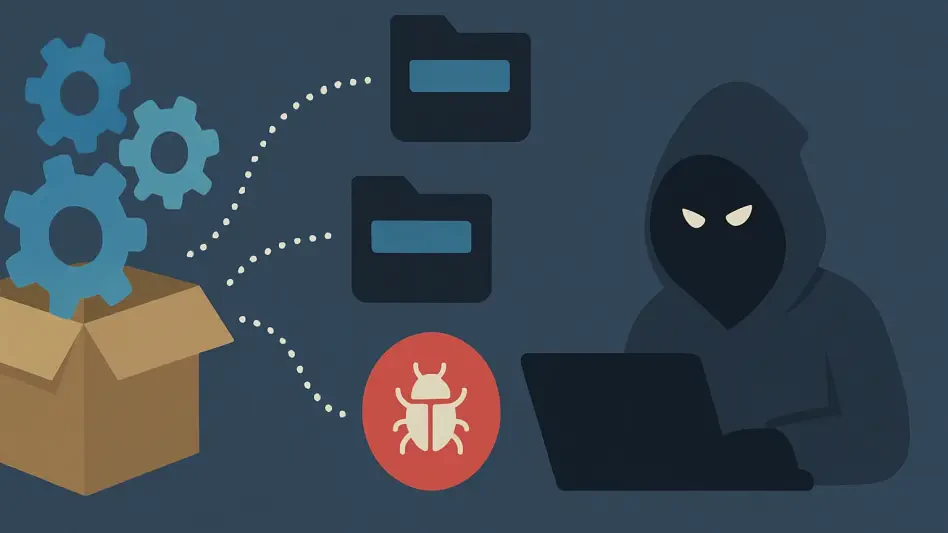

The rapid emergence of two formidable zero-day vulnerabilities targeting Microsoft Defender has sent shockwaves through the cybersecurity industry during the second quarter of 2026. These flaws, identified by the designations RedSun and UnDefend, represent a sophisticated shift in the mechanics of cyber warfare by weaponizing the very tools designed to safeguard the Windows operating system from external threats. Unlike traditional malware variants that attempt to hide from security software using obfuscation or encryption, these exploits manipulate the core logic of the antivirus engine itself to facilitate unauthorized access and maintain persistence within a network. This strategic inversion of defensive roles transforms the endpoint protection suite from a gatekeeper into an unwitting accomplice, allowing attackers to leverage privileged system functions for malicious ends while bypassing the traditional barriers established by Microsoft.
Current intelligence reports indicate that these vulnerabilities impact a vast range of platforms, encompassing Windows 10, Windows 11, and several critical versions of Windows Server currently in operation. While previous security updates successfully mitigated similar issues such as the BlueHammer flaw, RedSun and UnDefend remain unpatched and are being actively exploited in the wild by high-maturity threat actors. This escalating situation has forced global organizations to radically rethink their reliance on automated security remediation and signature-based detection models. As the trust boundaries within the operating system are systematically dismantled, the industry is witnessing a transition where the perceived safety of built-in security features can no longer be taken for granted without additional layers of verification and independent monitoring tools.
Technical Architecture of the Exploits
Mechanisms of the RedSun Vulnerability
RedSun is classified as a Local Privilege Escalation (LPE) vulnerability that specifically exploits a profound logic flaw within the remediation engine of Microsoft Defender. By utilizing NTFS directory junctions and opportunistic locks, an attacker can precisely orchestrate a race condition that tricks the operating system into redirecting privileged file operations toward unintended targets. When the antivirus engine identifies a decoy malicious file in a user-controlled directory, it initiates a cleanup process that runs with the highest possible system permissions. However, by swapping the directory destination at the exact moment of execution, the attacker forces the engine to overwrite protected system binaries with malicious code. This technique effectively turns a standard security cleanup routine into a high-speed vehicle for a full system takeover, granting a low-privileged user complete authority over the machine.
The danger of RedSun lies in its ability to abuse legitimate Windows API calls, such as those found in the Cloud Files API, making it nearly indistinguishable from normal system behavior. Because the file replacement is performed by a trusted Microsoft process, traditional heuristic scanners often fail to flag the activity as suspicious or harmful. Attackers have demonstrated the ability to replace critical services like the Tiering Engine Service or other core background processes, ensuring that their malicious code is executed every time the system boots. This level of access allows for the installation of persistent rootkits or the total disablement of secondary security controls. The elegance of the exploit is its simplicity; it does not require complex memory corruption or shellcode, but rather a clever manipulation of how the operating system handles file system metadata during a security event.
Functional Impact of the UnDefend Exploit
While RedSun focuses on the acquisition of power, the UnDefend exploit is designed to ensure that this power remains unchecked by neutralizing the defense suite without alerting the administrator. It specifically targets the delivery mechanisms responsible for signature updates and engine telemetry, effectively freezing Microsoft Defender in an obsolete state. By intercepting communication between the local host and the Microsoft update cloud, the exploit can simulate a successful update process while preventing any new threat definitions from actually being installed. This creates a “phantom” security status where the local dashboard indicates the system is fully protected and up to date, even though the underlying detection engine remains blind to modern threats and specific indicators of compromise used by the attacker.
Furthermore, UnDefend disables the behavioral monitoring components that would typically report unusual activity to a centralized Security Operations Center. This creates a strategic vacuum where an attacker can execute lateral movement or data exfiltration scripts with zero interference from the primary endpoint protection. The psychological impact on security teams is significant, as they are presented with a sea of green checkmarks in their management consoles while their infrastructure is being systematically dismantled from within. This degradation of defensive capabilities serves as the perfect companion to privilege escalation, as it removes the “immune system” of the digital environment. By the time a discrepancy is noted through manual auditing or third-party network traffic analysis, the intrusion has usually reached a stage of total environmental compromise that is difficult to reverse.
Exploitation Patterns and Target Demographics
Strategic Chaining and Campaign Execution
Security researchers have observed that sophisticated threat actors are using these two vulnerabilities in a tightly coordinated sequence to maximize the impact of their campaigns. The standard attack lifecycle typically begins with an initial breach achieved through targeted phishing or the exploitation of unpatched remote access gateways, which provides the attacker with a foothold as a standard user. Once this initial access is secured, the RedSun exploit is deployed immediately to elevate the attacker’s privileges to SYSTEM level, providing them with the administrative dominance necessary to modify core configuration files. With this elevated status, the UnDefend exploit is then triggered to silence the security suite, ensuring that all subsequent malicious actions—such as credential harvesting or the deployment of ransomware—occur in total silence.
This method of chaining exploits has proven to be highly effective against modern defense-in-depth strategies that rely heavily on endpoint visibility. By silencing the primary reporter of security events, the attacker gains the luxury of time, allowing them to carefully map the network and identify the most valuable assets without the pressure of a ticking clock. In many observed cases, attackers have remained resident within corporate networks for weeks before launching their final objective, all while the primary security software reported no issues. This tactical patience indicates that the actors involved are likely well-funded and highly disciplined, prioritizing stealth over immediate disruption. The synergy between RedSun’s power and UnDefend’s invisibility creates a “black hole” in the security posture that traditional monitoring tools are simply not equipped to fill.
Geographic and Sector Specific Target Analysis
The impact of these zero-day vulnerabilities is being felt on a global scale, with a discernible focus on high-value sectors where data sensitivity and operational uptime are paramount. Healthcare providers, financial institutions, and operators of critical national infrastructure have been identified as primary targets for these campaigns. In the healthcare sector, the ability to silence security alerts allows ransomware groups to encrypt patient records with a higher success rate, leading to significant leverage during extortion negotiations. Similarly, in the financial world, the stealth provided by UnDefend facilitates the quiet exfiltration of sensitive transactional data and customer records. The universal nature of Microsoft Defender makes this a target-rich environment, as nearly every major enterprise utilizes some form of the built-in protection suite.
Managed Service Providers (MSPs) represent a particularly high-risk demographic in this crisis, as they often serve as the central nervous system for dozens or even hundreds of downstream client environments. An attacker who successfully exploits an MSP’s internal systems using RedSun and UnDefend can potentially gain a “force multiplier” effect, using the service provider’s own management tools to push malicious payloads to all connected clients. This type of supply chain attack is highly efficient and incredibly difficult to defend against, as the malicious activity originates from a trusted source. The rapid weaponization of these flaws by ransomware operators and initial access brokers suggests that the window for preventive action is closing quickly. Organizations that fail to recognize the specific risks posed to their service providers may find themselves compromised through a side-channel they previously considered secure.
Evolution of Defense and Countermeasures
Adapting to Advanced Evasion Tactics
The discovery of the RedSun and UnDefend exploits highlights a significant and troubling trend in “living-off-the-land” methodologies, where attackers abuse legitimate system functions to avoid detection by traditional means. By exploiting the remediation logic of the security software itself, they effectively bypass the heuristic analysis and sandboxing techniques that are designed to catch external malicious code. This evolution in tactics requires a fundamental shift in defensive strategy, moving away from a single-solution mindset toward a more layered, “assumed breach” posture. Security professionals must now scrutinize the behavior of the security tools themselves, looking for anomalies in how protected processes interact with the file system or the network. The era where a single antivirus agent could be trusted as the ultimate source of truth for endpoint health has effectively ended.
To combat these threats, organizations are increasingly adopting a model of continuous verification that does not rely on the integrity of a single vendor’s ecosystem. This involves implementing granular telemetry that monitors the interaction between high-privilege system services and user-writable directories, looking for the specific reparse point manipulations that characterize the RedSun exploit. Furthermore, behavioral analytics are being tuned to detect “silent” failures in update processes, which can serve as an early warning sign that the UnDefend exploit is active. This shift toward deep-level system auditing is becoming the new standard for enterprise security, as it provides the only reliable way to identify when a trusted component has been turned against the user. Resilience in this new landscape is defined by the ability to detect the absence of expected security signals as much as the presence of malicious ones.
Implementation of Proactive Security Controls
While waiting for a formal patch from Microsoft, security teams must take immediate and aggressive steps to implement alternative controls that can break the attack chain of these vulnerabilities. One of the most effective strategies involves the use of Windows AppLocker or similar application control policies to strictly prevent the execution of unknown binaries from user-writable paths like temporary folders or download directories. By limiting where executable code can run, organizations can prevent the RedSun exploit from launching its secondary stage even if the initial privilege escalation is successful. Additionally, enabling specific Attack Surface Reduction rules that block the creation of NTFS reparse points can significantly hinder an attacker’s ability to redirect privileged file operations, effectively neutralizing the core mechanic of the vulnerability.
Beyond technical configurations, the deployment of a secondary, independent Endpoint Detection and Response (EDR) solution has become a critical requirement for maintaining visibility. A secondary tool that operates outside the Microsoft Defender ecosystem can provide an unbiased view of the system state, allowing administrators to see through the “phantom” protection status created by UnDefend. This cross-vendor approach ensures that a single point of failure in one security product does not lead to a total blind spot for the entire organization. Moving forward, the industry must prioritize the hardening of “trust boundaries” and advocate for more transparent security architectures that do not allow for such deep exploitation of core remediation logic. The lessons learned from this crisis should inform the development of more resilient operating systems that are designed to withstand the weaponization of their own defensive components.